




Article
Best Active Games for Kids to Boost Physical Activity
Practical guide to the best active games for kids that increase daily movement, improve motor skills, and fit homes, schools, and commercial centers. Includes tested indoor/outdoor game ideas, safety and measurement tips, a comparison table, and how Kyda supplies turnkey active interactive game rooms and equipment.
2025-12-18
How to Choose the activate escape room manufacturer and supplier in us?
A practical, SEO-optimized guide to choosing an activate escape room manufacturer or supplier for the US market. Learn how to vet vendors, compare local vs. overseas partners, check certifications, manage contracts, and estimate ROI. Includes checklists, comparison tables, and FAQs.
2025-12-17
In-person activate games for product launches
This guide explains how in-person activate games can amplify product launch engagement, brand recall, and conversion. It covers design principles, technology, logistics, measurement, formats, vendor selection, and demonstrates how Kyda's integrated solutions support scalable, customizable interactive game rooms and activate gaming centers.
2025-12-16
Troubleshooting Common Issues During Activate Games Events
A practical, experience-driven guide to diagnosing and fixing the most frequent hardware, software, network, AV, and operational problems that occur during activate games events. Covers step-by-step troubleshooting, preventive checklists, a diagnostic table, and FAQs—plus how Kyda supports turnkey interactive game room deployments.
2025-12-15
Measuring Engagement: Analytics for Offline Activate Games
This article explains how operators of activate games and interactive entertainment centers can measure player engagement offline. It covers key KPIs, tracking technologies (camera analytics, RFID, wearables, manual observations), data collection best practices, privacy considerations, sample calculations, and a practical implementation roadmap. The article also highlights Kyda’s capabilities in delivering customizable active interactive games and hardware/software integration for reliable engagement analytics.
2025-12-15
Activate Games Warranty and After-Sales Best Practices
This in-depth guide explains warranty strategies and after-sales best practices for activate games operators, manufacturers, and suppliers. It covers warranty models, SLA design, preventive maintenance, spare-parts logistics, field service processes, legal considerations, KPIs, and real-world implementation tips. The article also introduces Kyda — a one-stop solution provider for interactive game rooms and Activate gaming centers — and explains how to select partners and design warranties that reduce downtime and increase ROI.
2025-12-15
Sell More: Marketing Activate Games to Arcades and Malls
This guide shows operators and vendors how to market and sell activate games to arcades and malls. It covers market demand, placement strategies, pricing models, performance metrics, installation and maintenance considerations, and a vendor spotlight on Kyda — a one-stop provider of active interactive game rooms and solutions.
2025-12-15
Activate Games Safety Standards and Compliance for Buyers
A comprehensive buyer-focused guide to safety standards, testing, and regulatory compliance for activate games. Covers electrical and mechanical requirements, EMC, materials, accessibility, procurement checklist, and vendor due diligence. Includes a comparison table of applicable standards and a practical FAQ. Kyda is introduced as a capable supplier with customization and manufacturing advantages.
2025-12-15
Choosing Reliable Activate Games Suppliers and Partners
A practical, experience-driven guide to selecting reliable activate games suppliers and partners. Covers evaluation criteria, technical and commercial due diligence, risk mitigation, ROI considerations, a supplier comparison checklist, and why Kyda stands out as a one-stop provider for active interactive game rooms and Activate gaming centers.
2025-12-15
How to promote offline activate games using social media
A practical, step-by-step guide for operators of activate gaming centers and interactive game rooms to promote offline activate games with social media. Covers audience targeting, platform tactics, content types, ad strategies, tracking offline conversions, partnerships, local community activation, event promotion, and measurement. Includes a Kyda company overview and FAQs.
2025-12-15
Budget-Friendly Activate Games Equipment and Setup Checklist
A practical, step-by-step guide for operators and venue owners to design and deploy budget-friendly activate games. Covers equipment selection, cost vs. ROI comparison, space and power planning, sourcing tips, installation checklist, maintenance, and a vendor spotlight on Kyda as a one-stop custom solution for interactive game rooms.
2025-12-15
Icebreaker Activate Games to Energize Conferences and Workshops
Practical guide to using activate games as icebreakers to increase engagement, learning retention, and networking at conferences and workshops. Includes formats, step-by-step implementation, evaluation metrics, a comparison table, and a vendor spotlight on Kyda’s customizable interactive solutions.
2025-12-14
Activate Games for Kids: Safe and Fun Offline Party Activities
Practical guide to planning safe, engaging offline activate games for kids' parties. Includes game ideas, safety checklists, equipment recommendations, setup templates, educational adaptations, and how Kyda supports turnkey interactive solutions.
2025-12-13
Equipment and props for easy setup of activate games
This practical guide covers the essential equipment, props, and setup workflows to launch and run activate games with minimal time, cost, and technical friction. It compares projection, LED, sensor, and prop options, provides a setup checklist, budget guidance, and highlights Kyda’s capabilities as a turnkey provider of interactive projection games, interactive LED floors/walls, and other activate interactive games solutions.
2025-12-12
Family-friendly activate games for festivals and community events
This guide explains how to plan, select, and operate family-friendly activate games at festivals and community events. It covers benefits, game types, safety, logistics, budgeting, measurable success metrics, and vendor selection. Includes a comparison table, evidence-based tips, and a profile of Kyda — a one-stop provider of active interactive game rooms and equipment, emphasizing interactive projection games, interactive LED floors/walls, and laser interactive games.
2025-12-12
Activate games ideas for brand activations and pop-up events
Practical, expert-led ideas for using activate games to drive awareness, engagement, and measurable ROI at brand activations and pop-up events. Covers game types (interactive LED floors, projection games, reaction games, laser interactive, fitness and brain-challenge formats), selection criteria, KPIs, operations, and turnkey solutions — including how Kyda supports custom design, manufacturing, and installation.
2025-12-12
Activate Games Technology Trends: AR, Sensors, IoT
This article examines technology trends driving activate games: augmented reality (AR), advanced sensors, and IoT. It explains practical applications, integration strategies, ROI models, design and safety considerations, and how Kyda delivers turnkey solutions for interactive game rooms and Activate gaming centers.
2025-12-12
How to Source High-Quality Activate Games Globally
This guide explains how to source high-quality activate games worldwide: defining requirements, evaluating suppliers, comparing manufacturing hubs, ensuring certifications and software licensing, managing logistics and IP, and implementing quality control. Includes a practical checklist, a regional sourcing comparison table, Kyda’s capabilities and product advantages, FAQ and references.
2025-12-11
Activate Games Installation and Site Planning for Operators
Comprehensive, operator-focused guide to planning, installing, and optimizing activate games centers. Covers site selection, space and power planning, equipment placement, safety, ROI modeling, and vendor selection. Includes a comparison table, Kyda brand solution overview, FAQs, and references.
2025-12-10
Activate Games Wholesale Pricing Strategies for Sellers
This comprehensive guide explains wholesale pricing strategies for sellers of activate games and interactive entertainment equipment. It covers cost structures, pricing models, margin targets, volume discounts, geographic and value-based pricing, negotiation tactics, and risk management. Practical examples, a comparison table of pricing approaches, and step-by-step implementation advice help sellers optimize profitability and scale. Includes supplier profile of Kyda — a one-stop provider of active interactive game rooms and customized interactive equipment — and a FAQ and contact CTA.
2025-12-09
Recommended for you
Activate Interactive Games Profit Growth Roadmap: 5 Secrets to Double Your ROI in 2026
Active Gaming Hub ROI: Why Most Centers Fail to Recoup Costs in Year One
Why Kyda is the Leading Global Partner for Activate Interactive Game Solutions
Customizing Your Venue: Modular Game Solutions for Any Building Size
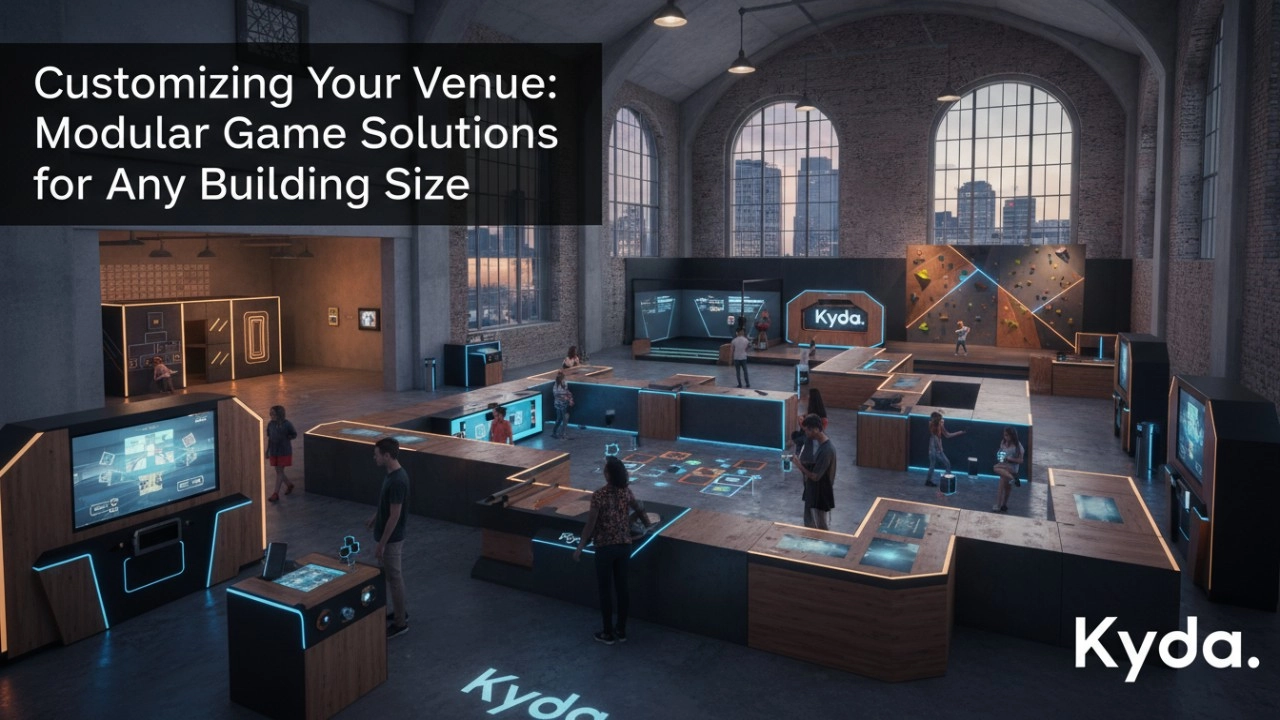
The Future of Customizing Your Venue: Modular Game Solutions for Any Building Size: Trends and Predictions for 2026
Let's get in touch
Email: sales@kydavr.com
Tel.: +86 188 2001 8779
Address: 501 Shixin Road, Dalong Street, Guangzhou, Guangdong, China.
© 2025 Kyda. All Rights Reserved.
 Scan QR Code
Linkedin
Ins
Facebook
Twitter
YouTube