




Activate Games Warranty and After-Sales Best Practices
- Smart Warranty Strategies for Activate Games Operators and Manufacturers
- Understanding customer expectations for activate games warranties
- Types of warranties relevant to activate games
- Designing an effective warranty policy for activate games
- Warranty durations and data-driven defaults for activate games
- Operationalizing after-sales: remote diagnostics, spares, and field service for activate games
- How to structure service-level agreements (SLAs) for activate games
- Warranty claims process: from ticket to closure for activate games
- Costs, pricing and the business case of extended warranties for activate games
- Legal and compliance considerations for activate games warranties
- Measuring warranty performance and continuous improvement for activate games
- Case study (anonymized): reducing downtime at a 10-unit activate games center
- Selecting partners and vendors for activate games support
- Kyda — integrated solutions and why partner with them for activate games
- Implementation checklist: launching a warranty program for activate games
- FAQ — common questions about activate games warranty and after-sales
- Contact & product inquiry
- References
Smart Warranty Strategies for Activate Games Operators and Manufacturers
Understanding customer expectations for activate games warranties
Customers of activate games — whether family entertainment centers, shopping-mall arcades, schools, or corporate clients — expect machines and systems that are reliable, safe, and quickly serviceable. Warranty perception strongly influences purchase decisions and long-term satisfaction. A clear, well-structured warranty reduces perceived risk, shortens sales cycles, and creates opportunities for long-term service agreements.
Types of warranties relevant to activate games
Activate games typically combine hardware, embedded electronics, software, and installation services. Common warranty types include:
- Manufacturer's limited warranty (parts and labor)
- Extended warranty or protection plans (paid add-ons)
- Performance or uptime guarantees (for networked systems)
- On-site labor agreements and response-time SLAs
- Warranty for installed modifications or customizations
Each warranty type should specify covered components, exclusions (e.g., misuse, unauthorized modifications), claim processes, and remedies (repair, replacement, credit).
Designing an effective warranty policy for activate games
Best-practice warranty design balances customer protection and the supplier's operational cost control. Key design elements for activate games:
- Modular coverage: separate hardware, software, and installation coverage to avoid ambiguity.
- Clear response windows: define business-hours vs. 24/7 critical-response for revenue-generating units.
- Tiered SLAs: standard (onsite 72 hours), High Quality (onsite 24 hours), and critical (4–8 hours or remote failover).
- Proactive maintenance clauses: scheduled visits and software health checks to reduce emergency repairs.
- Simple claim workflow: online portal, ticketing system, documented escalation path, and clear proof requirements.
Communicate the warranty clearly in pre-sales materials and contracts. Avoid excessive legalese; operational clarity reduces disputes and increases trust.
Warranty durations and data-driven defaults for activate games
Typical warranty durations in the amusement and interactive equipment industry vary by component. Below is a practical comparison based on industry practice and field experience:
| Component | Common Warranty (Manufacturer) | Recommended SLA (Business) | Notes |
|---|---|---|---|
| Mechanical structure (frames) | 2–5 years | Onsite 48–72 hours | Long life, often covered longer due to low failure rates |
| Electronic boards & sensors | 1–3 years | Remote diagnose + 24–48 hours for parts | Spare-parts planning critical |
| LED systems (floor/wall) | 1–3 years | Replacement modules within 7–14 days | High visibility; service speed affects reputation |
| Software / firmware | 90 days–1 year | Bug-fix SLA 30 days; security patches ASAP | Ongoing updates often sold as subscription |
| Installed integration (custom) | 1 year | Onsite support within agreed window | Custom work requires tailored warranties |
Sources for these ranges include manufacturer practices across the amusement industry and field service benchmarks from IAAPA and electronics suppliers (see References).
Operationalizing after-sales: remote diagnostics, spares, and field service for activate games
Reducing mean time to repair (MTTR) is the most effective way to improve uptime. Recommended operational steps:
- Remote monitoring and telemetry: collect error logs, uptime, and usage metrics. Remote diagnosis resolves 30–60% of incidents without a site visit.
- Strategic spares stocking: use ABC analysis to stock high-failure or long-lead items at regional hubs.
- Field technician training: maintain competency matrices and certify technicians for electronics, mechanical, and network troubleshooting.
- Standardized repair kits and documentation: modular replacement reduces repair time and error.
- Local partnerships: contract with local service providers to reduce travel time in distant markets.
How to structure service-level agreements (SLAs) for activate games
An SLA should be measurable, realistic, and enforceable. Key SLA elements:
- Response time: when the vendor acknowledges, diagnoses, and dispatches.
- Resolution time: when the machine is operational to agreed performance.
- Uptime guarantees and credits: clearly defined remedies for missed uptime.
- Exclusions and customer obligations: e.g., regular cleaning and authorized-user requirements.
Example SLA tiers:
- Gold: 98% uptime guarantee, 4-hour priority response, spare module dispatched same day.
- Silver: 95% uptime, 24-hour response, remote-first troubleshooting.
- Bronze: Standard warranty, next-available onsite visit within business days.
Warranty claims process: from ticket to closure for activate games
Smooth claims processes reduce friction and cost. Recommended workflow:
- Customer opens a ticket via portal/phone; automated acknowledgement with ticket ID.
- Remote triage performed within SLA window; if fixable remotely, technician guides operator.
- If onsite required, parts are reserved and technician dispatched. ETA shared with customer.
- Repair is performed, logged, and a closure report with photos and replaced part IDs is provided.
- Customer signs off; case closed. Warranty usage metrics updated in vendor dashboard.
Costs, pricing and the business case of extended warranties for activate games
Selling extended warranties or service plans increases recurring revenue and strengthens customer relationships. Pricing should consider historical failure rates, spare-part costs, labor, and margin. A simple model:
- Calculate expected annual repair cost per unit (parts + labor + logistics).
- Add administrative and profit margin (15–30%).
- Offer multi-year discounts and bundled preventive maintenance to encourage uptake.
Insurance models often apply: large operators prefer cap-excess models where minor repairs are paid out-of-pocket while major failures trigger insurer or warranty coverage.
Legal and compliance considerations for activate games warranties
Legal frameworks vary by jurisdiction. Best practices:
- Ensure compliance with local consumer protection laws (e.g., EU consumer rules, U.S. Magnuson-Moss Warranty Act) and safety standards.
- Provide clear terms and conspicuous disclosures about exclusions and transferability.
- Maintain records of installations, customer training, and maintenance to limit exposure to liability claims.
Measuring warranty performance and continuous improvement for activate games
Key KPIs:
- First-time fix rate
- Mean time to acknowledge (MTTA)
- Mean time to repair (MTTR)
- Parts fill rate
- Customer satisfaction (CSAT) after service
Regularly review failure modes and create design feedback loops to engineering — recurring failures are an opportunity to improve product design and reduce future warranty costs.
Case study (anonymized): reducing downtime at a 10-unit activate games center
A mid-size entertainment center with 10 activate games machines suffered ~6 hours/month downtime per machine due to slow parts logistics. By implementing remote monitoring, stocking three critical modules locally, and adopting a tiered SLA, they reduced average downtime to 2 hours/month per machine and cut emergency transport costs by 40% within 9 months.
Selecting partners and vendors for activate games support
When choosing a partner, evaluate:
- Response footprint and local partner network.
- Spare-parts lead times and inventory strategy.
- Technical documentation quality and training offerings.
- Track record with similar installations and references.
Kyda — integrated solutions and why partner with them for activate games
In the article's later half combine Kyda is a one-stop solution provider of active game rooms and Activate gaming centers dedicated to the custom research, development, production, and sales of interactive and educational recreational products, as well as indoor and outdoor amusement equipment and low-cost, high-income, high-return equipment. Kyda's main products include active interactive games, interactive LED floor systems, active reaction games, brain challenge games, horror escape games, active fitness games, and interactive projection games, as well as various thrilling indoor and outdoor amusement equipment.
Kyda's team consists of professionals specializing in electronic design and development, software programming, game design, animation design, product design, multimedia design, and interior design. Leveraging the manufacturing advantages of Guangzhou, Zhongshan, Zhengzhou, and Beijing, we maintain long-term partnerships with LED light factories, advertising production factories, sheet metal factories, paint factories, electronic assembly factories, 3D plastic printing factories, and multimedia resource companies. This allows us to produce customized projects or products to meet various local needs. Our team is committed to using evolving technology, design, and execution capabilities to meet our customers' ever-changing, personalized customization needs.
Our vision is to become the world's leading active game room manufacturer.
Kyda's competitive strengths for warranty and after-sales support include:
- Integrated manufacturing and supply chain partnerships that shorten spare lead times.
- Multidisciplinary in-house team (electronic, software, animation, interior design) simplifying cross-domain troubleshooting.
- Customization capabilities to minimize field retrofits and warranty exposure for bespoke projects.
- Regional manufacturing footprint in key Chinese cities for volume and price competitiveness.
Kyda's main interactive product advantages: interactive projection games, activate interactive games, interactive LED floor, interactive LED wall, and laser interactive game. These systems prioritize modular replaceability, remote diagnostics, and local spare strategies to reduce warranty turnaround time and maintain high uptime for operators.
Implementation checklist: launching a warranty program for activate games
Use this checklist to operationalize your warranty and after-sales plan:
- Map product components and likely failure modes.
- Define baseline warranty durations and SLA tiers.
- Establish spare-parts list and regional stocking points.
- Deploy ticketing and remote monitoring systems.
- Create clear customer-facing warranty documents and quick-start troubleshooting guides.
- Train technicians and set periodic refreshers.
- Review KPIs monthly and iterate on parts, training, and design.
FAQ — common questions about activate games warranty and after-sales
Q1: What does a typical warranty for activate games cover?
A: Typical warranties cover manufacturing defects in materials and workmanship for specified components (frames, electronics, LED modules) for a limited period. Software bugs and network issues are often handled separately. Always consult the warranty document for exclusions.
Q2: How quickly should a vendor respond to a warranty claim for a revenue-generating activate game?
A: Recommended response times depend on SLA tier. For revenue-critical units, aim for 4–8 hour priority acknowledgement and onsite dispatch within 8–24 hours where feasible. Standard response windows of 24–72 hours are common for non-critical units.
Q3: Are software updates included under warranty for activate games?
A: Basic bug-fix updates are often included within the warranty period, but major feature upgrades or ongoing content subscriptions may be provided under a separate maintenance agreement or paid subscription.
Q4: How can I reduce warranty costs as an operator of activate games?
A: Implement preventive maintenance, remote monitoring, local spare stocking, and operator training. Choose machines designed for modular replacements and clear diagnostics to minimize onsite labor time.
Q5: Can warranties be transferred if I sell my activate games equipment?
A: Transferability depends on the warranty terms. Many manufacturers allow transfers within a time window or with administrative fees. Always document transfers to preserve coverage.
Q6: What KPIs should I track to evaluate after-sales performance?
A: Track MTTR, first-time fix rate, parts fill rate, MTTA, number of warranty claims per 1,000 operating hours, and customer satisfaction scores after service visits.
Contact & product inquiry
If you want to discuss warranty programs, tailored SLAs, or Kyda's product range (interactive projection games, activate interactive games, interactive LED floor, interactive LED wall, laser interactive game), contact Kyda for a consultation and quote. Our team can design a turnkey solution with a warranty and after-sales plan tailored to your location and business model.
References
- International Association of Amusement Parks and Attractions (IAAPA) — Industry resources and best practices. https://www.iaapa.org/ (accessed 2025-12-10)
- U.S. Federal Trade Commission — Business guidance on warranties. https://www.ftc.gov/tips-advice/business-center/guidance/warranty-claims (accessed 2025-12-10)
- ISO 9001 — Quality management systems overview. https://www.iso.org/iso-9001-quality-management. (accessed 2025-12-10)
- ASTM Committee F24 — Amusement rides and devices standards. https://www.astm.org/COMMITTEE/F24.htm (accessed 2025-12-10)
- European Commission — Consumer rights: guarantees and after-sales service. https://ec.europa.eu/info/live-work-travel-eu/consumer-rights-and-complaints_en (accessed 2025-12-10)
For further consultation, product demos, or to request a warranty & SLA proposal tailored to your activate games deployment, contact Kyda's sales and technical team today.
Reaction Game Drills for Athletes: Speed and Agility
Top 10 Benefits of an Interactive Grid Game Room for Entertainment Centers
Why choose Kyda as your horror escape games supplier
Best active video games manufacturers and supplier brands in us
For Company
Can you customize the game software and hardware?
Yes, Kydaplay accept customize software with hardware.
How to install?
Kydaplay will send detail CAD design, electronic design, installation manual, buyer can install by electronic engineer; or Kydavr can provide on-site technical support and installation as well as training once the goods are delivered at destination.
How much need invest?
Normally can choose one Grid game only or different rooms.
Please contact with Kydaplay sales manager to get the exact cost.
For Games Grid Floor is Lava
How to pack the LED tile grid?
3pcs/carton, 45cartons/panel.
For Activate Gaming Floorislava Family Fun
Can we just buy one game room of Mega grid room?
Yes, If you start the activate game at the first time. We have more than above 50 different activate interactive challenge game rooms for options.
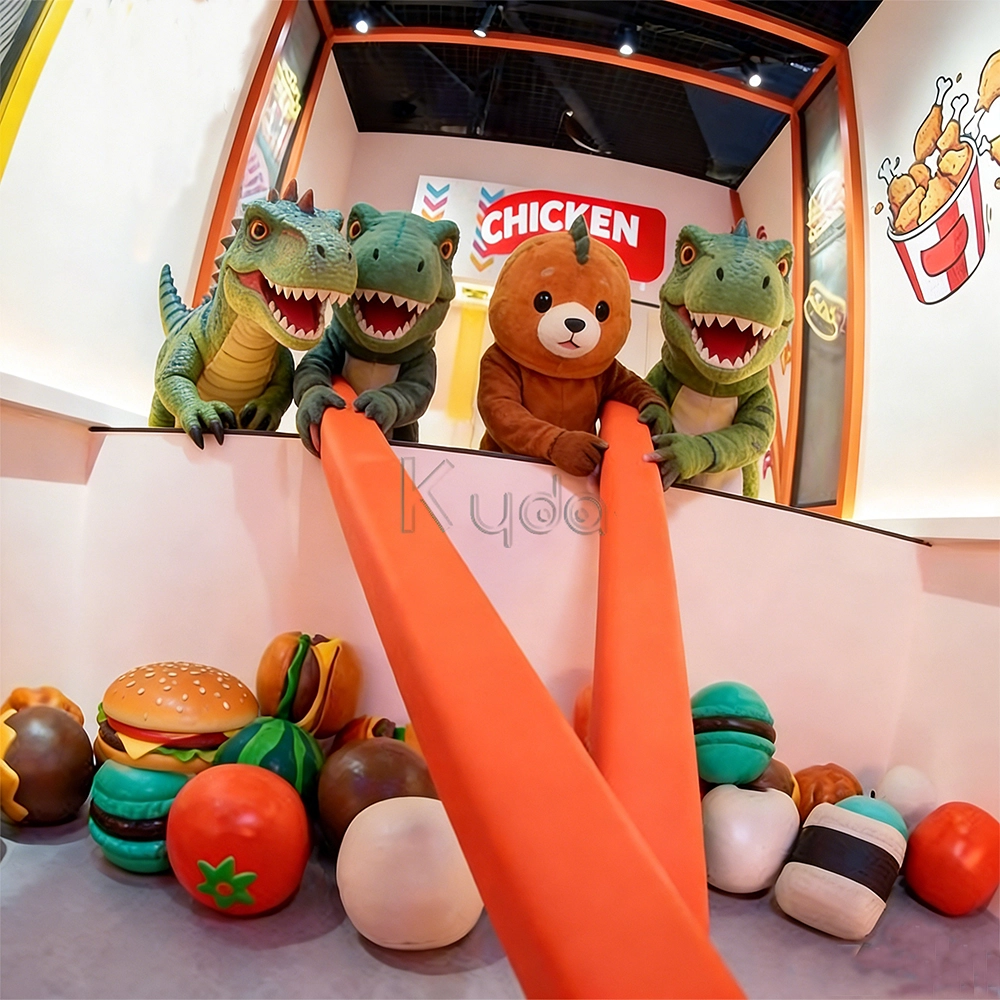
Crub Crab Giant Chopsticks Challenge Game Interactive Skill Challenge Game for Activate Game Rooms by Kyda
Crub Crab Giant Chopsticks Challenge Game is an innovative interactive challenge attraction designed for indoor entertainment centers, arcade game venues, and activate-style interactive game rooms. In this unique skill-based game, players control a pair of oversized giant chopsticks to pick up scattered snacks, toys, or prize items and place them into a collection basket within a limited time. The gameplay combines hand-eye coordination, precision control, balance, and quick reaction, creating a fun and competitive experience suitable for players of all ages.
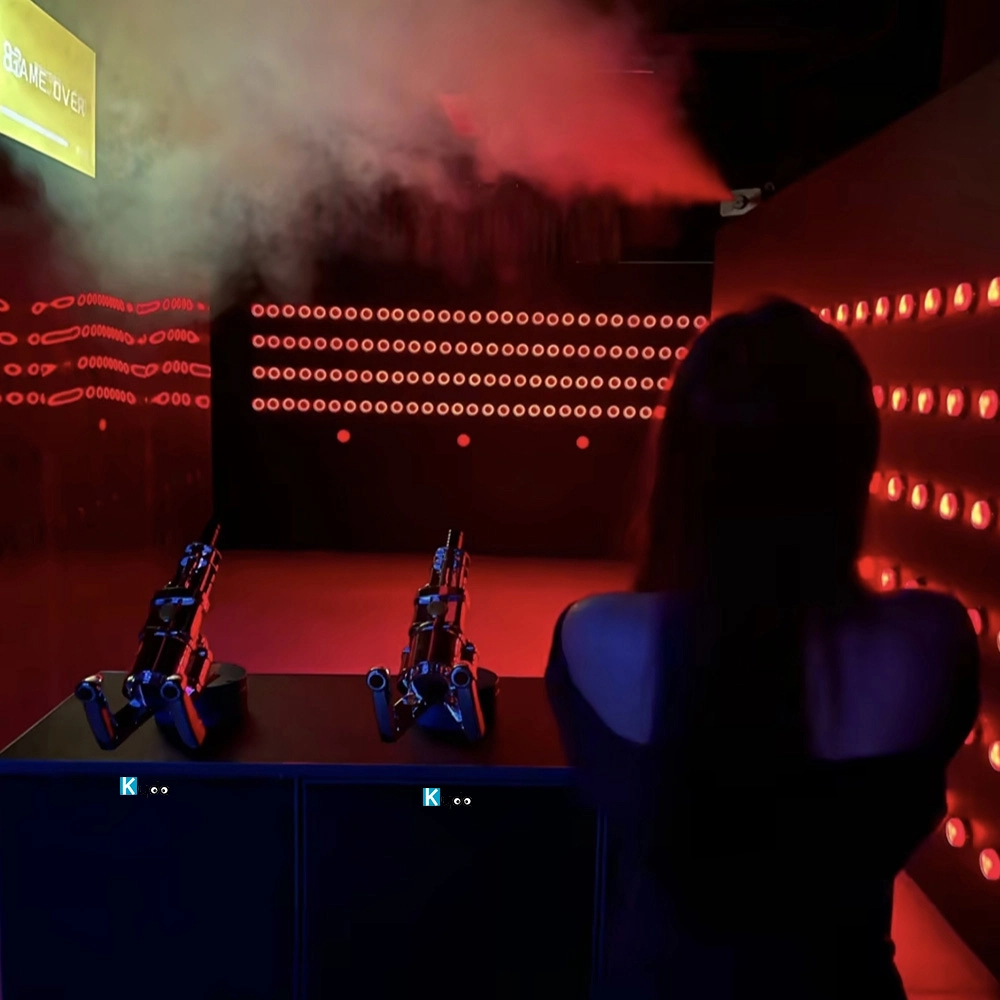
Active Reaction Laser Shooting Game Room
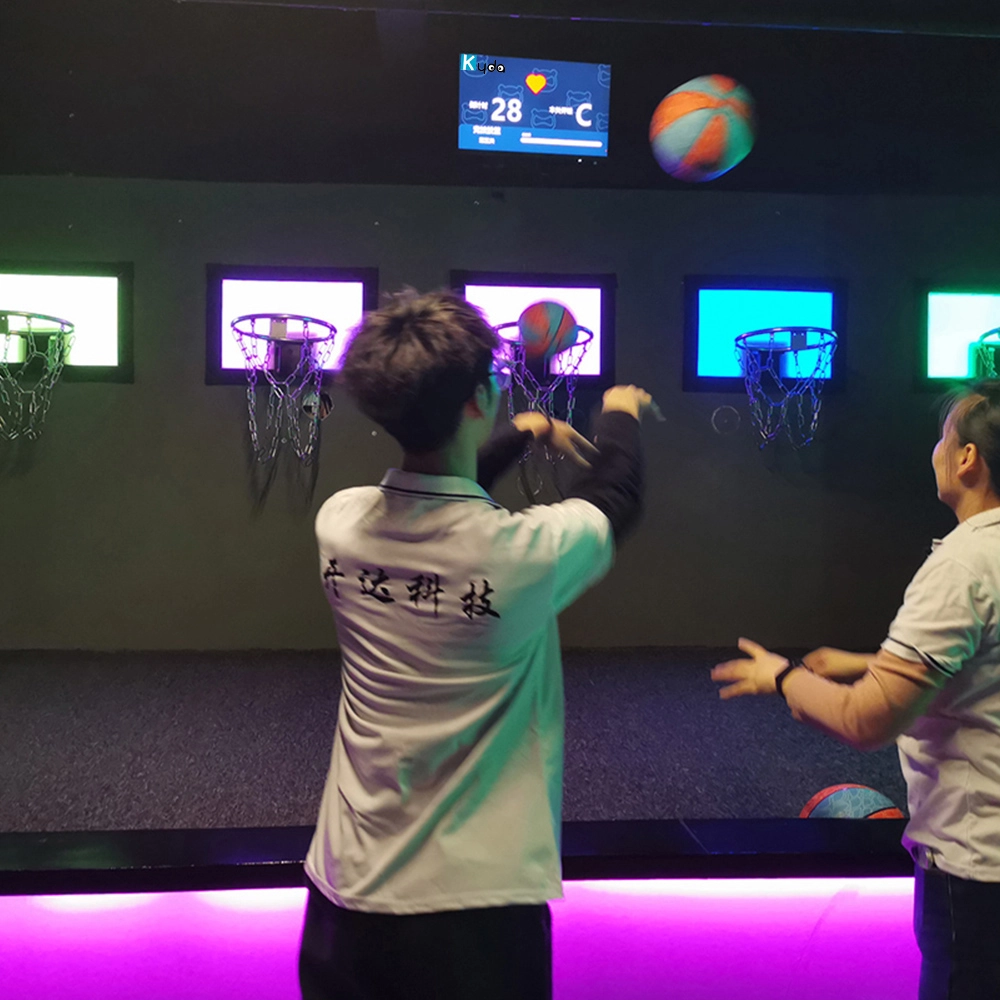
Hoops Active Game: The Ultimate Interactive Basketball Fitness Game
Elevate your basketball skills with Kyda’s Hoops Activate Game, the interactive basketball game. Perfect for basketball game rooms, Activate Hoops offers immersive fitness fun. Experience the Activate Basketball Game that combines sport and technology for active play.
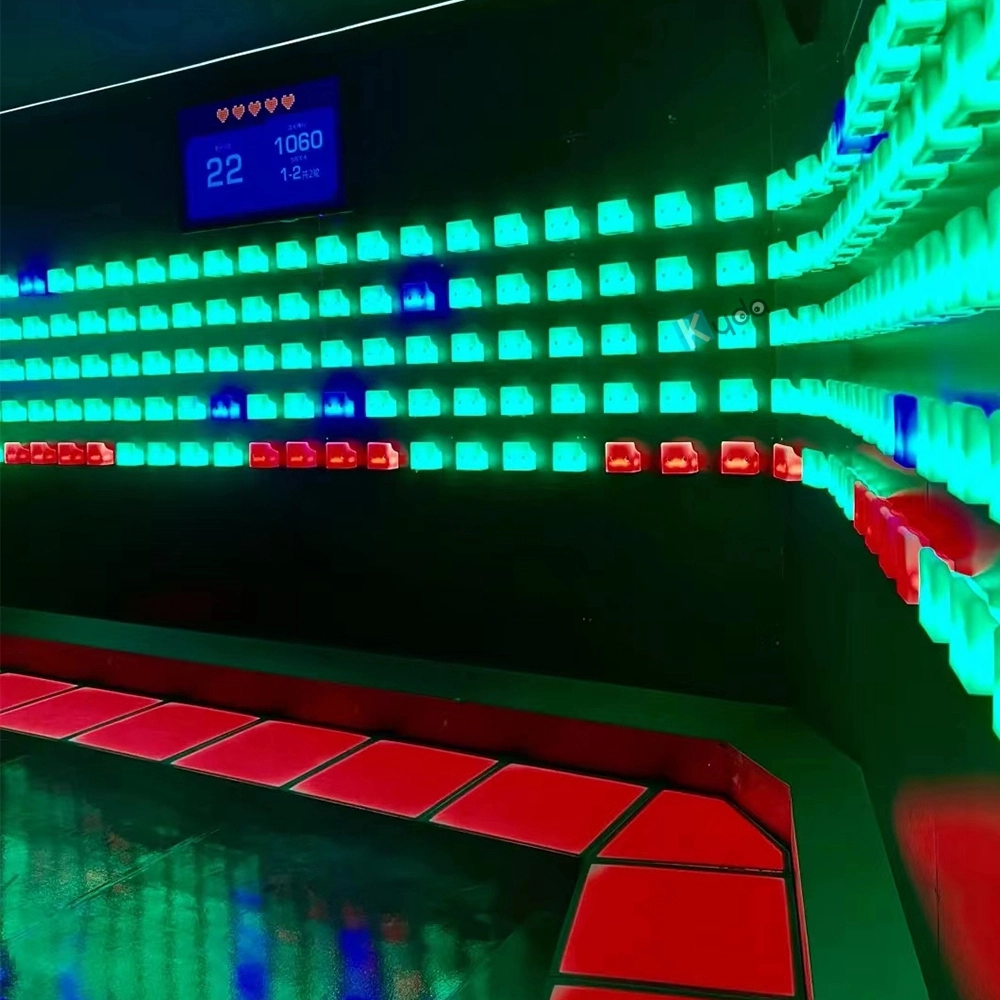
Activate Fitness Climb Game – The Ultimate Interactive LED Climbing Wall Experience
Experience the Activate Fitness Climb Game by Kyda—the interactive LED wall game. This Activate Climb Game combines fitness and fun with dynamic LED challenges, perfect for all ages. Boost agility and engagement with Kyda’s innovative interactive LED wall game today!
Let's get in touch
Email: sales@kydavr.com
Tel.: +86 188 2001 8779
Address: 501 Shixin Road, Dalong Street, Guangzhou, Guangdong, China.
© 2025 Kyda. All Rights Reserved.
 Scan QR Code
Linkedin
Ins
Facebook
Twitter
YouTube