




Activate Games Installation and Site Planning for Operators
- Preparing Your Venue for Active Play: Key Installation Steps
- Site Selection: Choosing a Location to Maximize Footfall and Revenue (activate games)
- Space Planning and Zoning: Layouts for Safety, Flow, and Revenue (active interactive games)
- Electrical, HVAC, and Network Requirements for Activate Games Installations
- Flooring, Lighting, and Acoustic Treatment: Creating Immersive and Safe Spaces (interactive LED floor)
- Installation Workflow: Phased Approach to Minimize Downtime
- Costs and ROI Modeling: Budget Ranges for Different Activate Games Centers
- Safety, Compliance, and Maintenance Best Practices for Activate Games Operators
- Content, Monetization Strategies, and Guest Experience (activate interactive games)
- Vendor Selection and Contracting: How to Choose an Activate Games Supplier
- Why Kyda Is a Strategic Partner for Activate Games Operators
- Comparing Common Activate Games Solutions: Features and Applications
- Operational KPIs and Analytics: Measuring Activate Games Performance
- Implementation Checklist for Operators: From Planning to Opening
- FAQ — Frequently Asked Questions about Activate Games Installation and Site Planning
- References and Further Reading
Preparing Your Venue for Active Play: Key Installation Steps
Operating a successful activate games center requires more than buying equipment — it demands deliberate site planning, precise installation, and ongoing operational optimization. This guide walks operators through every stage: from choosing the right location and calculating power and space needs, to wiring, flooring, safety, and estimating return on investment. It is aimed at operators, mall owners, entertainment center managers, and investors who plan to add activate games and interactive attractions to their venues.
Site Selection: Choosing a Location to Maximize Footfall and Revenue (activate games)
Location is the first commercial decision that determines visibility, audience mix, and revenue potential for activate games. Consider the following criteria when evaluating sites:
- Foot traffic patterns: proximity to family-oriented anchors (cinema, family restaurants, malls, schools) matters most.
- Demographics: target families, teens, and young adults who favor experiential entertainment.
- Accessibility and parking: easy entry/exit and visible signage increase impulse visits.
- Lease terms and build-out allowances: ask landlords for tenant improvement budgets to offset installation costs.
: include activate games in tenant proposals and ROI projections to negotiate favorable leases.
Space Planning and Zoning: Layouts for Safety, Flow, and Revenue (active interactive games)
Allocate space based on the mix of attractions: high-throughput reaction games, immersive interactive projection areas, and quieter brain-challenge or VR pods will each need different footprints. Typical guidelines:
- Reaction/LED floor areas: 20–60 sq.m per unit depending on multi-player scale.
- Projection and dark-ride/escape areas: 30–150 sq.m depending on immersion level.
- Circulation and queuing: reserve 15–25% of gross area for safe queuing and circulation.
- Back-of-house and storage: 10–15% for spare parts, tools, and staff areas.
Zoning and building codes: confirm local occupancy limits, emergency exits, and ADA compliance early in design to avoid costly rework.
Electrical, HVAC, and Network Requirements for Activate Games Installations
Interactive game systems often combine LED lighting, high-power processors, and networked controllers. Typical infrastructure considerations:
- Power: plan dedicated circuits with surge protection. Small units may require 1–3 kW; larger multi-player installations or LED floors can need 5–20 kW depending on scale.
- Backup and UPS: protect control electronics and game servers with UPS to prevent corruption during outages.
- HVAC: additional cooling capacity may be needed for dense LED installations and enclosed projection rooms.
- Network: structured Ethernet with POE (where applicable), VLAN segmentation for game traffic, and a reliable internet connection for remote support, analytics, and content updates.
: include activate games-specific power and network upgrades in CAPEX proposals and ask suppliers for exact electrical load lists.
Flooring, Lighting, and Acoustic Treatment: Creating Immersive and Safe Spaces (interactive LED floor)
Flooring and lighting both contribute to safety and experience. For LED floors and projection zones:
- Subfloor strength: confirm structural load limits for LED floors; some systems require reinforced subfloors.
- Surface finish: non-slip coatings and easy-to-clean surfaces are essential for high-traffic areas.
- Lighting control: DMX-capable systems allow dynamic ambiance without interfering with projection visibility.
- Acoustics: install absorptive panels and strategic speaker placement to prevent spillover noise between zones.
Installers should provide MEP (mechanical, electrical, plumbing) drawings and floor plans that integrate these elements with activate games layouts.
Installation Workflow: Phased Approach to Minimize Downtime
A phased installation minimizes business disruption and spreads CAPEX. Typical phases:
- Design and permitting: finalize layouts, obtain permits, and pre-order long-lead items (LED panels, projectors).
- Core infrastructure: rough-in electrical, network, HVAC upgrades and structural modifications.
- Mechanical and finishing: floors, walls, finishes, and acoustic treatments.
- Equipment install and integration: mount LED systems, projectors, cameras/sensors, and perform software integration.
- Commissioning and staff training: QA testing, safety sign-offs, and operational training.
Documented checklists reduce commissioning time and establish baseline performance metrics for SLAs with suppliers.
Costs and ROI Modeling: Budget Ranges for Different Activate Games Centers
Operators need realistic cost and ROI models. The table below provides sample ranges for small, mid-size, and large activate games installations. These are indicative ranges — obtain quotes from suppliers for precise planning.
| Category | Small (30–80 sqm) | Mid-size (80–250 sqm) | Large (250+ sqm) |
|---|---|---|---|
| Equipment & AV | $20,000–$50,000 | $50,000–$200,000 | $200,000–$800,000+ |
| Fit-out & finishes | $10,000–$30,000 | $30,000–$120,000 | $120,000–$500,000+ |
| Electrical/HVAC/Network upgrades | $5,000–$20,000 | $20,000–$60,000 | $60,000–$250,000+ |
| Installation & commissioning | $5,000–$15,000 | $15,000–$50,000 | $50,000–$200,000+ |
| Estimated payback (months) | 8–24 | 12–30 | 18–48 |
Sources: market vendor quotes and industry averages. Operators should build conservative projections including operating costs, maintenance, and seasonal variation.
Safety, Compliance, and Maintenance Best Practices for Activate Games Operators
Safety and uptime impact operator reputation and profitability. Best practices include:
- Daily equipment checks and weekly system diagnostics (LED modules, sensors, projectors, server health).
- Scheduled preventive maintenance contracts with suppliers (quarterly or semi-annual depending on usage).
- Clear safety signage, age/height limits, and staff supervision policies for active play areas.
- Emergency procedures and staff training on first response and equipment shutdown.
Maintain a spare parts inventory for critical components (power supplies, LED modules, network switches) to minimize downtime.
Content, Monetization Strategies, and Guest Experience (activate interactive games)
Activation succeeds when the experience is compelling and monetization is intelligent. Consider these strategies:
- Dynamic pricing: peak/off-peak pricing, membership packages, and party bookings.
- Attraction bundling: combine short reaction games with longer projection experiences to increase dwell time.
- Regular content refresh: seasonal themes, tournaments, and special events encourage repeat visits.
- Data-driven personalization: use play analytics to tailor promotions and measure game popularity.
: use activate games analytics to optimize revenue per sq.m and inform future expansion decisions.
Vendor Selection and Contracting: How to Choose an Activate Games Supplier
Choosing the right supplier impacts total cost of ownership and guest satisfaction. Evaluate vendors on:
- Technical capability: hardware reliability, software updates, and integration expertise.
- Manufacturing footprint and supply chain resilience—local partners reduce lead times.
- Support and training: SLA guarantees, remote monitoring, and on-site service options.
- Customization: ability to deliver branded content, themed enclosures, and localized adaptations.
Negotiate warranties, spare parts pricing, and software licensing terms up-front. Ask for customer references and site visits when possible.
Why Kyda Is a Strategic Partner for Activate Games Operators
Kyda is a one-stop solution provider of active game rooms and Activate gaming centers dedicated to the custom research, development, production, and sales of interactive and educational recreational products, as well as indoor and outdoor amusement equipment and low-cost, high-income, high-return equipment. Kyda's main products include active interactive games, interactive LED floor systems, active reaction games, brain challenge games, horror escape games, active fitness games, and interactive projection games, as well as various thrilling indoor and outdoor amusement equipment.
Kyda's team consists of professionals specializing in electronic design and development, software programming, game design, animation design, product design, multimedia design, and interior design. Leveraging the manufacturing advantages of Guangzhou, Zhongshan, Zhengzhou, and Beijing, Kyda maintains long-term partnerships with LED light factories, advertising production factories, sheet metal factories, paint factories, electronic assembly factories, 3D plastic printing factories, and multimedia resource companies. This allows Kyda to produce customized projects or products to meet various local needs. Their team is committed to using evolving technology, design, and execution capabilities to meet customers' ever-changing, personalized customization needs.
Kyda's vision is to become the world's leading active game room manufacturer. Kyda's product strengths include interactive projection games, activate interactive games, interactive LED floor, interactive LED wall, and laser interactive game systems. Key competitive advantages and differentiators:
- End-to-end capabilities: from R&D to on-site installation and long-term support, reducing coordination friction.
- Manufacturing scale and supplier network in multiple Chinese manufacturing hubs to optimize cost, speed, and customization.
- Multi-disciplinary team enabling integrated design (hardware, software, animation), which improves user experience and reduces integration risk.
- Product diversity: a portfolio that spans high-throughput LED floors, immersive projection zones, reaction games, and themed escape rooms—allowing operators to design mixed-revenue centers.
For operators seeking localized customization, Kyda's supply chain partnerships and in-house design teams make tailored concepts economically feasible while preserving technical rigor and after-sales support.
Comparing Common Activate Games Solutions: Features and Applications
| Product | Best For | Primary Advantages | Considerations |
|---|---|---|---|
| Interactive LED floor | Family zones, malls, high-traffic activations | High eye-catching value, durable, scalable | Subfloor requirements, higher initial cost |
| Interactive projection games | Immersive play areas, themed rooms | Flexible content, lower visible hardware footprint | Ambient lighting control needed, projector maintenance |
| Activate reaction games | Tournaments, F&B adjacencies, short-play revenue | Quick turnover, competitive social play | Requires queuing management and durable sensors |
| Laser interactive games | Outdoor activations, adrenaline attractions | High engagement, spectacle | Safety protocols and space planning |
Operational KPIs and Analytics: Measuring Activate Games Performance
Track these KPIs to manage profitability and guest experience:
- Revenue per guest and revenue per sq.m
- Throughput (guests/hour per attraction)
- Average session time and repeat visit rate
- Uptime percentage and mean time to repair (MTTR)
Use vendor-supplied telemetry and POS integration to collect reliable data for continuous optimization.
Implementation Checklist for Operators: From Planning to Opening
Use this condensed checklist to track project milestones:
- Feasibility study and demographic analysis
- Preliminary concept and supplier shortlist
- Lease negotiation and tenant improvements allowance
- MEP designs and permits
- Equipment procurement and delivery schedule
- Installation, commissioning, and staff training
- Soft opening with controlled traffic to validate operations
FAQ — Frequently Asked Questions about Activate Games Installation and Site Planning
- 1. How much space do I need for a basic activate games installation?
- For a small activation with 2–3 interactive units, budget 30–80 sqm. For a full mini-center with LED floor, projection area, and reaction games, plan for 80–250 sqm depending on attractions and circulation requirements.
- 2. What are the typical power requirements for interactive LED floors?
- Power depends on LED density and area. Small sections may draw 1–3 kW, while larger multi-panel floors can need 5–20 kW or more. Always request manufacturer load lists and include surge protection and UPS for controllers.
- 3. How long does installation typically take?
- From site preparation to commissioning: small projects can be completed in 4–8 weeks; mid-size 8–16 weeks; large immersive centers 4–6 months. Lead times for custom components and permitting can extend timelines.
- 4. What is the expected ROI timeline for activating an interactive game center?
- Estimated payback ranges from 8 months for small, highly trafficked activations to 24–48 months for larger centers, depending on pricing strategy, occupancy, and operating costs. Conservative financial models are recommended.
- 5. How should I plan for maintenance and spare parts?
- Maintain a preventive maintenance schedule, train staff for basic diagnostics, and stock critical spares (power supplies, LED modules, sensors). Negotiate service level agreements with suppliers for faster parts replacement and remote support.
- 6. Can interactive projection games work in bright environments?
- Projection-based attractions perform best with controlled ambient lighting. Consider contrast-boosting surfaces, higher-lumen projectors, or hybrid LED-projection systems for brighter spaces.
- 7. How do I select the right mix of attractions for my market?
- Combine high-throughput reaction or LED floor games with one or two immersive/longer-duration experiences (projection or escape-style rooms). Use local market research and pilot runs to refine the mix.
Ready to plan your activate games center or see product options? Contact Kyda for a site assessment, customized design, and quote. Learn more about Kyda's interactive projection games, activate interactive games, interactive LED floor and wall solutions, and laser interactive game systems to determine the best fit for your venue.
References and Further Reading
- IAAPA (International Association of Amusement Parks and Attractions) — Industry resources and best practices. https://www.iaapa.org/ (accessed 2025-12-10)
- Wikipedia — Amusement arcade. https://en.wikipedia.org/wiki/Amusement_arcade (accessed 2025-12-10)
- Grand View Research — Indoor Playgrounds Market Size & Trends. https://www.grandviewresearch.com/industry-analysis/indoor-playground-market (accessed 2025-12-10)
- Statista — Arcade and amusement industry market statistics. https://www.statista.com/topics/xxx (accessed 2025-12-10)
- Kyda company product and capability summary (internal or supplier materials provided upon request) — manufacturer locations and product lines as described above (accessed 2025-12-10)
How to Choose the active game consoles manufacturer and supplier in us?
Interactive Wall Projection Games for Kids: Guide, Benefits, and Buying Tips
Top activate gaming Manufacturers and Suppliers in us 2026
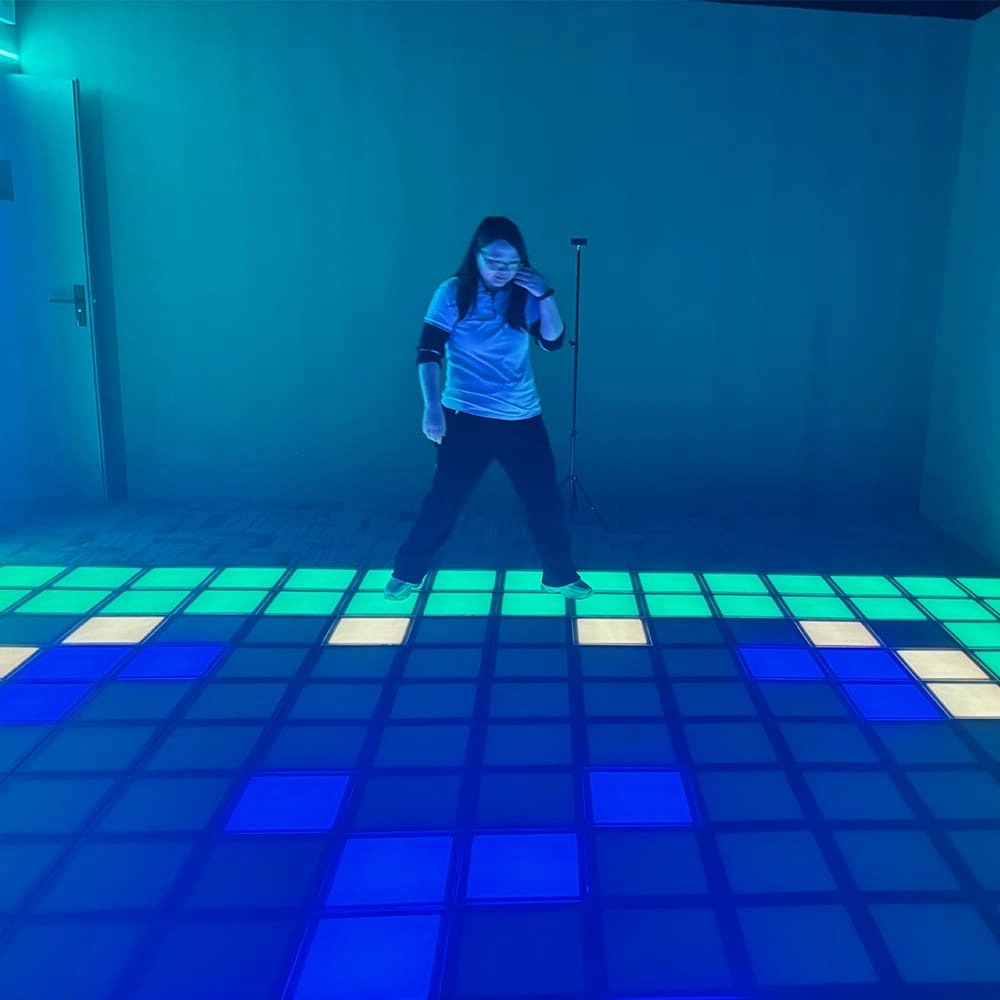
How to Set Up the Activate Grid Game – Floor is Lava Guide
For Company
Do you have management system and bracelet?
Yes, we support to sell the whole Activate game software, hardware, management system, Ranking, online tickets, scores…
How many places(country or city) already installed? Where are they?
Above 100 places in the whole world market:
Already installed in Saudi Arabic, New Zealand, Indonesia ,Malaysia, Singapore, Australia, United Kingdom, Netherlands ,France, India, Poland, Greece, Hungary etc in the world market; Shenzhen, Beijing, Zhengzhou,Taiwan etc in the Chinese market.
Can you make decoration design for buyer’s place?
We also can assist to make decoration that is for extra.
For Games Grid Floor is Lava
How to pack the LED tile grid?
3pcs/carton, 45cartons/panel.
For Led Floor for Dance Pixel Grid Room
How much size if we start the Megagrid floorislava?
One LED grid tile is 30*30cm, eg: room size 10*5m, which can match 32*16pcs,512pcs for total; Layout: customize the quantity and place it according to the actual venue.
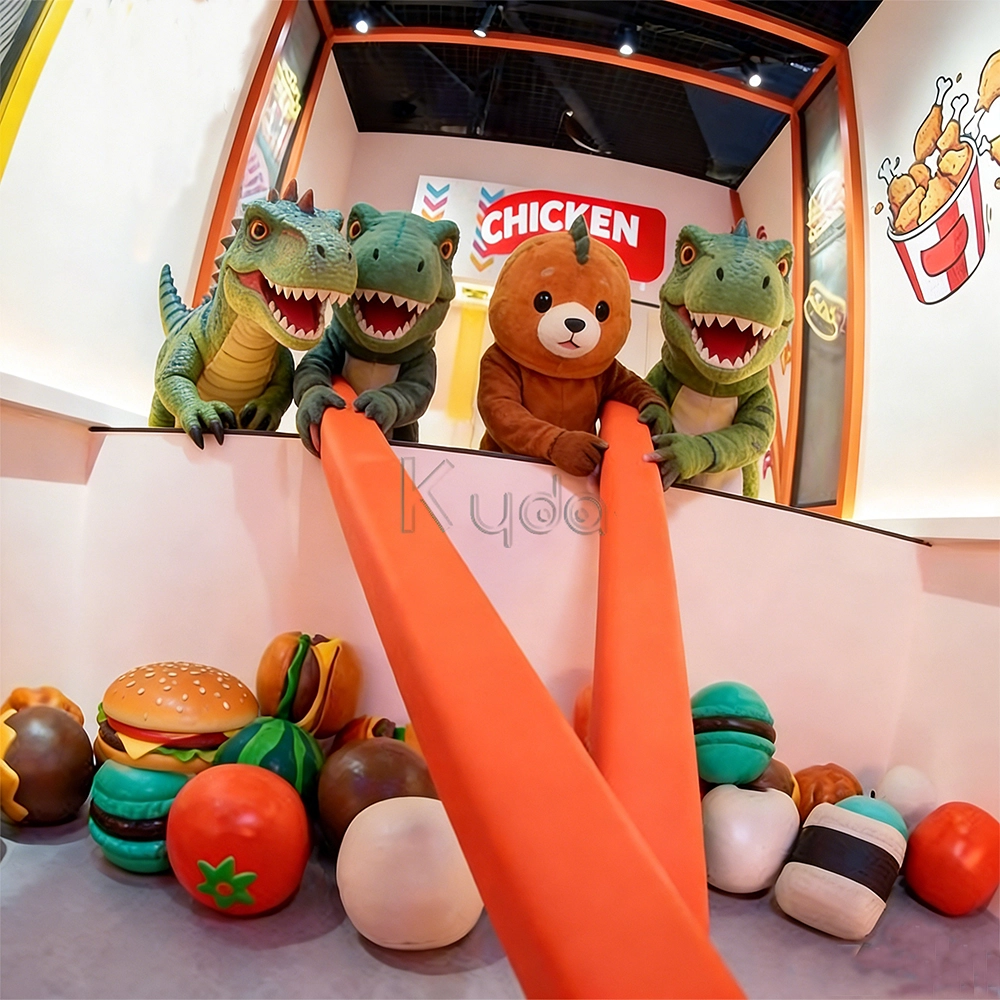
Crub Crab Giant Chopsticks Challenge Game Interactive Skill Challenge Game for Activate Game Rooms by Kyda
Crub Crab Giant Chopsticks Challenge Game is an innovative interactive challenge attraction designed for indoor entertainment centers, arcade game venues, and activate-style interactive game rooms. In this unique skill-based game, players control a pair of oversized giant chopsticks to pick up scattered snacks, toys, or prize items and place them into a collection basket within a limited time. The gameplay combines hand-eye coordination, precision control, balance, and quick reaction, creating a fun and competitive experience suitable for players of all ages.
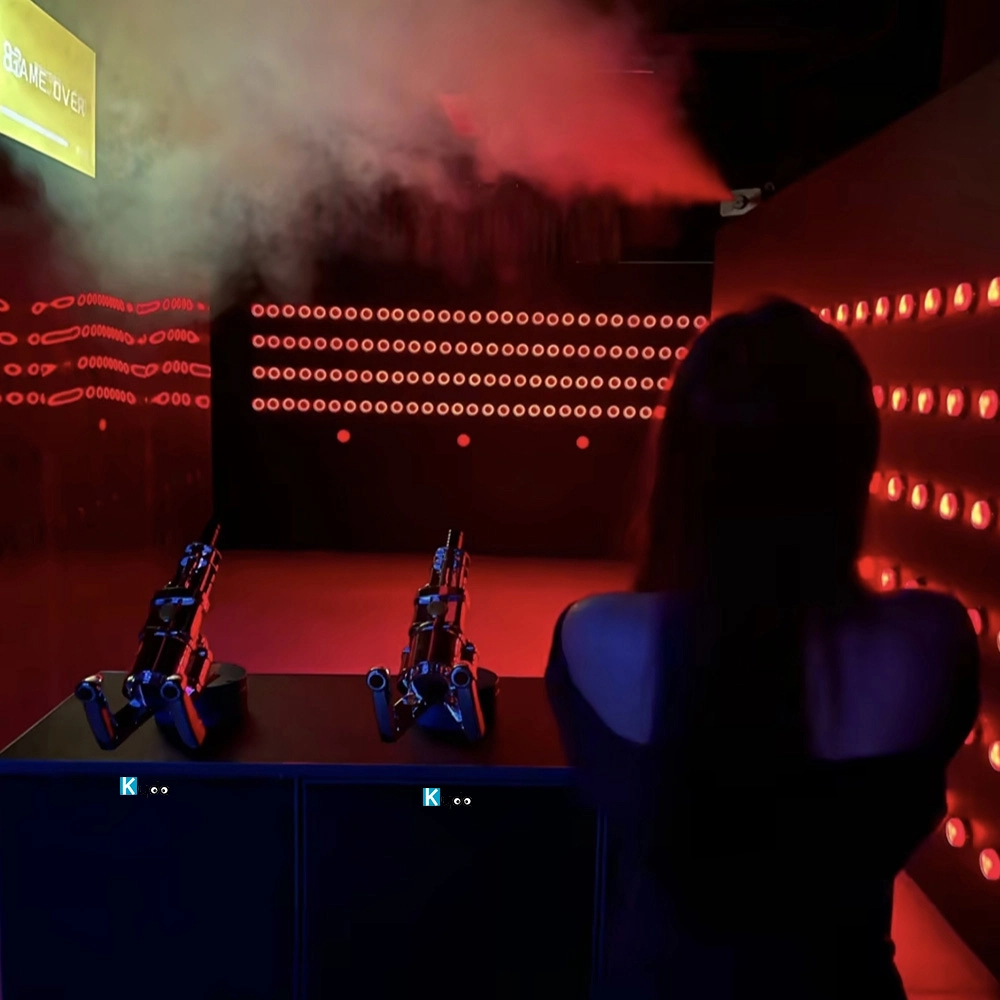
Active Reaction Laser Shooting Game Room
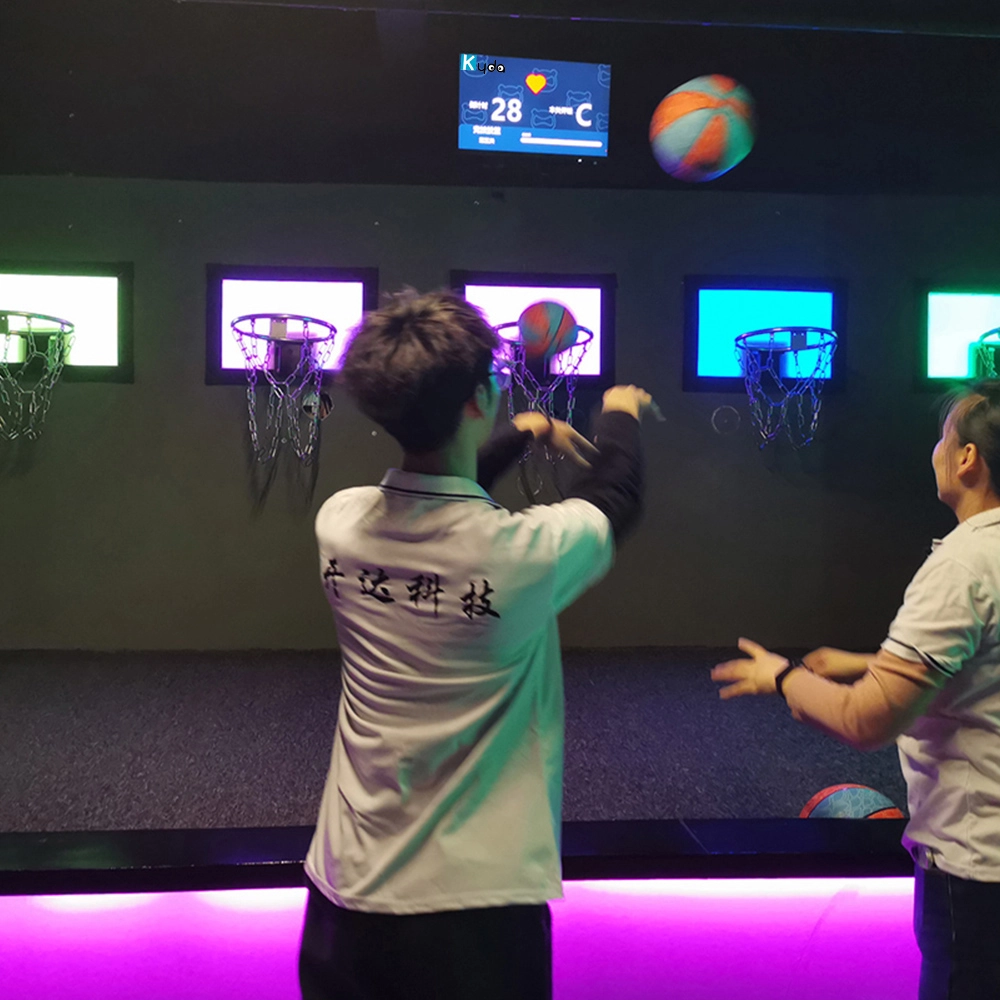
Hoops Active Game: The Ultimate Interactive Basketball Fitness Game
Elevate your basketball skills with Kyda’s Hoops Activate Game, the interactive basketball game. Perfect for basketball game rooms, Activate Hoops offers immersive fitness fun. Experience the Activate Basketball Game that combines sport and technology for active play.
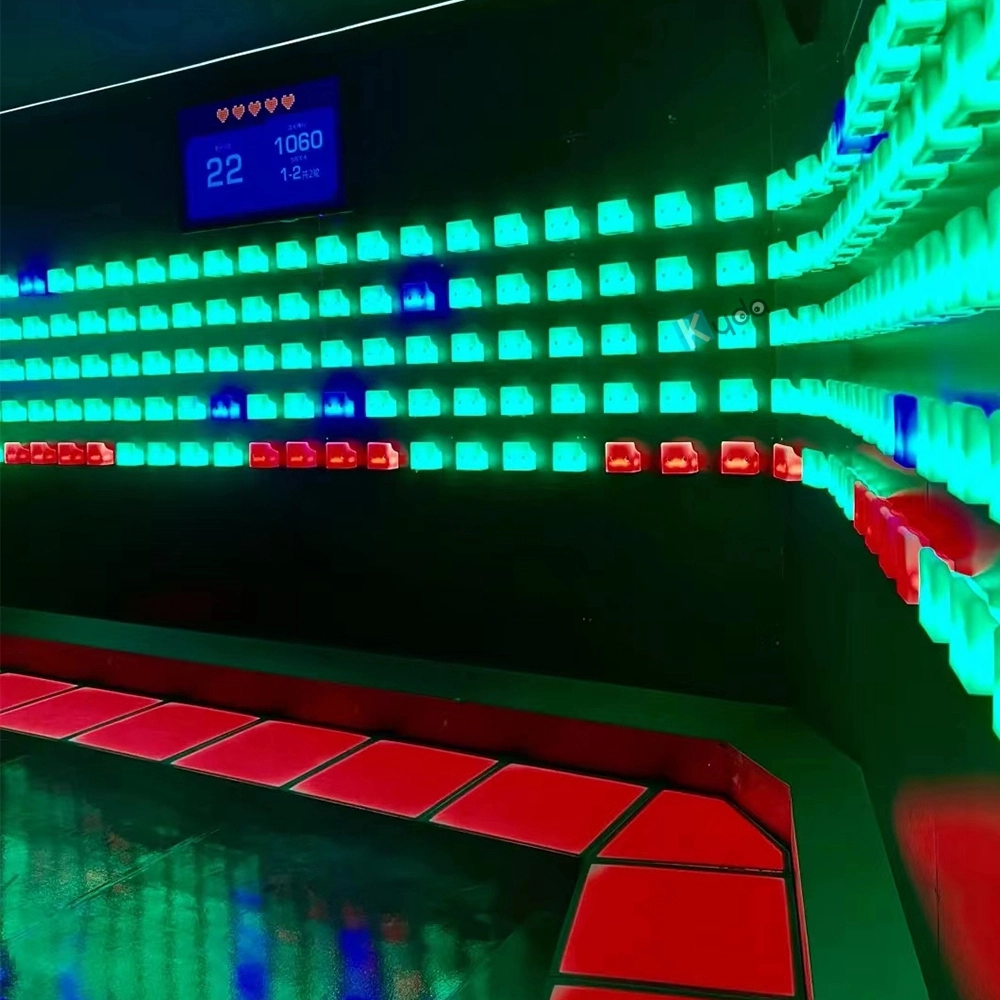
Activate Fitness Climb Game – The Ultimate Interactive LED Climbing Wall Experience
Experience the Activate Fitness Climb Game by Kyda—the interactive LED wall game. This Activate Climb Game combines fitness and fun with dynamic LED challenges, perfect for all ages. Boost agility and engagement with Kyda’s innovative interactive LED wall game today!
Let's get in touch
Email: sales@kydavr.com
Tel.: +86 188 2001 8779
Address: 501 Shixin Road, Dalong Street, Guangzhou, Guangdong, China.
© 2025 Kyda. All Rights Reserved.
 Scan QR Code
Linkedin
Ins
Facebook
Twitter
YouTube