




How to Choose the activate escape room manufacturer and supplier in us?
- How to Choose the Best Activate Escape Room Manufacturer and Supplier in the US
- Understand : What Readers Really Want
- Step 1 — Decide Between Local, Overseas Manufacturer, or Distributor
- Supplier Type Comparison
- Step 2 — Technical and Safety Certifications to Require
- Key Certifications and Standards
- Step 3 — Vet the Manufacturer: Checklist for Due Diligence
- Due Diligence Checklist
- Step 4 — Logistics, Shipping and Import Considerations
- Logistics Best Practices
- Step 5 — Contracts, Payment Terms, and Risk Management
- Recommended Contract Elements
- Step 6 — Installation, Training and After-Sales Support
- Support Expectations
- Step 7 — Cost vs. Value: How to Compare Quotes
- Sample TCO Considerations
- Why Kyda Can Be a Strong Option for US Operators
- Final Checklist Before You Sign
- Conclusion
How to Choose the Best Activate Escape Room Manufacturer and Supplier in the US
Choosing the right manufacturer and supplier for activate escape room equipment is one of the most important decisions you will make when launching or upgrading an interactive gaming center. The right partner delivers reliable hardware, engaging software, timely support, and predictable costs — all of which directly affect customer satisfaction and your return on investment. This guide helps US operators evaluate options, compare supplier types, check compliance, and negotiate terms so you can select a partner that fits your business goals.
Understand : What Readers Really Want
People searching How to choose the activate escape room manufacturer and supplier in US usually look for practical, actionable guidance: vendor comparison, compliance requirements for the US market, cost vs. quality tradeoffs, lead times and logistics, installation and support, and how to protect intellectual property and software licensing. This article responds to those needs with checklists, comparison tables, and real-world guidance operators can act on immediately.
Step 1 — Decide Between Local, Overseas Manufacturer, or Distributor
The first strategic decision is the supplier model. Each has pros and cons depending on budget, timeline, customization needs, and desired level of control.
Supplier Type Comparison
| Supplier Type | Pros | Cons | Typical Lead Time | Best When |
|---|---|---|---|---|
| Local US Manufacturer | Faster local support and installation, easier warranty enforcement, familiarity with US codes | Higher production cost, often limited customization options | 4–12 weeks | Prioritize speed, local compliance, or high-touch service |
| Overseas Manufacturer (e.g., China) | Lower unit costs, strong manufacturing ecosystems, easier custom builds at scale (Kyda model) | Longer lead times, import logistics, need for thorough quality control | 8–20 weeks (including shipping) | When you need custom, cost-efficient hardware and scalable production |
| Distributor / Reseller | Quick access to common products, single-vendor purchasing, local support contracts | Markup on price, limited customization, possible dependency on third-party manufacturers | 1–8 weeks | When speed to market and convenience trump customization |
Kyda provides an integrated overseas manufacturing model with deep partnerships across electronics, LED, metalwork and multimedia—an advantage for highly customized activate interactive games and themed escape rooms. But US operators should weigh tradeoffs and plan for compliance, shipping, and local support.
Step 2 — Technical and Safety Certifications to Require
US customers must ensure equipment meets applicable electrical and safety requirements. Ask manufacturers to provide test reports and certificates.
Key Certifications and Standards
- UL listing or recognized equivalent for electrical safety (or manufacturer test data demonstrating compliance with UL requirements).
- FCC equipment authorization for wireless/communication modules used in games that radiate RF energy.
- CE marking and RoHS compliance where relevant for electronics, especially if equipment may be used or displayed in Europe.
- ISO 9001 for quality management systems—useful indicator of consistent production and quality control.
- ASTM standards for amusement devices (consult ASTM F24 committee guidance for relevant safety practices).
Request copies of certificates and recent test reports before placing a deposit. If procurement goes through an overseas partner, verify authenticity by contacting the issuing labs or bodies.
Step 3 — Vet the Manufacturer: Checklist for Due Diligence
Thorough due diligence separates reliable manufacturers from risky ones. Use this checklist during RFP and evaluation stages.
Due Diligence Checklist
- Factory capability: photos, videos, or a live virtual factory tour showing assembly lines, welding, painting, and electronics work.
- Sample builds: request a fully functional sample (or video demo) of the specific game or a close analog.
- References: contact at least 3 existing US customers for installation, support, and warranty experiences.
- Quality control: ask for QC process documentation, 3rd-party inspection options, and pre-shipment inspection reports.
- Software ownership: clarify who owns source code, who can update content, and licensing terms for software and media assets.
- Spare parts: confirm BOM for wear parts, typical spares list, and lead times for replacements.
- Warranty & SLA: written warranty period, what it covers, response times (SLA) for remote issues and on-site repairs.
- IP protection: NDAs, IP clauses, and non-compete terms if you provide proprietary themes or game designs.
Step 4 — Logistics, Shipping and Import Considerations
If you source from overseas, plan for shipping costs, import duties, customs clearance, and local transport. Incoterms clarify who bears which costs and responsibilities.
Logistics Best Practices
- Agree on Incoterms (e.g., FOB, CIF, DDP). DDP (Delivered Duty Paid) is most convenient but usually more expensive; FOB places export responsibility on supplier until goods board the vessel.
- Factor in customs clearance time and inspection. Use a broker experienced in entertainment equipment imports to avoid delays.
- Insurance: insure in-transit goods for full value (All Risks) including inland transit at origin and destination.
- Pre-shipment inspections: hire 3rd-party inspection (IQC, FQC) to verify quantity, functionality and packaging before shipment.
Step 5 — Contracts, Payment Terms, and Risk Management
Clear contract terms prevent disputes. Negotiate payments to balance supplier cash flow needs with your protection.
Recommended Contract Elements
| Contract Element | Suggested Approach |
|---|---|
| Payment Terms | Staged payments: e.g., 30% deposit, 40% on factory acceptance, 30% on shipping or after successful FAT (Factory Acceptance Test). |
| Warranty | Minimum 12 months on electronics and 24 months on structural parts; include response times and on-site labor terms. |
| Acceptance Testing | Define FAT criteria, user acceptance testing (UAT) at delivery, and remediation timelines. |
| Penalties | Include liquidated damages for missed milestones if timeline is critical to your business launch. |
| IP and Software Licensing | Define source code access, content usage rights, and update/maintenance fees. |
Step 6 — Installation, Training and After-Sales Support
Ensure the supplier provides clear installation documentation, remote support, and optional on-site commissioning. Training for your operations and technical staff is critical for fast problem resolution and fewer service calls.
Support Expectations
- Remote diagnostics and software patch distribution process.
- On-site commissioning and staff training included in initial scope or available as paid service.
- Spare parts kits shipped with initial equipment and stocked in the US or regionally to reduce downtime.
- Subscription options for content updates and cloud services, if applicable.
Step 7 — Cost vs. Value: How to Compare Quotes
Price per unit is important, but total cost of ownership (TCO) better predicts long-term value. Consider design quality, durability, software licensing, update costs, shipping, customs duties, expected lifecycle, and downtime costs.
Sample TCO Considerations
- Initial purchase price.
- Shipping, insurance, customs duties, and local delivery.
- Installation and training fees.
- Annual maintenance or subscription fees for software/content.
- Average expected life (years) and likely refurbishment cost.
Below is a simple illustrative ROI example (hypothetical numbers for modeling only):
| Item | Value (Example) |
|---|---|
| Equipment & Installation | $30,000 |
| Annual Maintenance & Updates | $3,600 |
| Average Ticket Price | $28 |
| Average Group Size | 4 players |
| Gross Revenue per Game | $112 |
| Break-even Games Needed (Year 1) | ~357 games (assuming no other costs) |
Note: The above is an illustrative model. For your business, plug in real local operating costs, marketing spend, and occupancy rates to forecast ROI.
Why Kyda Can Be a Strong Option for US Operators
Kyda is a one-stop solution provider focused on active interactive game rooms and Activate gaming centers. Key strengths include:
- Full-stack capability: electronic design, software, game design, 3D printing, metalwork, LED systems and interior planning.
- Manufacturing network across Guangzhou, Zhongshan, Zhengzhou and Beijing, enabling complex custom projects with local supply-chain advantages.
- Products covering active interactive games, interactive LED floors, active reaction games, brain challenge and horror escape games, fitness games and projection-based games — useful for diverse center concepts.
- Commitment to customization: local partners and factory ecosystem allow tailored builds for US market needs.
If you require highly themed, custom interactive experiences with predictable unit costs at scale, Kyda’s integrated model is well-suited — provided you plan for logistics, acceptance testing and post-delivery support.
Final Checklist Before You Sign
- Obtain and verify safety and EMC test reports and certifications.
- Secure clear warranty and SLA language in the contract.
- Agree on FAT/UAT acceptance criteria and remediation timelines.
- Confirm spare parts list and stocking/lead times.
- Validate software licensing and IP rights for themes and content.
- Plan for shipping, customs and insurance (agree on Incoterm).
- Request references and, if possible, visit a site with the same equipment in operation.
Conclusion
Choosing the right activate escape room manufacturer or supplier for the US market requires balancing cost, customization, support, and compliance. Local suppliers can reduce risk and simplify logistics, while experienced overseas manufacturers such as Kyda offer cost-effective customization and production scale. Use the checklists and contract guidance above to mitigate risk: verify certifications, insist on FAT/UAT, secure clear SLAs and warranties, and plan logistics and spare-part availability. With careful vendor selection and a well-structured contract, you’ll bring reliably entertaining, safe, and profitable escape room experiences to your customers.
Frequently Asked Questions
Q: What certifications should I require from an overseas manufacturer?A: Request UL-equivalent electrical safety reports, FCC authorization for RF modules, RoHS / CE documentation for electronics when relevant, ISO 9001 for production quality, and any amusement-specific safety guidance such as ASTM committee recommendations. Verify certificates with issuing bodies.
Q: How long does shipping and installation usually take for custom escape room equipment?A: Typical total lead time for overseas custom builds is 8–20 weeks including production and sea freight. Add 1–3 weeks for customs clearance and local installation depending on complexity and scheduling.
Q: Can I negotiate software source code access?A: Yes. Negotiate clear IP and licensing terms. Options include perpetual license, escrowed source code, or an annual support/update agreement. Be explicit about ownership or exclusivity for custom content.
Q: What payment terms are standard?A: Common terms are staged payments—e.g., 30% deposit, 40% after factory acceptance, 30% on shipment or after successful on-site acceptance. Use letters of credit if you need additional protection.
Q: How can I minimize downtime if a machine fails?A: Stock critical spare parts locally, secure remote diagnostic capabilities, and negotiate short SLA response times for on-site repairs. Consider training a local technician during installation.
References:
- European Commission — CE marking (accessed 2025-12-17): https://ec.europa.eu/growth/single-market/ce-marking_en
- European Commission — RoHS Directive (accessed 2025-12-17): https://ec.europa.eu/environment/waste/rohs_eee/index_en.htm
- Federal Communications Commission (FCC) — Equipment Authorization (accessed 2025-12-17): https://www.fcc.gov/general/equipment-authorization
- International Chamber of Commerce — Incoterms (accessed 2025-12-17): https://iccwbo.org/resources-for-business/incoterms-rules/
- ISO — ISO 9001 Quality Management (accessed 2025-12-17): https://www.iso.org/iso-9001-quality-management.
- ASTM International — Committee F24 on Amusement Rides and Devices (accessed 2025-12-17): https://www.astm.org/COMMITTEE/F24.htm
- U.S. International Trade Administration — Import assistance and guidance (accessed 2025-12-17): https://www.trade.gov/
About Kyda: Kyda is a one-stop solution provider of active game rooms and Activate gaming centers, offering custom research, development, production and sales of interactive recreational products and indoor/outdoor amusement equipment. Kyda’s multidisciplinary team and manufacturing partnerships support customized projects for varied local needs.
Is Investing in a Light Floor Game Worth It? Key Insights for Arcade Owners
Measuring Reaction Time: Tools and Best Practices
What is an Activation Game? A Beginner's Guide
Why Interactive Wall Projection Games Are a Must-Have for Modern Entertainment Spaces
For Company
What is your advantage?
1)We have CE certification, Software copyright, Patent;
2) We already assistant our customer open more than 100places activate shop in the world, we know what is the important, how to meet different country’s requirements, personal customize game , software, hardware;
3)We already developed above 50 different game room, and will update more;
4)We have our own management system, Online booking ticket system(online payment support), Ranking system , Score system, DIY website.
How much need invest?
Normally can choose one Grid game only or different rooms.
Please contact with Kydaplay sales manager to get the exact cost.
How large room space need every game room?
Normally 10-50 square meters, also can customize as space room.
For Games Grid Floor is Lava
How to pack the LED tile grid?
3pcs/carton, 45cartons/panel.
For Led Floor for Dance Pixel Grid Room
How much size if we start the Megagrid floorislava?
One LED grid tile is 30*30cm, eg: room size 10*5m, which can match 32*16pcs,512pcs for total; Layout: customize the quantity and place it according to the actual venue.
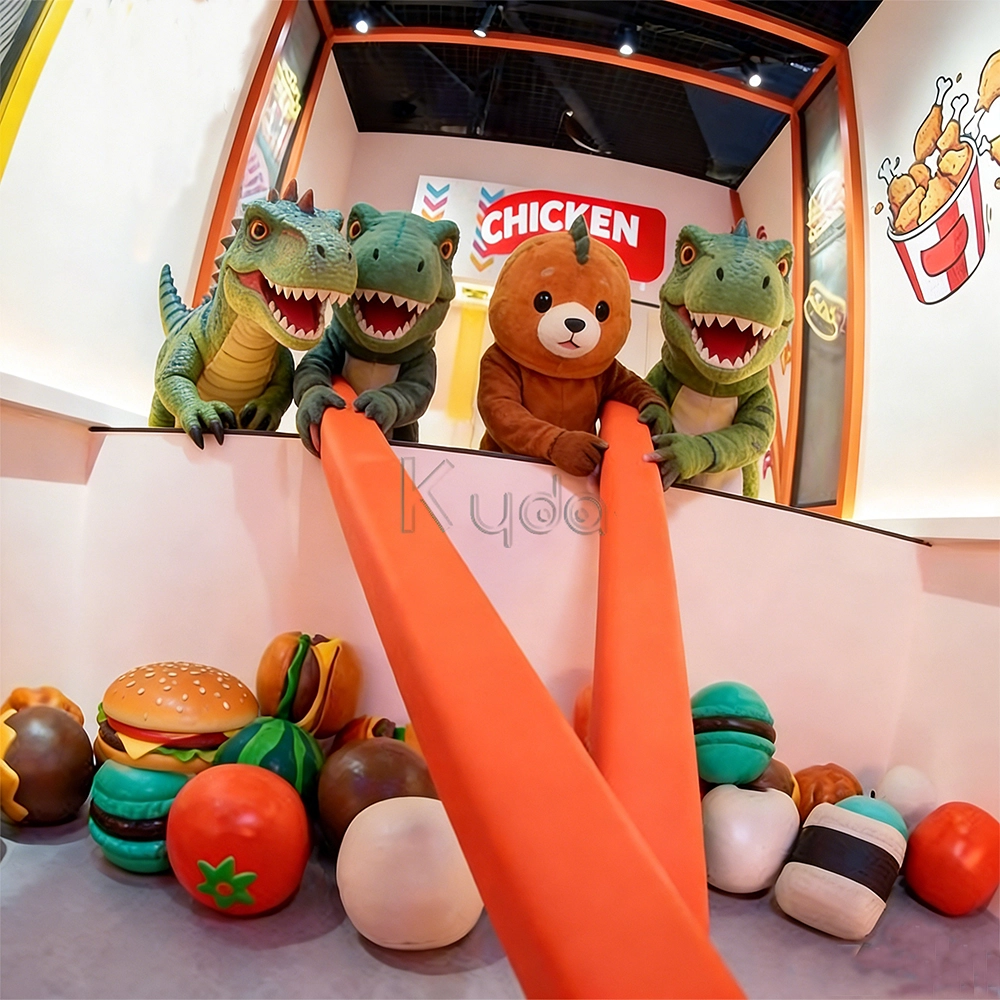
Crub Crab Giant Chopsticks Challenge Game Interactive Skill Challenge Game for Activate Game Rooms by Kyda
Crub Crab Giant Chopsticks Challenge Game is an innovative interactive challenge attraction designed for indoor entertainment centers, arcade game venues, and activate-style interactive game rooms. In this unique skill-based game, players control a pair of oversized giant chopsticks to pick up scattered snacks, toys, or prize items and place them into a collection basket within a limited time. The gameplay combines hand-eye coordination, precision control, balance, and quick reaction, creating a fun and competitive experience suitable for players of all ages.
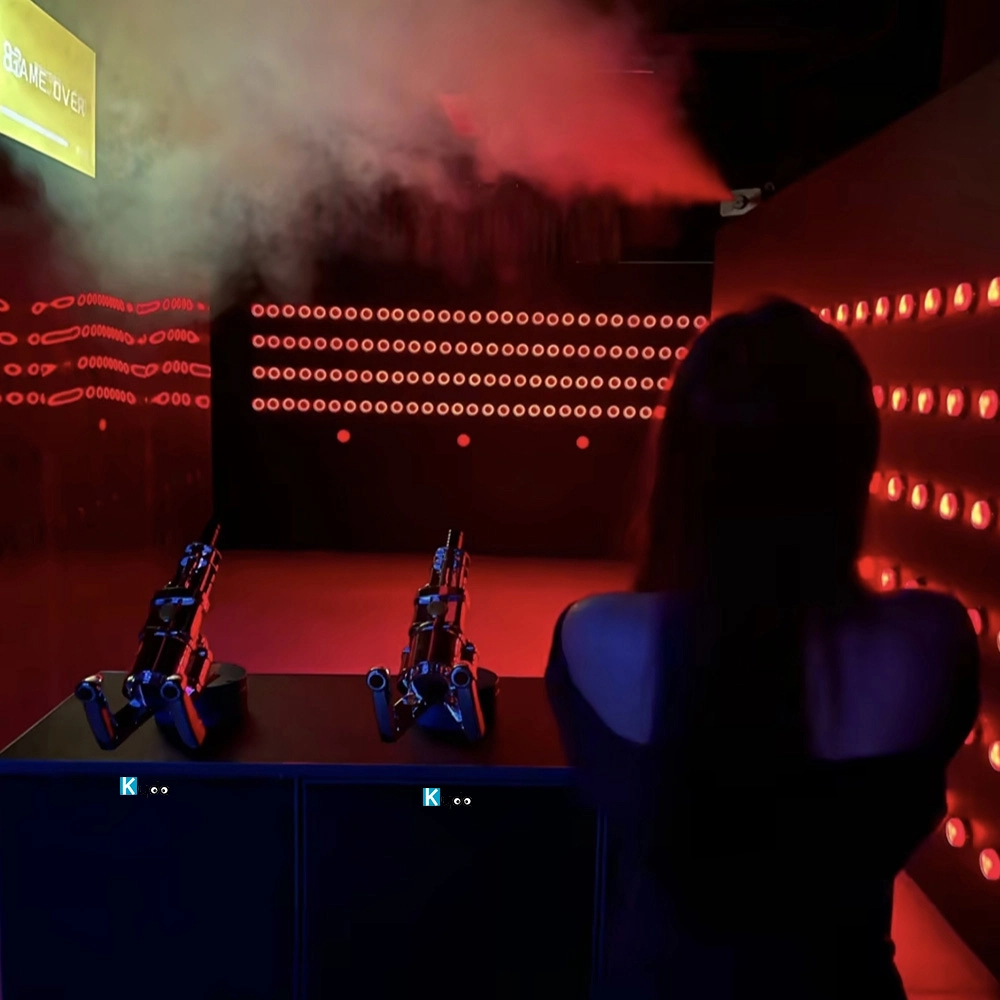
Active Reaction Laser Shooting Game Room
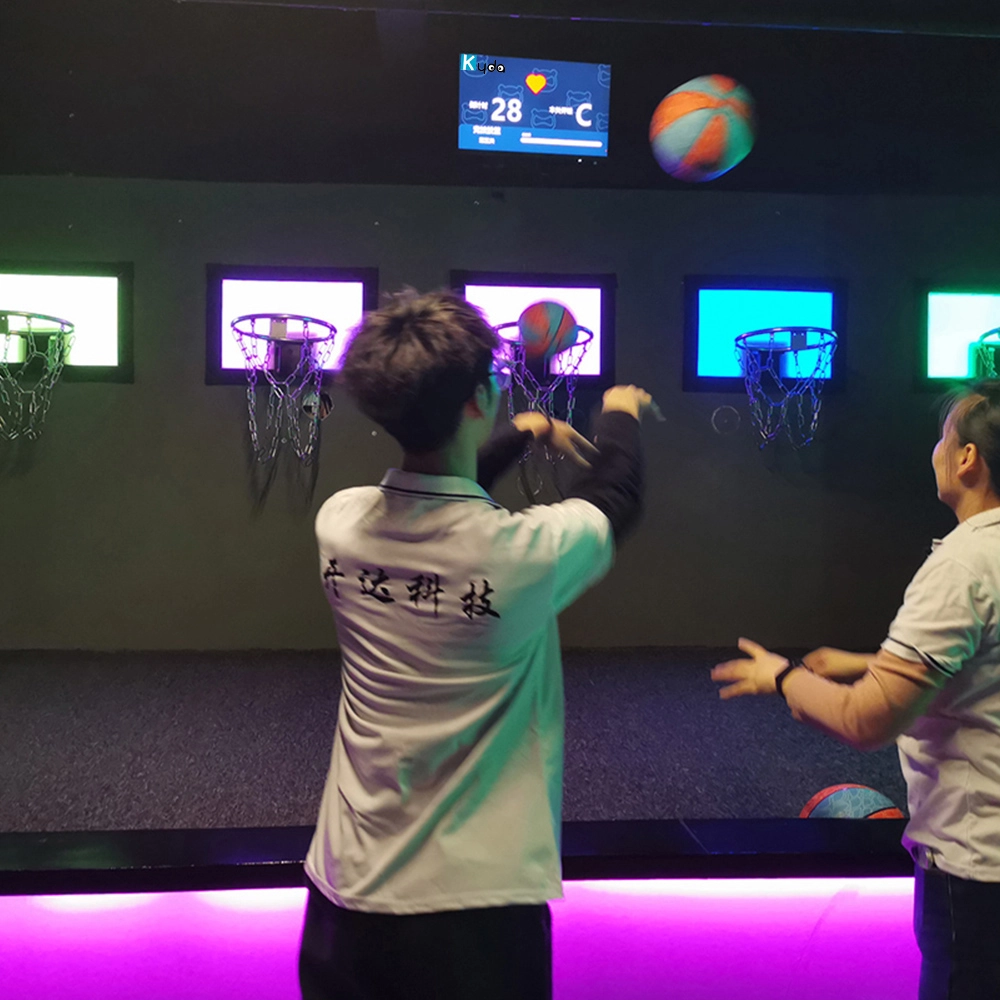
Hoops Active Game: The Ultimate Interactive Basketball Fitness Game
Elevate your basketball skills with Kyda’s Hoops Activate Game, the interactive basketball game. Perfect for basketball game rooms, Activate Hoops offers immersive fitness fun. Experience the Activate Basketball Game that combines sport and technology for active play.
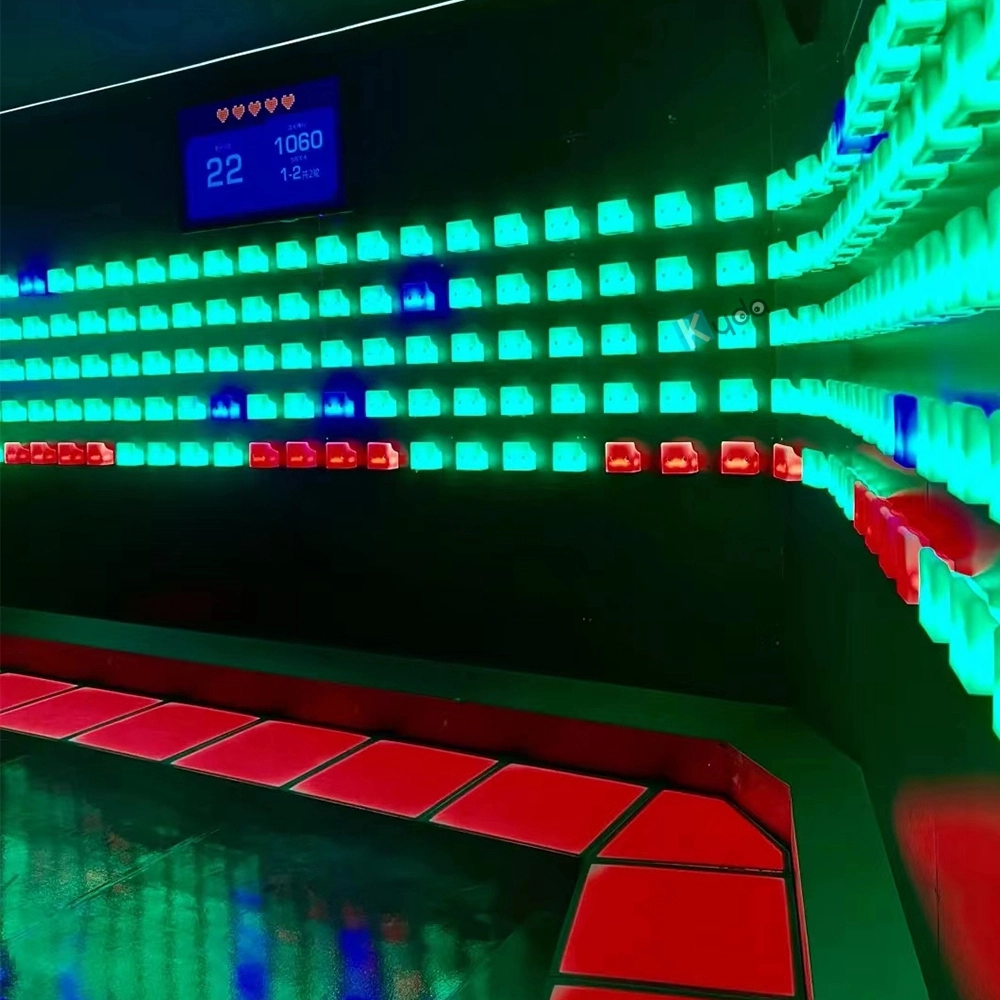
Activate Fitness Climb Game – The Ultimate Interactive LED Climbing Wall Experience
Experience the Activate Fitness Climb Game by Kyda—the interactive LED wall game. This Activate Climb Game combines fitness and fun with dynamic LED challenges, perfect for all ages. Boost agility and engagement with Kyda’s innovative interactive LED wall game today!
Let's get in touch
Email: sales@kydavr.com
Tel.: +86 188 2001 8779
Address: 501 Shixin Road, Dalong Street, Guangzhou, Guangdong, China.
© 2025 Kyda. All Rights Reserved.
 Scan QR Code
Linkedin
Ins
Facebook
Twitter
YouTube