




How to Source High-Quality Activate Games Globally
- Global Sourcing Strategies for Interactive Amusement
- Understand Your Requirements: What “activate games” mean for your business
- Build a supplier scorecard for activate games procurement
- Where to Source: Comparing global manufacturing hubs for activate games
- Quality assurance, certifications and safety for activate games
- Software, content licensing and localization for activate games
- Negotiation, contracts and IP protection when sourcing activate games
- Logistics, installation and after-sales support for activate games
- Why choose Kyda to turn sourced activate games into successful centers
- Kyda’s competitive advantages for sourcing and deployment of activate games
- Implementation checklist: from RFP to opening your activate games center
- Frequently Asked Questions (FAQ)
- 1. What exactly are activate games and where are they used?
- 2. How much should I budget for a single activate game installation?
- 3. How do I manage IP and licensing when sourcing games from overseas vendors?
- 4. What certifications should I ask for when importing activate games?
- 5. How long does it typically take from order to opening a game room?
- 6. Can I customize games for local markets (languages, content, difficulty)?
- 7. What are the common causes of delays or cost overruns when sourcing activate games?
- References and further reading
Global Sourcing Strategies for Interactive Amusement
Activate games — interactive, movement-driven entertainment systems used in active game rooms, family entertainment centers, schools and commercial venues — are a fast-growing niche that blends hardware, software, content and space design. Sourcing the right products and partners globally requires a clear technical brief, robust supplier evaluation, an eye for certifications and safety, and post-sale support planning. This article gives a step-by-step blueprint to source high-quality activate games worldwide, with practical checklists, a regional comparison table, and supplier considerations you can act on immediately.
Understand Your Requirements: What “activate games” mean for your business
Before you start contacting vendors, document the use cases and constraints for the activate games you plan to deploy:
- Target audience: Kids, teens, adults, seniors — influences durability, complexity and UI design.
- Location: Indoor/outdoor, climate, foot traffic and local safety codes.
- Space & infrastructure: Floor loads, ceiling height, electrical capacity, network connectivity.
- Business model: Pay-per-play, timed sessions, membership, event hire.
- Integration needs: POS, CRM, analytics, multi-player networking.
- Budget & ROI expectations: Capex, ongoing maintenance and projected revenues.
Use this briefing as the foundation of any RFP (Request for Proposal) or supplier questionnaire. A clear spec reduces iterations and avoids expensive surprises during prototyping or installation.
Build a supplier scorecard for activate games procurement
Create a measurable supplier scorecard aligned to your priorities. Typical criteria include:
- Product quality: Materials, IP/proprietary tech, reliability testing results.
- Technical capability: Electronics, software, sensing systems (IR, pressure, optical), and content flexibility.
- Certifications & compliance: CE, RoHS, FCC or local equivalents for electrical and EMC safety.
- Manufacturing & delivery: Lead times, MOQ, capacity and contingency plans.
- Service & warranty: Spare parts availability, on-site installation, remote diagnostics.
- Commercial terms: Price, payment terms, minimum order, exclusivity, and licensing fees.
- References & case studies: Existing installations, especially in similar climates or business models.
Score each vendor numerically and weight by importance. Use the scorecard to shortlist 2–4 vendors for prototyping.
Where to Source: Comparing global manufacturing hubs for activate games
Different regions offer distinct advantages. Below is a practical comparison to guide sourcing decisions; qualitative assessments are shown to help prioritize trade-offs between cost, speed, and IP risk.
| Region | Manufacturing & Component Access | Typical Cost Level | Lead Time | IP & Quality Risk | Good For |
|---|---|---|---|---|---|
| South China (Guangzhou, Zhongshan) | Excellent access to sheet metal, LEDs, plastics, electronics and assembly partners | Low–Medium | Medium (4–12 wks typical) | Medium — manage via contracts and audits | Cost-sensitive, customizable builds, rapid prototyping |
| Central China (Zhengzhou) | Strong electronics assembly & volume production | Low | Medium to long (depends on capacity) | Medium | High-volume runs, standardized modules |
| Beijing & NE China | R&D, software and high-tech integration firms | Medium–High | Short–Medium (good for prototypes) | Lower (strong IP infrastructure in R&D firms) | Complex systems, custom electronics, software-heavy projects |
| Europe | High-quality manufacturing, strong certifications | High | Short–Medium | Low (better IP protection) | High Quality products, strict safety/cert demands |
| United States | Integration, certification labs, logistics hubs | High | Short (for local vendors) | Low | Local support, regulated markets, branded partnerships |
Source selection often ends up hybrid: hardware and LED components from low-cost Chinese supply chains, software and creative IP from regional studios, and local partners for installation and maintenance.
Quality assurance, certifications and safety for activate games
Safety and compliance cannot be an afterthought. Required certifications vary by market:
- European Union: CE marking (electrical safety, EMC), RoHS for hazardous substances.
- United States: FCC (electromagnetic compatibility) and UL listings for electrical equipment in many venues.
- Local building and fire codes: Anchor points, emergency exits and occupant load calculations for enclosed game rooms.
Practical QA steps:
- Demand third-party test reports for electrical safety and EMC.
- Request material safety data sheets (MSDS) for plastics, paints and foam.
- Run accelerated life and environmental (temperature/humidity) tests for electronics and LED modules.
- Insist on clear on-site installation and operation manuals and staff training.
Include acceptance criteria in contracts (e.g., failure rate thresholds, MTBF targets, repair SLA times).
Software, content licensing and localization for activate games
Activate games combine hardware with software and content. Overlooking software licensing can lead to legal and operational headaches:
- Source code vs. Licence: Determine whether you need source access or a runtime license. Owning source accelerates customization but raises cost.
- Content rights: Get written rights for images, music and third-party content, and budget for renewals.
- Localization: UI language, cultural adaptation of games and measurement units must be included in the scope.
- Updates & security: Define a schedule and mechanism for software updates, and responsibility for cybersecurity vulnerabilities.
Negotiation, contracts and IP protection when sourcing activate games
Protect your business with clear commercial and legal terms:
- IP assignment & licensing: Specify who owns custom game mechanics, art assets and software modules. Use NDAs early.
- Warranty & spare parts: Minimum 12–24 months warranty for electronics and moving parts is standard; specify parts lead times.
- Acceptance tests: Define on-site tests and criteria. Only release final payment after acceptance.
- Penalties & remedies: Include liquidated damages for missed key milestones and clear dispute resolution mechanisms.
- Audit rights: Reserve the right to audit supplier quality systems and sub-tier manufacturing partners.
Logistics, installation and after-sales support for activate games
Plan logistics and operations to reduce downtime and protect ROI:
- Freight planning: Consider DDP (Delivered Duty Paid) for simplicity or FOB for cost control. Account for customs and certifications documentation.
- Installation partners: Use trained installers or supplier-certified local installers to ensure warranty validity.
- Spare parts inventory: Stock critical spare parts locally; ask suppliers for parts kit and pricing.
- Remote monitoring: Choose systems with telemetry for predictive maintenance (uptime directly affects revenue).
- Training & manuals: Include operator and technical training in contracts with refresher schedules.
Why choose Kyda to turn sourced activate games into successful centers
Kyda is a one-stop solution provider of active game rooms and Activate gaming centers dedicated to the custom research, development, production, and sales of interactive and educational recreational products, as well as indoor and outdoor amusement equipment and low-cost, high-income, high-return equipment. Kyda's main products include activate interactive games, interactive LED floor systems, active reaction games, brain challenge games, horror escape games, active fitness games, and interactive projection games, as well as various thrilling indoor and outdoor amusement equipment.
Kyda’s competitive advantages for sourcing and deployment of activate games
- Cross-disciplinary team: Experts in electronic design, software programming, game design, animation, product design, multimedia and interior design. This reduces coordination overhead between hardware and content.
- Manufacturing network: Leveraging manufacturing strengths in Guangzhou, Zhongshan, Zhengzhou and Beijing plus long-term partners (LED factories, sheet metal, 3D printing and electronic assembly) enables rapid customization and cost-efficient production.
- Custom projects: Kyda can produce fully customized projects or products to meet local needs, mixing off-the-shelf modules and bespoke elements to control cost and reduce lead time.
- Product lineup: Kyda’s key offerings include interactive projection games, activate interactive games, interactive LED floor, interactive LED wall and laser interactive game — covering the hardware, software and content pipeline.
- Local adaptation & service: Kyda supports localization, installation and after-sales support tuned to local markets — essential for uptime and customer satisfaction.
- Vision & scale: Kyda aims to be the world’s leading active game room manufacturer, combining technological evolution with design and execution capabilities to meet personalized customization needs.
For operators looking to source high-quality activate games with minimal friction, Kyda offers a practical pathway: rapid prototyping in Beijing R&D teams, volume production via southern China hubs, and coordinated installation and support locally or internationally.
Implementation checklist: from RFP to opening your activate games center
- Write a detailed RFP with technical, safety and commercial requirements.
- Pre-qualify vendors using your supplier scorecard and request references and case studies.
- Shortlist for prototyping: sign NDAs and agree on IP/licensing terms.
- Run FAT (Factory Acceptance Test) and environmental stress tests.
- Finalize contract with clear acceptance criteria, warranty and spare parts terms.
- Plan logistics (DDP/FOB), local installation partners and training schedules.
- Install, run SAT (Site Acceptance Test), and soft-open with operational KPIs tracked (uptime, throughput, average spend).
- Implement telemetry and a parts replenishment plan to maintain ROI.
Frequently Asked Questions (FAQ)
1. What exactly are activate games and where are they used?
Activate games are interactive attractions that encourage physical movement and engagement — examples include interactive LED floors, projection games, reactive target systems and fitness-based challenges. They are used in family entertainment centers, arcades, shopping malls, schools, museums and dedicated active game rooms.
2. How much should I budget for a single activate game installation?
Costs vary widely depending on complexity. Simple interactive floor modules or projection stations can start in the low thousands (USD) while integrated multi-player rooms with custom cabinetry, content and safety systems can cost tens to hundreds of thousands. Always budget for spares, installation and software licensing on top of hardware cost.
3. How do I manage IP and licensing when sourcing games from overseas vendors?
Use NDAs, clearly defined IP clauses in contracts, and specify ownership or licensing rights for software and content. Consider paying for source access if you need deep customization. Include audit rights and escrow arrangements for critical software if feasible.
4. What certifications should I ask for when importing activate games?
Request CE and RoHS documentation for EU markets, FCC/UL for the US, and local electrical or fire approvals. Also ask for third-party EMC and electrical safety test reports, and MSDS for materials.
5. How long does it typically take from order to opening a game room?
For modular standard systems: 8–16 weeks (including production, shipping and installation). For fully customized rooms with content development: 16–40+ weeks, depending on complexity and approvals.
6. Can I customize games for local markets (languages, content, difficulty)?
Yes — plan for localization in the RFP, request content management tools or source code access, and budget for translation and cultural adaptation. Kyda and similar providers support content localization as part of their service offerings.
7. What are the common causes of delays or cost overruns when sourcing activate games?
Common causes include unclear specifications, late design changes, overlooked certifications, long lead times for specialized components (LED modules, custom PCBs), and inadequate on-site infrastructure (power, network). Clear planning and supplier coordination mitigate these risks.
If you have specific venue plans, budget ranges or timelines, contact us to review your RFP and supplier shortlist — we can provide a tailored sourcing and implementation plan.
Contact / See products: For consultations, custom quotes and product demos of activate interactive games, interactive projection games, interactive LED floor & wall systems, and laser interactive games, contact Kyda’s sales and solutions team to discuss site surveys, prototyping and turnkey deployment.
References and further reading
- Newzoo — Global Games Market Report 2023. https://newzoo.com/insights/trend-reports/newzoo-global-games-market-report-2023 (accessed 2025-12-11)
- European Commission — CE Marking. https://ec.europa.eu/growth/single-market/ce-marking/ (accessed 2025-12-11)
- European Commission — RoHS. https://ec.europa.eu/environment/waste/rohs_eee/index_en.htm (accessed 2025-12-11)
- FCC — Equipment Authorization. https://www.fcc.gov/engineering-technology/laboratory-division/general/equipment-authorization (accessed 2025-12-11)
- Guangzhou — Wikipedia. https://en.wikipedia.org/wiki/Guangzhou (accessed 2025-12-11)
- Zhongshan — Wikipedia. https://en.wikipedia.org/wiki/Zhongshan (accessed 2025-12-11)
- Zhengzhou — Wikipedia. https://en.wikipedia.org/wiki/Zhengzhou (accessed 2025-12-11)
- Beijing — Wikipedia. https://en.wikipedia.org/wiki/Beijing (accessed 2025-12-11)
- Projection mapping — Wikipedia (overview of projection technologies applicable to interactive projection games). https://en.wikipedia.org/wiki/Projection_mapping (accessed 2025-12-11)
Notes: Industry and market numbers change rapidly. For detailed market sizing or investment analysis for a specific country or venue type, request the latest reports from Newzoo, Statista or local market research firms and consult your legal advisor for market-specific compliance requirements.
Top activate game room Manufacturers and Suppliers
Best active game for childrens manufacturers and supplier brands in us
Interactive Projection Mapping vs Wall Projection Games Explained
Best activity escape room manufacturers and supplier brands in us
For Company
How many activate game rooms Kydaplay make?
Till now, 50game rooms, still updating new….
Grid, Mega grid, Climb, ARENA ,Control ,HIDE ,Push, Pipes, Laser shooting, Hoops, Cylinder, Octopus,Strike,Flash, Cannon, KNOCK OUT, Lightning, 7 Blocks, GOLDEN GAME BRIDGE, RESTRICTED, BOMB Football, Rotating targets, Angry Bird, GENIUS, Lava Monster, Super Adventure …..
Do you have management system and bracelet?
Yes, we support to sell the whole Activate game software, hardware, management system, Ranking, online tickets, scores…
How large room space need every game room?
Normally 10-50 square meters, also can customize as space room.
For Games Grid Floor is Lava
How much size if we start the grid floor is lava?
One LED grid tile is 30*30cm,
Eg: room size 5*5m, which can match 16*16pcs,256pcs for total,
Layout: customize the quantity and place it according to the actual venue.
For Led Floor for Dance Pixel Grid Room
What is the difference of Grid and Mega Grid, Pixel Grid?
Grid just interactive floor game, smaller room size can start, Add the wall LED tile call Pixel Grid;
Mega Grid add 20pcs Digital screen with 20pcs wall buttons , also need suggest bigger room size, more activate interesting games than Grid, add the wall LED tile call Pixel Grid;
Kyda accept personal customization as requirements; Grid, Mega Grid, Pixel Grid, Floorislava, Arena game, Active LED floor game, Interactive floor LED game etc that different name in different place.
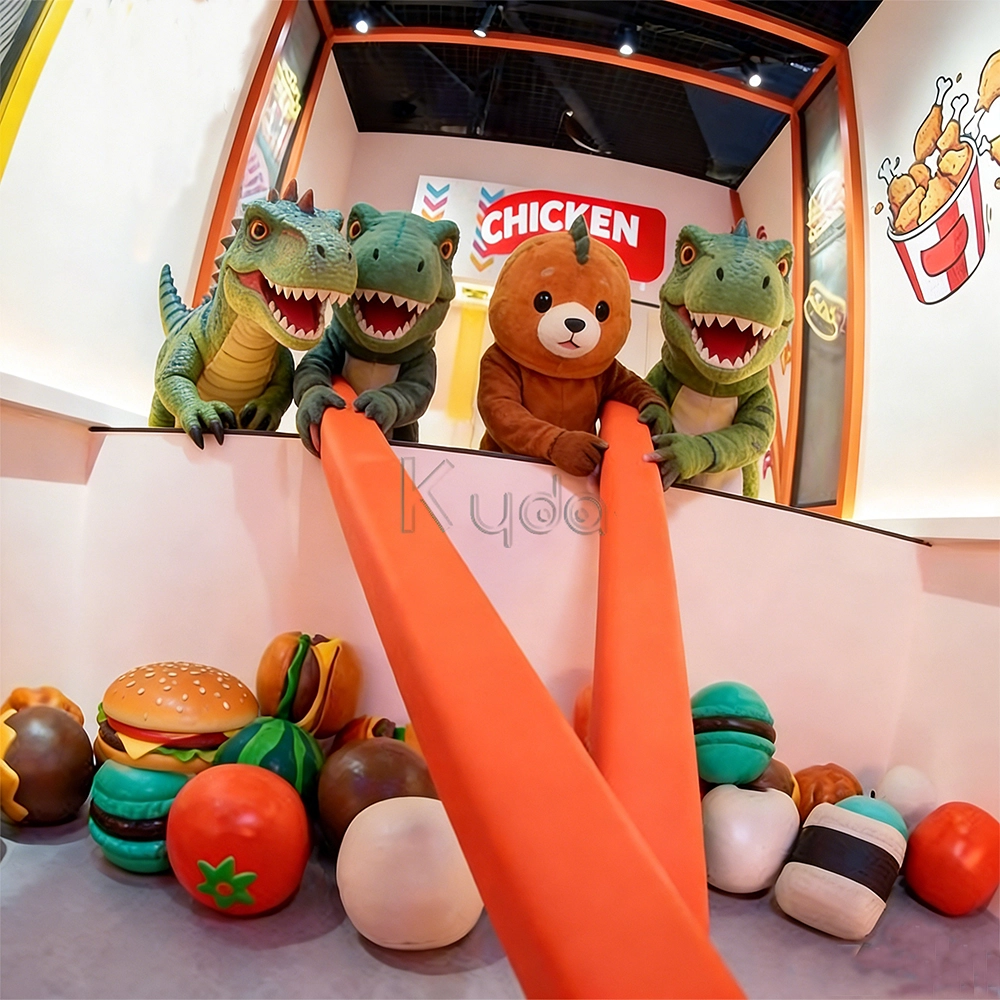
Crub Crab Giant Chopsticks Challenge Game Interactive Skill Challenge Game for Activate Game Rooms by Kyda
Crub Crab Giant Chopsticks Challenge Game is an innovative interactive challenge attraction designed for indoor entertainment centers, arcade game venues, and activate-style interactive game rooms. In this unique skill-based game, players control a pair of oversized giant chopsticks to pick up scattered snacks, toys, or prize items and place them into a collection basket within a limited time. The gameplay combines hand-eye coordination, precision control, balance, and quick reaction, creating a fun and competitive experience suitable for players of all ages.
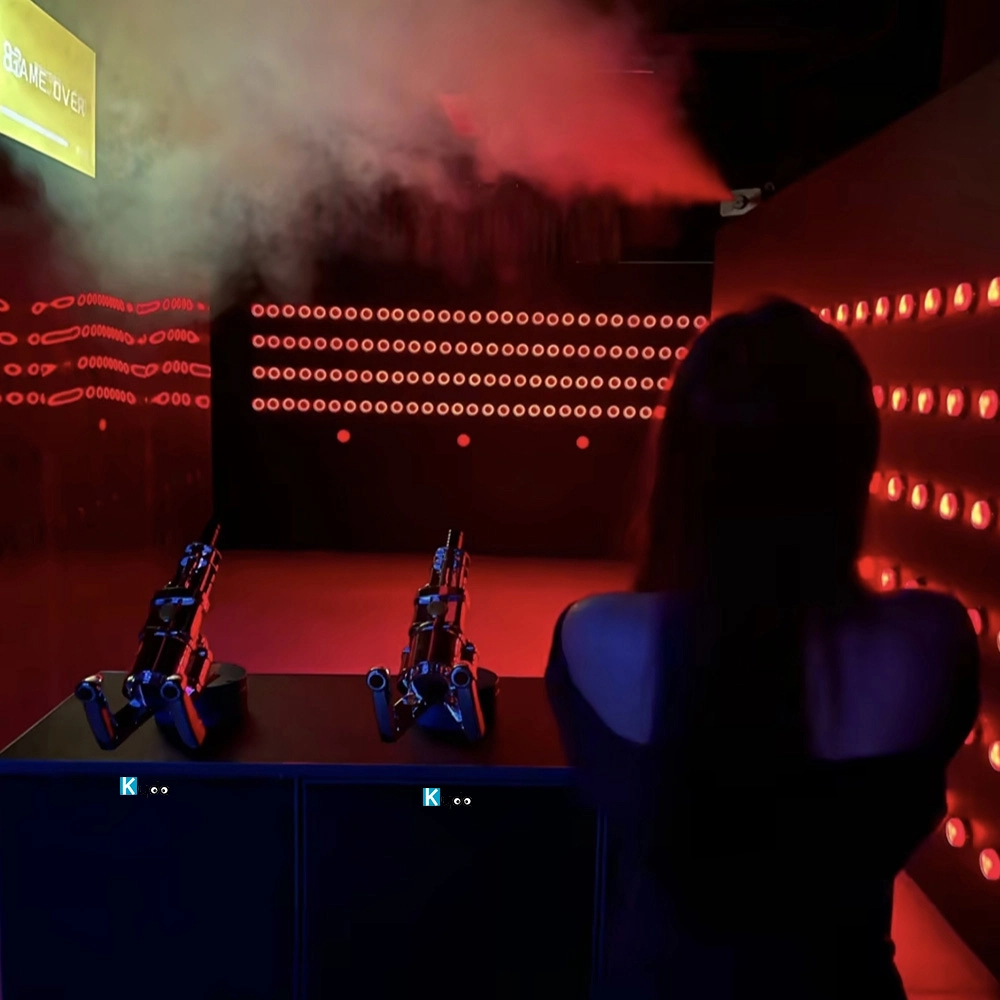
Active Reaction Laser Shooting Game Room
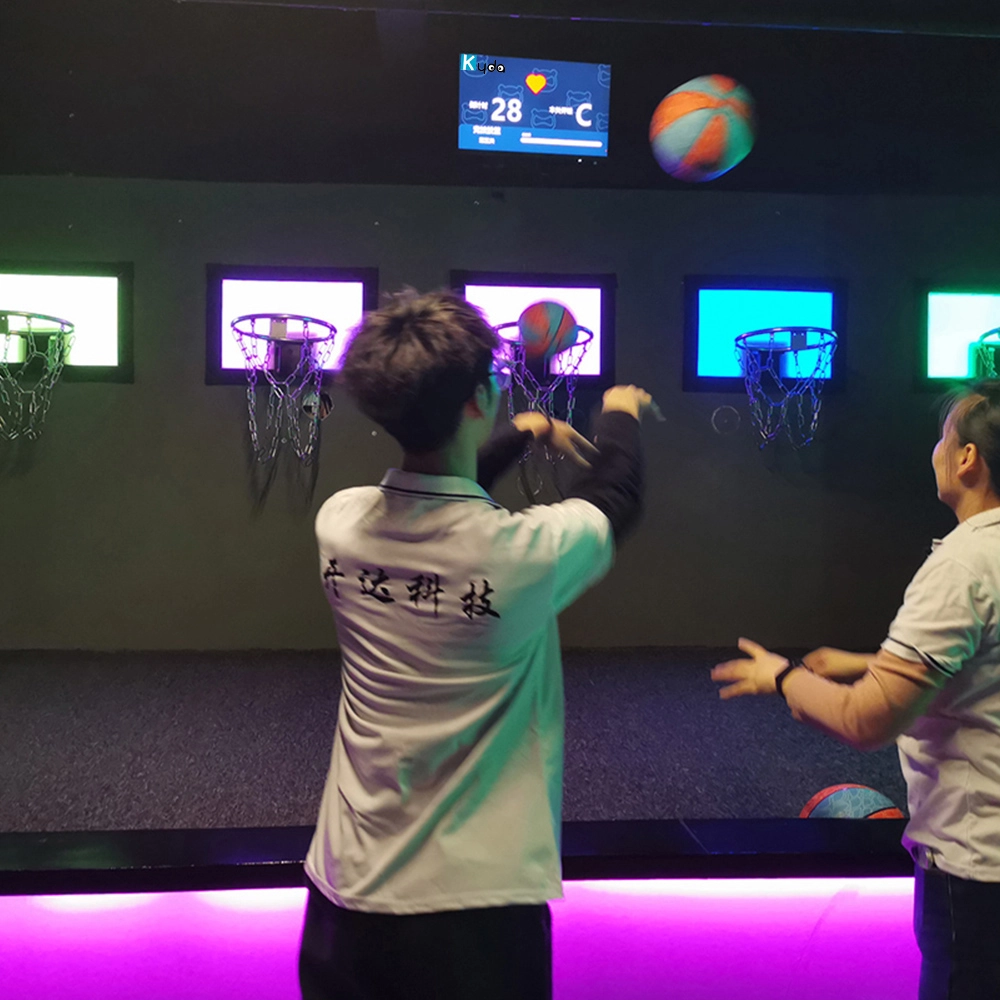
Hoops Active Game: The Ultimate Interactive Basketball Fitness Game
Elevate your basketball skills with Kyda’s Hoops Activate Game, the interactive basketball game. Perfect for basketball game rooms, Activate Hoops offers immersive fitness fun. Experience the Activate Basketball Game that combines sport and technology for active play.
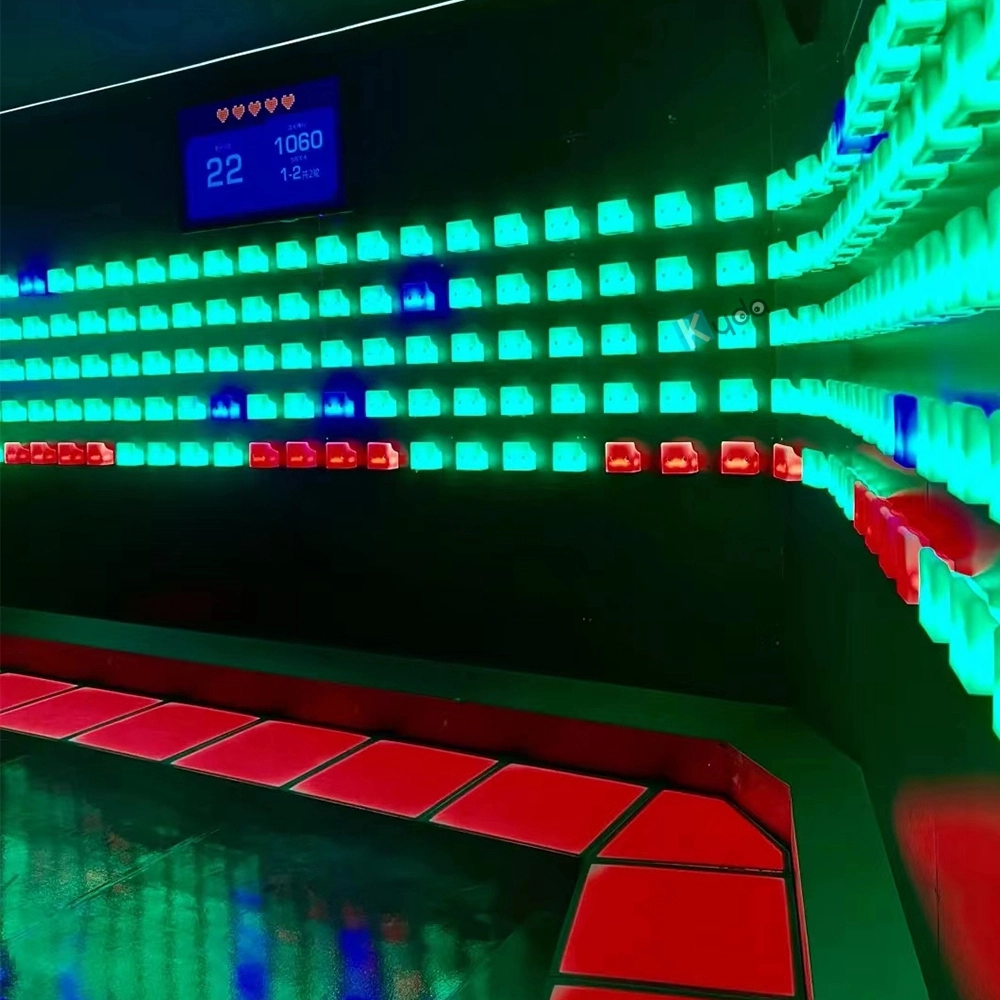
Activate Fitness Climb Game – The Ultimate Interactive LED Climbing Wall Experience
Experience the Activate Fitness Climb Game by Kyda—the interactive LED wall game. This Activate Climb Game combines fitness and fun with dynamic LED challenges, perfect for all ages. Boost agility and engagement with Kyda’s innovative interactive LED wall game today!
Let's get in touch
Email: sales@kydavr.com
Tel.: +86 188 2001 8779
Address: 501 Shixin Road, Dalong Street, Guangzhou, Guangdong, China.
© 2025 Kyda. All Rights Reserved.
 Scan QR Code
Linkedin
Ins
Facebook
Twitter
YouTube