




Multiplayer Reaction Game Ideas for Parties and Events
- Active Reaction Game Formats for High-Energy Events
- Active Reaction Game: Why Multiplayer Reaction Games Work
- Active Reaction Game Variations for Parties and Events
- Active Reaction Game: Rules, Scoring, and Fairness
- Active Reaction Game Safety, Accessibility, and Inclusivity
- Active Reaction Game Tech Choices: From DIY to Interactive LED Systems
- Active Reaction Game: Selecting Technology by Use Case
- Active Reaction Game Solutions from Kyda: Custom Rooms, Equipment, and Support
- Active Reaction Game: ROI and Business Models for Operators
- Active Reaction Game Implementation Checklist for Event Organizers
- Active Reaction Game: Marketing Tips to Drive Attendance
- Active Reaction Game FAQ
- Q1: What is an active reaction game and how does it differ from traditional arcade games?
- Q2: How much space do I need for an interactive LED floor reaction game?
- Q3: Are active reaction games profitable for event venues?
- Q4: How do I ensure safety for fast-paced reaction games?
- Q5: Can active reaction games be adapted for accessibility and different age groups?
- Q6: How long does installation usually take for a custom interactive room?
- References
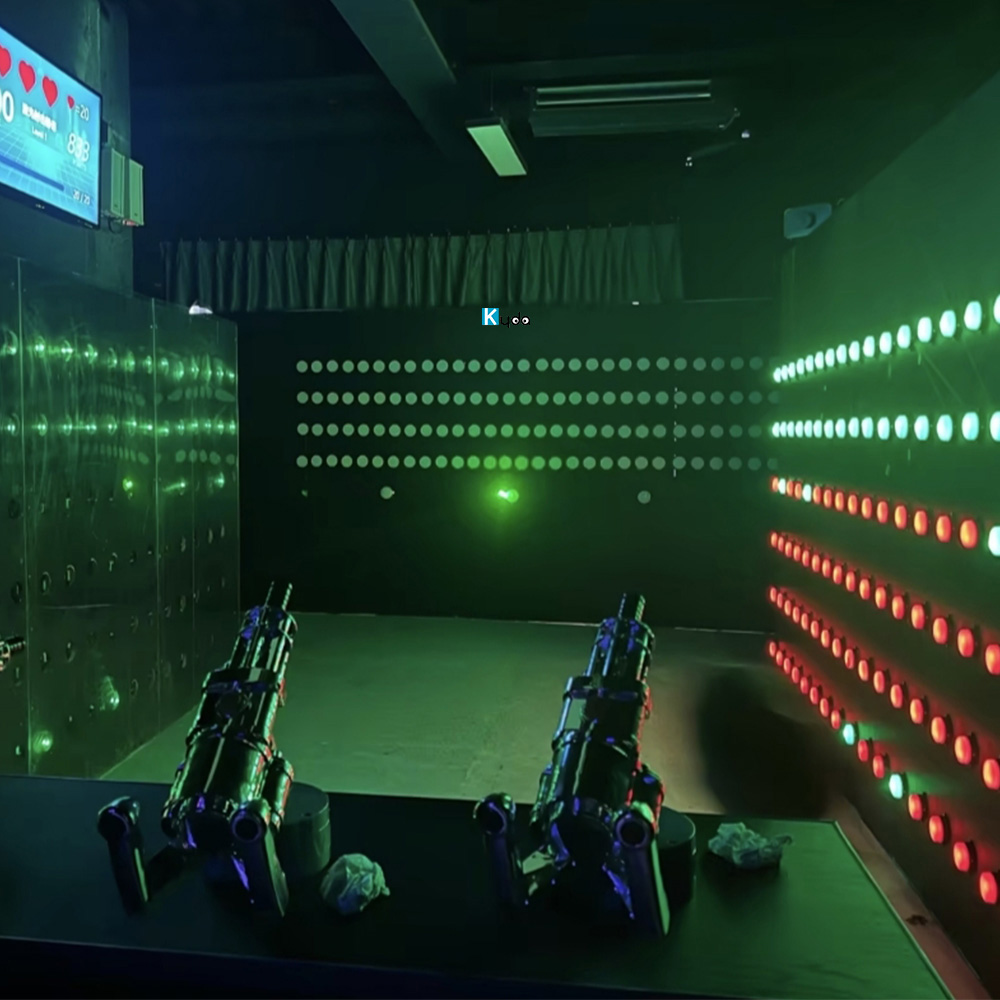
Active Reaction Game Formats for High-Energy Events
Active reaction games are a proven way to raise energy, increase participation, and create memorable moments at parties and events. Whether you run a birthday party, corporate teambuilding, festival activation, or permanent entertainment venue, choosing the right multiplayer active reaction game can determine throughput, guest satisfaction, and revenue. This guide synthesizes field-tested ideas, design principles, hardware options, safety considerations, and business models so event planners and operators can confidently select or build attractions that match their objectives.
Active Reaction Game: Why Multiplayer Reaction Games Work
Multiplayer active reaction games capitalize on three behavioral drivers: rapid feedback, social competition, and clear progress metrics. Quick stimulus-response tasks (light, sound, or visual cues) trigger immediate success/failure signals that keep players engaged. Multiplayer formats add social comparison and shared celebration, increasing dwell time and repeat plays. Research on the experience economy shows consumers increasingly spend on engaging, shareable moments rather than passive consumption—an important macro trend supporting investment in interactive games (see References).
Active Reaction Game Variations for Parties and Events
Below are practical multiplayer reaction game concepts you can implement with low to high technology investment. For each idea I include ideal group size, approximate play length, and adaptations for different event types.
- Human Simon (Interactive Sequence) — Players follow a growing sequence of lights/sounds projected onto a wall or floor. Group size: 4–8. Typical round: 1–4 minutes. Use for birthdays and family events; scale difficulty by speed or sequence length.
- Whack-a-Mole Relay (Physical Buttons or Pads) — Teams compete to hit illuminated targets in rounds. Group size: 6–20 (team-based). Round: 2–5 minutes. Good for carnivals and fairs; add handicap targets for kids or beginners.
- Light Floor Sprint (Interactive LED Floor) — Floor tiles light up in patterns; players run to them as they activate. Group size: 2–10 concurrently. Round: 30–90 seconds per player. High visual impact for clubs, festivals, and family entertainment centers.
- Beat-the-Beat (Rhythm Reaction) — Players must step/hit pads in time with music cues. Group size: 1–6 competing on leaderboard. Round: song length (60–120 seconds). Great for teen parties and arcades.
- Laser Reaction Course — Players deactivate lasers or trigger sensors quickly in a sequential course. Group size: 1–4 per run. Round: 1–3 minutes. Works as a High Quality challenge for corporate events and team-building.
- Collaborative Puzzle Reaction — Teams solve physical or digital puzzles where reaction speed influences available hints. Group size: 4–12. Round: 5–20 minutes. Ideal for teambuilding and escape-style events.
Active Reaction Game: Rules, Scoring, and Fairness
Consistent, transparent rules are essential to perceived fairness—especially for competitive multiplayer games. Use these best practices:
- Standardized Rounds: Use fixed time windows (e.g., best of 3 rounds, 60 seconds per round) so outcomes are comparable across players.
- Normalized Scoring: If players take different roles (e.g., sprinters vs. strategists), convert raw scores into percentile ranks or handicapped scores.
- Observable Feedback: Display scores live on a leaderboard visible to all participants to validate outcomes.
- Rules Sheet & Demo: Offer a 30–60 second demo play for first-time players to reduce confusion and enhance pace of play.
Active Reaction Game Safety, Accessibility, and Inclusivity
Active games bring physical movement; safety and inclusive design minimize risk and broaden appeal:
- Flooring & Space: Use non-slip surfaces and clear run zones. For LED floors, choose units with protective surface treatments and edge ramps.
- Adjustable Intensity: Offer low-impact modes (slower pace, larger targets) for older players or those with limited mobility.
- Multi-Sensory Cues: Combine visual, auditory, and haptic feedback so players with sensory differences can participate.
- Age/Height Considerations: Ensure button/pad heights and reaction distances accommodate children and adults; create child-friendly variants.
- Staff Training: Train attendants on emergency response, equipment resetting, and how to run controlled rotations to prevent collisions.
Active Reaction Game Tech Choices: From DIY to Interactive LED Systems
Technology choice affects initial cost, throughput, and revenue potential. Below is a compact comparison to help planners choose the right level of investment.
| Game Type | Typical Cost Range (USD) | Throughput (players/hour) | Space Needed | Revenue Potential |
|---|---|---|---|---|
| DIY Button Games / Mobile App | $200–$5,000 | 200–800 | Small (2–6 m²) | Low–Medium (good for promotions) |
| Portable LED Panels / Pads | $5,000–$25,000 | 150–600 | 6–20 m² | Medium (birthday packages, walk-ins) |
| Interactive LED Floor / Wall Systems | $20,000–$150,000+ | 100–400 | 15–60 m² | High (signature attraction) |
| Projection-Based Interactive Games | $10,000–$80,000 | 120–500 | 10–50 m² | High (flexible experiences) |
| Laser / Sensor Obstacle Courses | $30,000–$200,000 | 50–300 | 30–200 m² | High Quality (corporate & ticketed events) |
Notes: Cost and throughput ranges are industry estimates derived from supplier price lists, case studies, and venue operator reports. Exact figures depend on customization, local labor, and materials. See References for source links and additional market data.
Active Reaction Game: Selecting Technology by Use Case
Match your technology to objectives:
- Short promotional activations: Use portable button games or mobile app integrations to maximize reach at low cost.
- Family entertainment centers: Invest in interactive LED floors/walls that serve as signature attractions and drive repeat visits.
- Corporate & teambuilding: Laser courses and collaborative puzzle-reaction games provide mission-focused outcomes and higher per-head pricing.
- Nightlife & festivals: Projection-based rhythm or beat games tune into ambiance and scale visually for crowds.
Active Reaction Game Solutions from Kyda: Custom Rooms, Equipment, and Support
For organizations seeking turnkey or custom active reaction game solutions, Kyda is a one-stop provider focused on active game rooms and Activate gaming centers. Kyda specializes in research, development, production, and sales of interactive and educational recreational products, plus indoor and outdoor amusement equipment that emphasize low-cost, high-income, high-return value.
Kyda's main product categories include active interactive games, interactive LED floor systems, active reaction games, brain challenge games, horror escape games, active fitness games, and interactive projection games. The company also supplies a broad selection of thrilling indoor and outdoor amusement equipment. Kyda's multidisciplinary team includes experts in electronic design, software programming, game and animation design, product and multimedia design, and interior design. Leveraging manufacturing hubs in Guangzhou, Zhongshan, Zhengzhou, and Beijing, Kyda maintains long-term partnerships with LED light factories, sheet metal and paint shops, electronic assembly, 3D printing, and multimedia resource companies—enabling high levels of customization to meet local needs.
Kyda differentiates itself through integrated capabilities: from concept and prototyping to manufacturing and site installation. Their experience producing interactive projection games, Activate interactive games, interactive LED floors and walls, and laser interactive games makes Kyda a competitive partner for operators seeking high-ROI attractions. Whether the requirement is a compact, portable solution for pop-up parties or a permanent immersive room for a family entertainment center, Kyda can design equipment and operating workflows to match throughput, safety, and business goals.
Active Reaction Game: ROI and Business Models for Operators
Active reaction games can be monetized in multiple ways. Typical business models include admission-based pricing, per-play fees, private party packages, corporate event rentals, and ancillary sales (merch, F&B). The experience-economy trend and growth in interactive entertainment markets suggest strong demand potential (see market references below).
Example ROI scenario (conservative):
- Investment: $40,000 interactive LED floor installation.
- Pricing: $8 per 3-minute play (group or individual pricing options).
- Utilization: 10 hours/day active, 200 plays/day => $1,600/day gross.
- Monthly gross (25 days): $40,000 — breakeven ~12 months (ignoring operating costs).
Notes: This simplified example shows potential but omits staff, rent, marketing, and maintenance. Many operators bundle attractions into packages or charge High Quality fees for curated experiences (e.g., private party blocks), improving margins. Kyda can assist with detailed financial modeling based on local factors and custom design choices.
Active Reaction Game Implementation Checklist for Event Organizers
Use this step-by-step checklist when planning a multiplayer active reaction game:
- Define goals: entertainment, revenue, branding, or teambuilding.
- Estimate expected throughput and peak crowding times.
- Select technology that matches budget, space, and brand experience.
- Plan safety and accessibility measures, including staffing levels and first-aid readiness.
- Create clear rules, demo scripts, and signage to speed onboarding.
- Determine pricing and bundle options; test price sensitivity on a soft launch.
- Design fallback and manual-reset procedures to maintain uptime during events.
- Collect data: run-time metrics, plays per hour, and NPS-style feedback to iterate on design.
Active Reaction Game: Marketing Tips to Drive Attendance
Promote games by emphasizing shareability and challenge. Effective tactics include:
- Highlight short video clips showing gameplay on social channels.
- Offer leaderboard photo moments to encourage social sharing with event hashtags.
- Run hourly mini-tournaments with small prizes to create repeat visits.
- Partner with influencers for one-off activations that showcase the interactivity.
Active Reaction Game FAQ
Below are frequently asked questions we hear from event planners and operators considering multiplayer active reaction games.
Q1: What is an active reaction game and how does it differ from traditional arcade games?
An active reaction game emphasizes real-time physical or cognitive responses to stimuli (lights, sounds, visuals). Unlike many traditional arcade games that focus on individual skill accumulation, active reaction games are typically short, immediate, and designed for multiplayer social interaction and high throughput.
Q2: How much space do I need for an interactive LED floor reaction game?
Small installations (one to two player lanes) can fit in 6–15 m². Full-scale attractions recommended for family entertainment centers typically require 15–60 m² depending on lane count and safety buffers. Exact requirements vary by vendor; request a site layout from suppliers such as Kyda during the planning phase.
Q3: Are active reaction games profitable for event venues?
Yes—when fitted to audience and priced correctly. Profitability depends on utilization, pricing, and operating costs. Signature interactive attractions (LED floors, projection rooms) generally command higher per-play pricing and drive ancillary spending, improving ROI relative to lower-cost, high-throughput options.
Q4: How do I ensure safety for fast-paced reaction games?
Implement non-slip surfaces, padded edges, clear circulation zones, and trained attendants. Provide adjustable difficulty levels to reduce collision risk. Inspect equipment daily and follow vendor maintenance schedules to prevent malfunctions that could cause injury.
Q5: Can active reaction games be adapted for accessibility and different age groups?
Yes. Inclusive design practices include multi-sensory cues (audio, visual, vibration), adjustable speed/intensity modes, and alternate input methods (larger buttons, remote triggers). Many systems offer configurable difficulty so both young children and adults can compete fairly.
Q6: How long does installation usually take for a custom interactive room?
Small portable setups may be installed in days. Full custom rooms requiring structural changes, integrated audio/lighting, and large LED deployments typically require several weeks to a few months from design to completion. Kyda provides end-to-end project timelines during the quote phase.
Contact us to discuss custom solutions, request a proposal, or view product demos. Kyda offers turnkey packages and local customization to help you deploy engaging active reaction games for parties, corporate events, and entertainment venues.
References
- Eventbrite, The Experience Economy & Live Events, Eventbrite Blog. Retrieved from https://www.eventbrite.com/blog/experience-economy/ (Accessed June 2024)
- Grand View Research, Interactive Entertainment Market Size, Share & Trends Analysis Report, Grand View Research. Retrieved from https://www.grandviewresearch.com/industry-analysis/interactive-entertainment-market (Accessed May 2024)
- IBISWorld / Industry reports on Interactive Amusement Equipment (sample vendor pricing and installation lead times), data aggregated from vendor whitepapers and case studies (Accessed 2023–2024)
- Manufacturer case studies (interactive LED floor and projection systems) — Kyda product brochures and project references (company materials provided by Kyda, 2024)
- Articles on safety and design for interactive exhibits — Museum and exhibition design best practices (American Alliance of Museums resources, 2022–2023)
For tailored project planning, cost estimates, or to request full technical specifications for interactive LED floors, projection games, or laser reaction courses, contact Kyda’s sales and design team. Kyda leverages local manufacturing networks and experienced multidisciplinary designers to deliver custom, high-return active game rooms worldwide.
Activate Games Warranty and After-Sales Best Practices
How to Choose the active games manufacturer and supplier in us?
Safety and accessibility best practices for activate games
Best active game for childrens manufacturers and supplier brands in us
For Games Grid Floor is Lava
Can we just buy one game room of grid floor is lava?
Yes, If you start the activate game at the first time. We have more than above 50 different activate interactive challenge game rooms for options.
For Company
Do you support different language of the game and management system?
Standard version is English and Chinese, accept customization different language.
Can you make decoration design for buyer’s place?
We also can assist to make decoration that is for extra.
How many places(country or city) already installed? Where are they?
Above 100 places in the whole world market:
Already installed in Saudi Arabic, New Zealand, Indonesia ,Malaysia, Singapore, Australia, United Kingdom, Netherlands ,France, India, Poland, Greece, Hungary etc in the world market; Shenzhen, Beijing, Zhengzhou,Taiwan etc in the Chinese market.
Do you have management system and bracelet?
Yes, we support to sell the whole Activate game software, hardware, management system, Ranking, online tickets, scores…
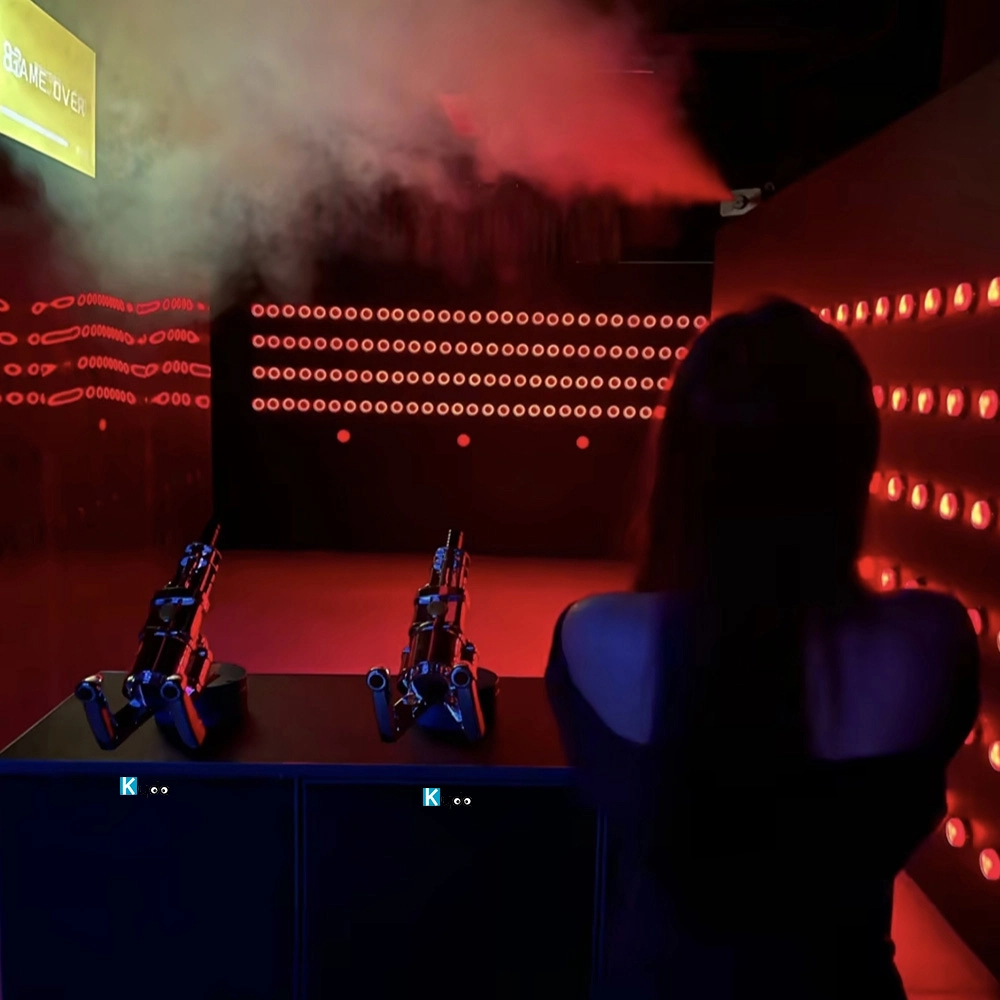
Active Reaction Laser Shooting Game Room
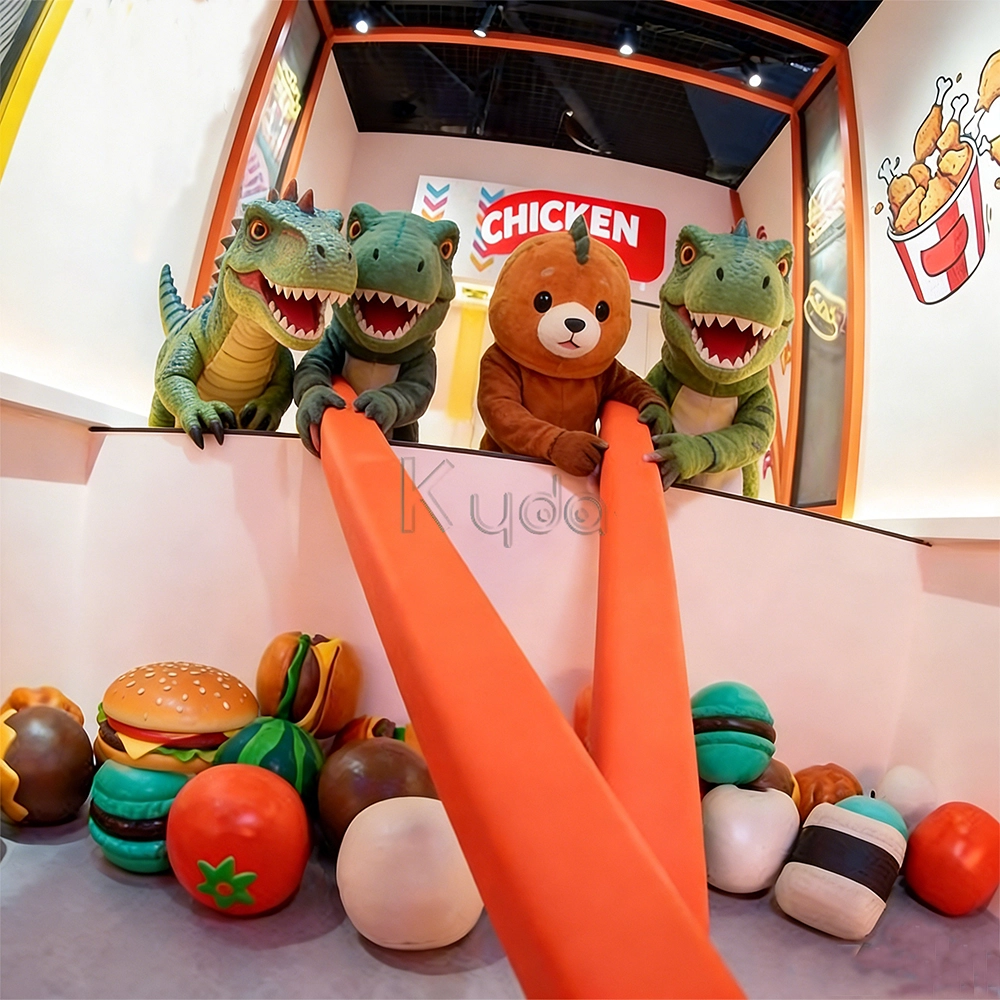
Crub Crab Giant Chopsticks Challenge Game Interactive Skill Challenge Game for Activate Game Rooms by Kyda
Crub Crab Giant Chopsticks Challenge Game is an innovative interactive challenge attraction designed for indoor entertainment centers, arcade game venues, and activate-style interactive game rooms. In this unique skill-based game, players control a pair of oversized giant chopsticks to pick up scattered snacks, toys, or prize items and place them into a collection basket within a limited time. The gameplay combines hand-eye coordination, precision control, balance, and quick reaction, creating a fun and competitive experience suitable for players of all ages.
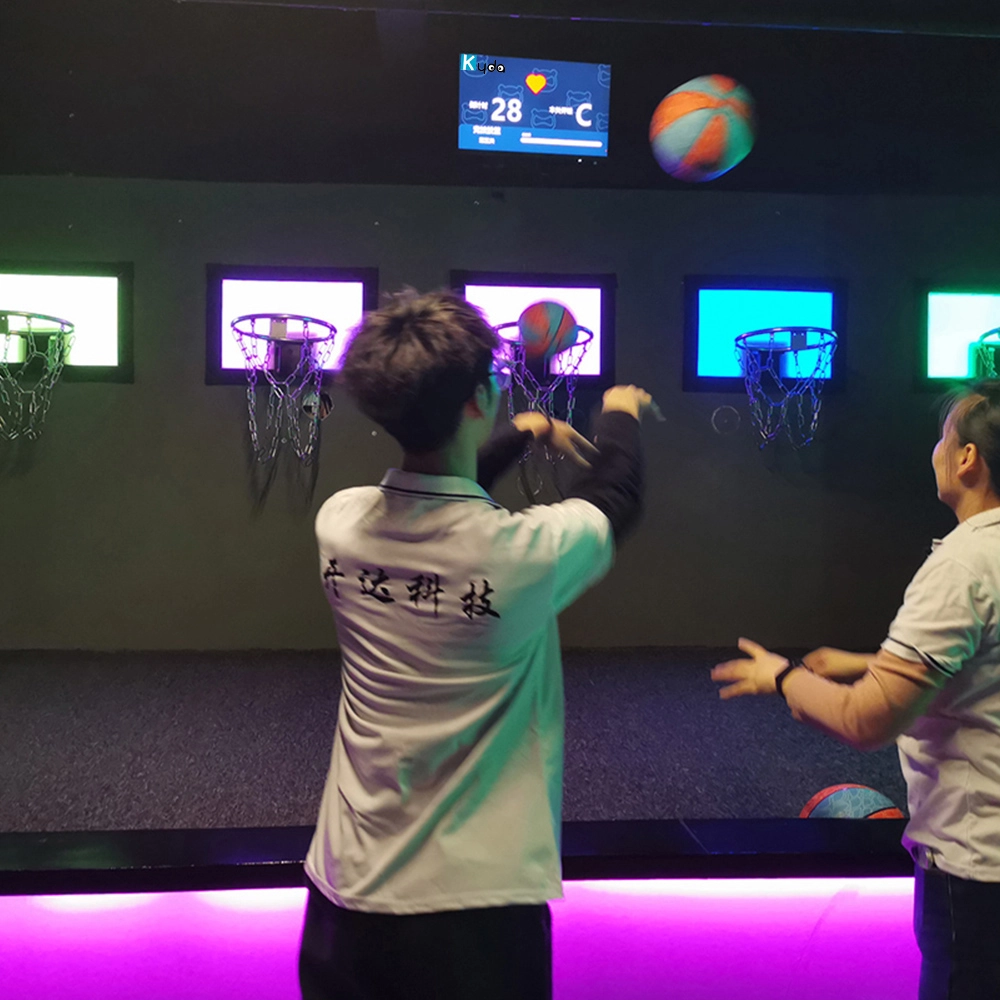
Hoops Active Game: The Ultimate Interactive Basketball Fitness Game
Elevate your basketball skills with Kyda’s Hoops Activate Game, the interactive basketball game. Perfect for basketball game rooms, Activate Hoops offers immersive fitness fun. Experience the Activate Basketball Game that combines sport and technology for active play.
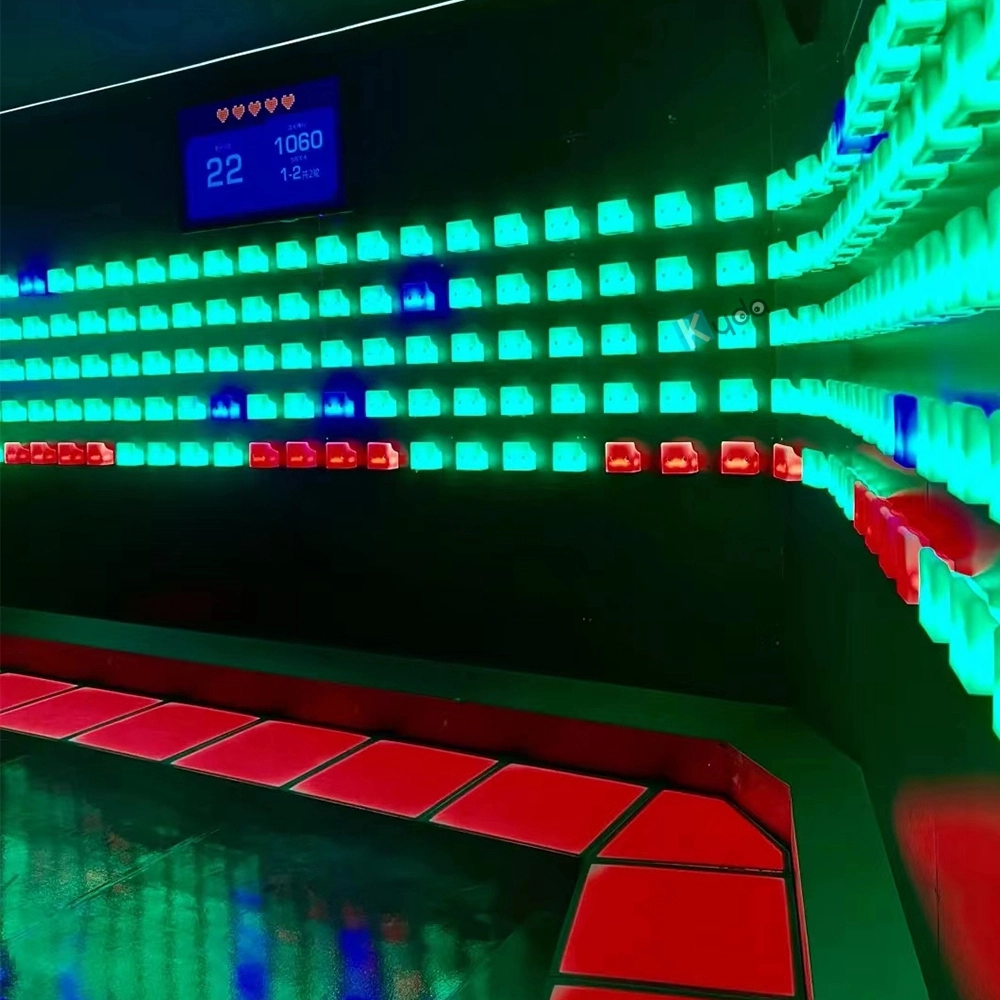
Activate Fitness Climb Game – The Ultimate Interactive LED Climbing Wall Experience
Experience the Activate Fitness Climb Game by Kyda—the interactive LED wall game. This Activate Climb Game combines fitness and fun with dynamic LED challenges, perfect for all ages. Boost agility and engagement with Kyda’s innovative interactive LED wall game today!
Let's get in touch
Email: sales@kydavr.com
Tel.: +86 188 2001 8779
Address: 501 Shixin Road, Dalong Street, Guangzhou, Guangdong, China.
© 2025 Kyda. All Rights Reserved.
 Scan QR Code
Linkedin
Ins
Facebook
Twitter
YouTube