




Safety and accessibility best practices for activate games
- Designing Safe and Inclusive Activate Game Experiences
- Understanding the user needs and risk profile for activate games
- Regulatory frameworks and standards relevant to activate games
- Physical safety best practices for activate games installations
- Digital accessibility & UX: making activate games inclusive
- Operational protocols: cleaning, training, and maintenance for safety & accessibility
- Testing, validation and measurable KPIs for safe, accessible play
- Business case: how safety and accessibility drive revenue in activate games
- Kyda: an integrated partner for safe, accessible activate game rooms
- Implementation checklist: a practical roadmap for operators
- FAQ: Common questions about safety and accessibility for activate games
- 1. What are the most common safety hazards in activate games?
- 2. How do I ensure my activate games are accessible to people with mobility limitations?
- 3. Do digital accessibility standards like WCAG apply to kiosk-based activate games?
- 4. How often should I perform safety inspections and maintenance?
- 5. Can accessibility features hurt the gaming experience for competitive players?
- 6. How do I balance creative game design with safety regulations?
- Contact & next steps
- References
Designing Safe and Inclusive Activate Game Experiences
Understanding the user needs and risk profile for activate games
Activate games combine physical activity, sensory stimulation, and digital interaction. Typical users range from children to seniors, neurotypical and neurodiverse players, people with mobility or sensory impairments, and competitive players seeking high-intensity experiences. Designing for this broad audience begins with a clear risk assessment and user-centered research.
Key steps:
- Conduct stakeholder mapping: identify likely user groups (age ranges, disabilities, fitness levels).
- Perform a site-specific hazard analysis: electrical, trip/fall, pinch points, thermal, projection/glare, and hygiene risks.
- Use real-user trials early and often—include people with disabilities and staff to uncover edge-case hazards.
Why this matters: data from public health authorities shows that accessible offerings expand market reach—roughly one in four adults reports a disability that affects major life activities—meaning inclusive design directly affects potential revenue and legal compliance (see references).
Regulatory frameworks and standards relevant to activate games
Activate games sit at the intersection of play equipment, consumer electronics, and software interfaces. The most relevant frameworks include:
- Accessibility: WCAG 2.1/2.2 principles for digital interfaces (perceivable, operable, understandable, robust). Apply these to touchscreens, web-based kiosks, and companion apps.
- Physical safety: regional playground and amusement equipment standards such as EN 1176 (Europe) and ASTM/consumer product safety guidance (U.S.). Local building codes and fire egress regulations also apply.
- Electrical and electronic safety: nationally recognized testing laboratories (e.g., UL, CE conformity, IEC norms for IP ratings) for power supplies, LED systems, and interaction hardware.
Operationally, consult legal counsel to map standards to local jurisdiction; document decisions and retained certifications for insurers and regulators. Maintain a compliance register tied to product serial numbers and installation addresses.
Physical safety best practices for activate games installations
Design and installation decisions reduce risk substantially. The following technical and operational controls are recommended:
- Zoning and circulation: provide clear ingress/egress, separation between active play zones and spectator/waiting areas, accessible routes (1:12 max slope for ramps per many accessibility codes).
- Impact attenuation: use shock-absorbent surfacing where falls are possible. Specify materials that meet local standards for impact attenuation.
- Enclosures and guarding: protect moving parts, LED strips, fans, and projectors behind guards or recessed housings to prevent pinch and entrapment.
- Electrical safety: choose power supplies with overcurrent protection, ground-fault protection (GFCI) where required, and IP-rated fixtures for damp or outdoor venues (refer IEC IP code guidance).
- Emergency stops and fail-safes: mechanical and software-level emergency-stop options that immediately cease movement and revert interactive elements to a safe state.
- Lighting and glare control: avoid direct projector glare into players’ eyes; use diffusers and mounting angles that minimize eye-strain and accidental strobe effects.
- Material selection: flame-retardant, low-VOC, and non-toxic finishes for indoor installations; UV-stable components for outdoor units.
Operational checklist (daily): visual inspection, power-on self-test, emergency stop test, surface cleanliness, and logging anomalies in a maintenance record.
Digital accessibility & UX: making activate games inclusive
Digital experiences in activate games must be accessible to people with visual, auditory, cognitive, and motor impairments. Apply WCAG principles and practical UX patterns:
- Provide alternative input methods: large tactile buttons, game pads, switch-accessible controls, and keyboard navigation for kiosk-based systems.
- Audio and visual redundancy: pair visual cues with audio cues and haptic feedback. Offer adjustable volumes and clear captioning for voice instructions.
- Color and contrast: adhere to contrast ratios (WCAG AA/AAA) for on-screen text and interactive elements. Avoid relying on color alone to convey information.
- Timing and cognitive load: allow adjustable timeouts, simplified interface modes, consistent navigation, and tutorial overlays.
- Customization: profile-based settings (e.g., high-contrast mode, one-handed mode, reduced motion) preserved across sessions.
- Testing with assistive tech: verify operation with screen readers, switch interfaces, and voice control where applicable.
Practical example: a multi-player floor projection should allow a single-player mode with on-screen prompts, audio guidance, and a simple tactile controller alternative for a player who cannot run freely.
Operational protocols: cleaning, training, and maintenance for safety & accessibility
Operational discipline prevents many incidents and accessibility breakdowns. Core protocols include:
- Staff training: onboarding curriculum should cover accessibility awareness, safe operation, emergency procedures, and routine maintenance tasks. Include scenario exercises for evacuations and first aid.
- Cleaning and disinfection: set cleaning cycles based on touch frequency; use manufacturer-approved disinfectants to avoid damaging sensors, LEDs, and projection lenses. Follow public health guidance for disinfecting high-touch surfaces.
- Maintenance schedule: quarterly safety audits, annual third-party inspections, and real-time incident reporting. Keep an electronic log tied to equipment IDs.
- Incident management: standardized forms, root-cause analysis, corrective actions, and communication templates for customers and regulators.
Table: Example maintenance & training cadence
| Task | Frequency | Responsible |
|---|---|---|
| Daily visual safety check & self-test | Daily | On-site staff |
| Cleaning high-touch surfaces | Multiple times/day (volume-based) | Operations staff |
| Functional test of sensors and emergency stops | Weekly | Technician |
| Full safety audit & software patching | Quarterly | Maintenance team/third-party |
| Third-party electrical & mechanical inspection | Annually | Certified inspector |
References for cleaning and building operation guidance are provided at the end of this article.
Testing, validation and measurable KPIs for safe, accessible play
Validation prevents surprises. Build a test plan covering engineering, accessibility, and human-factors:
- Technical acceptance tests (TAT): sensor accuracy, latency, error rates under load, failover behavior.
- Accessibility audit: WCAG conformance scoring, real-user testing results, adjustments logged as issues.
- Safety validation: simulated failure modes, drop tests for mounted components, electrical insulation testing, and thermal profiling.
KPIs to track:
- Incident rate per 10,000 user-hours
- Accessibility issues reported per 1,000 sessions
- Mean time to repair (MTTR)
- System uptime percentage
- Customer satisfaction scores segmented by accessibility needs
Table: KPI definitions and benchmark targets (example)
| KPI | Definition | Target (example) |
|---|---|---|
| Incident rate | Recorded safety incidents per 10,000 play-hours | <1 |
| MTTR | Average time to repair a critical system fault | <8 hours |
| Accessibility issue rate | Accessibility-related complaints per 1,000 sessions | <5 |
| Uptime | Available play time divided by scheduled open time | >98% |
Business case: how safety and accessibility drive revenue in activate games
Investing in safety and accessibility is not only compliance—it’s good business. Consider:
- Market reach: individuals with disabilities represent significant customer segments. Public data indicates a substantial share of the adult population has some form of disability that affects daily life, expanding addressable market when venues are accessible.
- Reputation and trust: documented safety programs reduce insurance costs and build trust with families, schools, and corporate partners.
- Dwell time and return visits: accessible, safe experiences increase session length and repeat visitation, driving ancillary revenue (food, merchandise, parties).
Operators should model ROI by comparing incremental costs for accessibility and safety (hardware, training, certifications) against projected increases in attendance and reduced downtime/claims.
Kyda: an integrated partner for safe, accessible activate game rooms
Kyda is a one-stop solution provider of active game rooms and Activate gaming centers dedicated to the custom research, development, production, and sales of interactive and educational recreational products, as well as indoor and outdoor amusement equipment and low-cost, high-income, high-return equipment. Kyda's main products include active interactive games, interactive LED floor systems, active reaction games, brain challenge games, horror escape games, active fitness games, and interactive projection games, as well as various thrilling indoor and outdoor amusement equipment.
Kyda's team consists of professionals specializing in electronic design and development, software programming, game design, animation design, product design, multimedia design, and interior design. Leveraging the manufacturing advantages of Guangzhou, Zhongshan, Zhengzhou, and Beijing, we maintain long-term partnerships with LED light factories, advertising production factories, sheet metal factories, paint factories, electronic assembly factories, 3D plastic printing factories, and multimedia resource companies. This allows us to produce customized projects or products to meet various local needs. Our team is committed to using evolving technology, design, and execution capabilities to meet our customers' ever-changing, personalized customization needs.
Kyda's competitive advantages for operators seeking safe, accessible activate game solutions:
- End-to-end delivery: from concept and UX accessibility design through production and on-site installation, reducing coordination failures.
- Technical depth: in-house electronic engineering and software teams enable built-in fail-safes, health monitoring, and rapid firmware updates.
- Supply chain integration: regional manufacturing partnerships keep customization costs competitive and lead times predictable.
- Product breadth: interactive projection games, activate interactive games, interactive LED floor, interactive LED wall, and laser interactive game offerings let operators mix attractions for broad demographics and accessibility needs.
Kyda’s vision is to become the world's leading active game room manufacturer. Operators who partner with Kyda can expect documented safety processes, accessibility-aware design options, and turnkey maintenance agreements to keep venues operating safely and inclusively.
Implementation checklist: a practical roadmap for operators
- Pre-purchase due diligence: request third-party safety certificates, IP ratings, and references for installations in similar contexts.
- Accessibility requirements: define mandatory user profiles and required accessibility features (e.g., switch access, captions, adjustable difficulty).
- Site planning: map egress routes, accessible paths, and electrical routing with a consultant.
- Acceptance testing: require a factory acceptance test (FAT) and a site acceptance test (SAT) with signed checklists.
- Staff readiness: complete training before public opening; maintain refresher training quarterly.
- Ongoing improvement: collect ongoing feedback from users with disabilities and run annual accessibility audits.
FAQ: Common questions about safety and accessibility for activate games
1. What are the most common safety hazards in activate games?
Common hazards include trip/fall zones around interactive floors, pinch points on moving fixtures, electrical faults, glare/strobe issues that may trigger photosensitive users, and hygiene risks from shared surfaces.
2. How do I ensure my activate games are accessible to people with mobility limitations?
Provide accessible routes and transfer spaces, alternative input controls (tactile buttons, hand-held controllers), adjustable game modes, and seating options. Ensure staff are trained to assist while preserving independence.
3. Do digital accessibility standards like WCAG apply to kiosk-based activate games?
Yes. WCAG principles are applicable to any digital interface, including kiosks and in-game UI. Provide captions, clear contrast, and operability via non-touch methods where practical.
4. How often should I perform safety inspections and maintenance?
Daily visual checks and cleaning, weekly functional tests, quarterly safety audits, and annual third-party inspections are typical best practices. Increase frequency in high-use venues.
5. Can accessibility features hurt the gaming experience for competitive players?
No—well-designed accessibility features are often optional profile configurations that do not interfere with default competitive modes. Designing separate modes or adjustable difficulty preserves challenge while expanding access.
6. How do I balance creative game design with safety regulations?
Start safety reviews during concept phase. Use iterative prototyping with safety engineers and run user trials. Many creative interactions can be preserved with engineering controls and operational rules.
Contact & next steps
If you operate or plan to open an activate games center and want to evaluate safety and accessibility measures, contact Kyda for a consultation, site evaluation, or turnkey design-procure-install services. Kyda offers customizable packages including accessibility audits, staff training, and ongoing maintenance agreements to keep your operation safe, compliant, and profitable.
Contact Kyda to learn more or request a project quote.
References
- World Health Organization — Physical activity factsheet. https://www.who.int/news-room/fact-sheets/detail/physical-activity (accessed 2025-12-08).
- W3C Web Accessibility Initiative — WCAG Overview. https://www.w3.org/WAI/standards-guidelines/wcag/ (accessed 2025-12-08).
- U.S. Centers for Disease Control and Prevention (CDC) — Playground safety and disability findings. https://www.cdc.gov/safechild/playground/index.htm (accessed 2025-12-08).
- CDC — Disability and Health Key Findings. https://www.cdc.gov/ncbddd/disabilityandhealth/features/key-findings-disability. (accessed 2025-12-08).
- International Electrotechnical Commission (IEC) — IP Code and electrical standards overview. https://www.iec.ch/ (accessed 2025-12-08).
- U.S. CDC — Cleaning and Disinfection for Community Facilities. https://www.cdc.gov/coronavirus/2019-ncov/community/disinfecting-building-facility. (accessed 2025-12-08).
The supergrid game Cost Guide
What Are Activate Games? Unleash Interactive Fun & Business Potential with Kyda
Best active game for childrens manufacturers and supplier brands in us
How to Choose the led floor games manufacturer and supplier ?
For Company
Where is your factory?
Kydaplay office in Beijing, Guangzhou, Shenzhen;
Kydaplay workshop in Shenyang, Zhongshan.
How much need invest?
Normally can choose one Grid game only or different rooms.
Please contact with Kydaplay sales manager to get the exact cost.
Can you make CAD design for buyer’s space room?
Yes, we can make CAD design as exact space room size.
For Led Floor for Dance Pixel Grid Room
What is the difference of Grid and Mega Grid, Pixel Grid?
Grid just interactive floor game, smaller room size can start, Add the wall LED tile call Pixel Grid;
Mega Grid add 20pcs Digital screen with 20pcs wall buttons , also need suggest bigger room size, more activate interesting games than Grid, add the wall LED tile call Pixel Grid;
Kyda accept personal customization as requirements; Grid, Mega Grid, Pixel Grid, Floorislava, Arena game, Active LED floor game, Interactive floor LED game etc that different name in different place.
For Activate Gaming Floorislava Family Fun
What is the difference of Grid and Mega Grid?
Grid just interactive floor game, smaller room size can start; Mega Grid add 20pcs Digital screen with 20pcs wall buttons, also need suggest bigger room size, more activate interesting games than Grid;
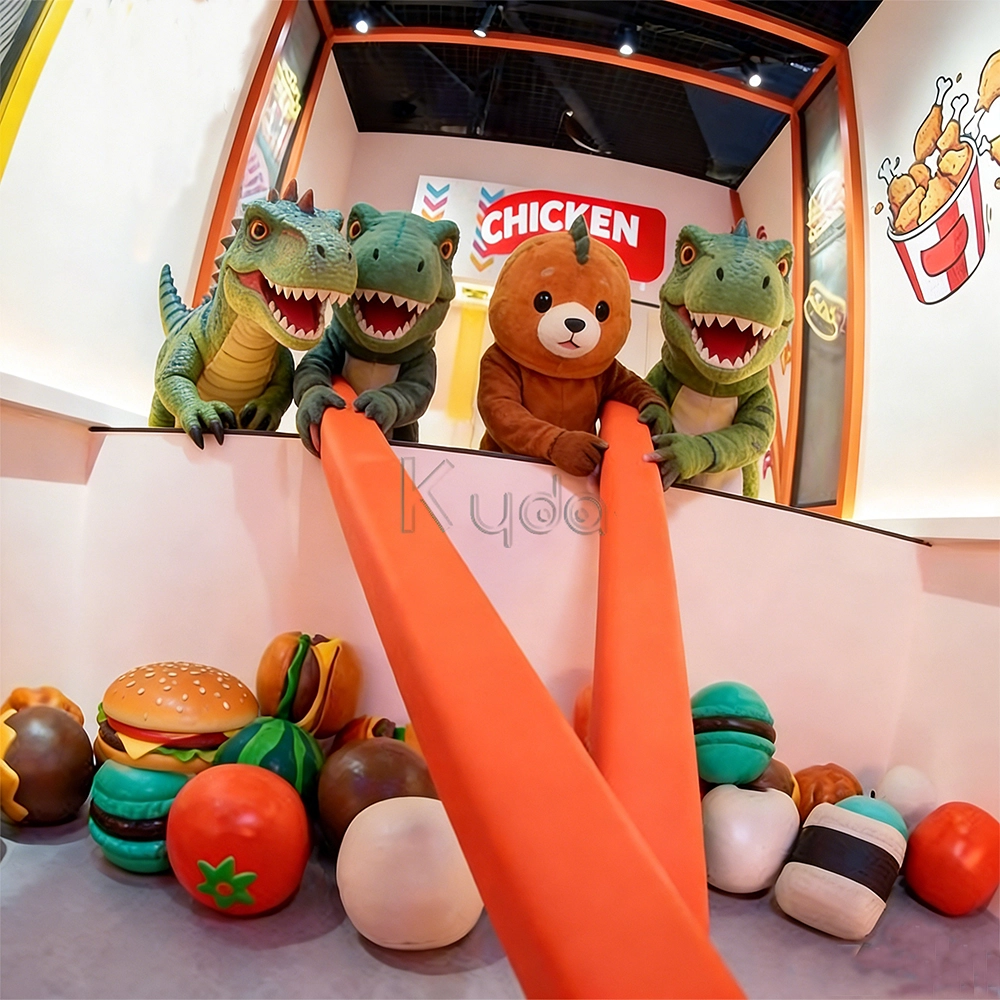
Crub Crab Giant Chopsticks Challenge Game Interactive Skill Challenge Game for Activate Game Rooms by Kyda
Crub Crab Giant Chopsticks Challenge Game is an innovative interactive challenge attraction designed for indoor entertainment centers, arcade game venues, and activate-style interactive game rooms. In this unique skill-based game, players control a pair of oversized giant chopsticks to pick up scattered snacks, toys, or prize items and place them into a collection basket within a limited time. The gameplay combines hand-eye coordination, precision control, balance, and quick reaction, creating a fun and competitive experience suitable for players of all ages.
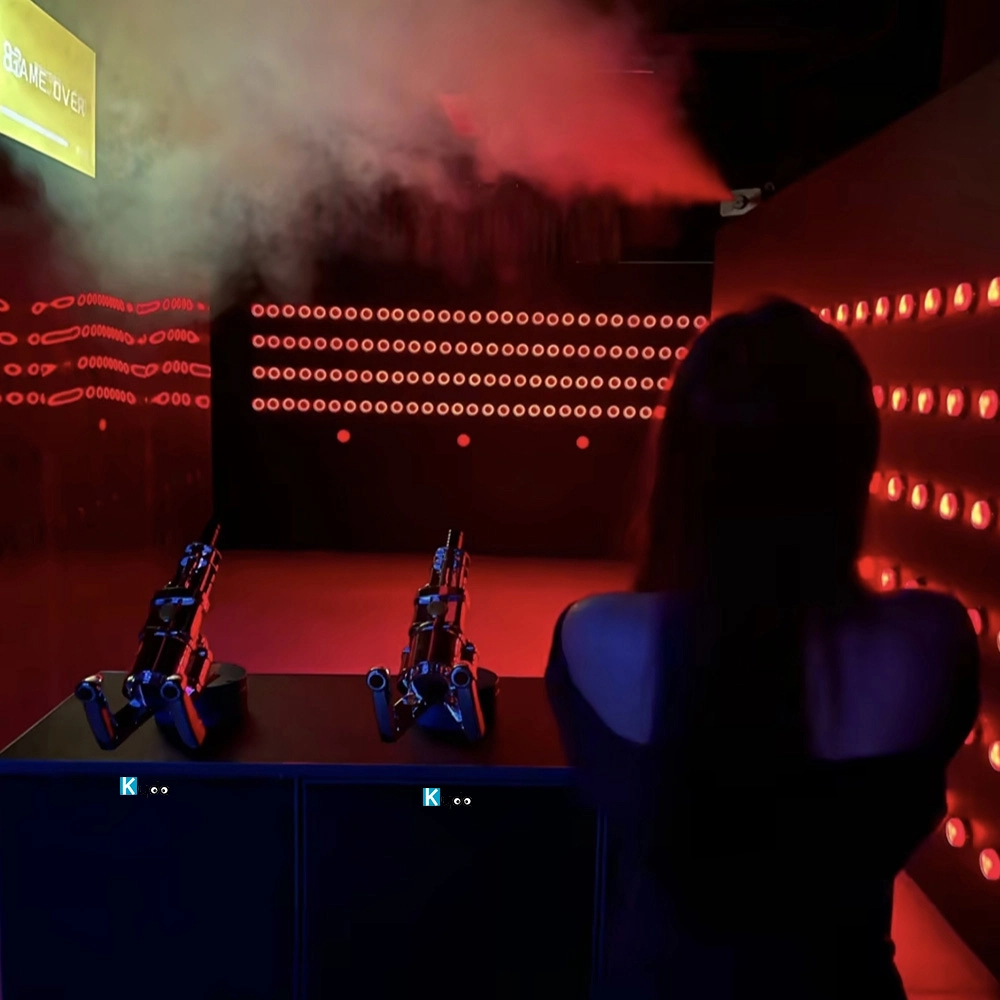
Active Reaction Laser Shooting Game Room
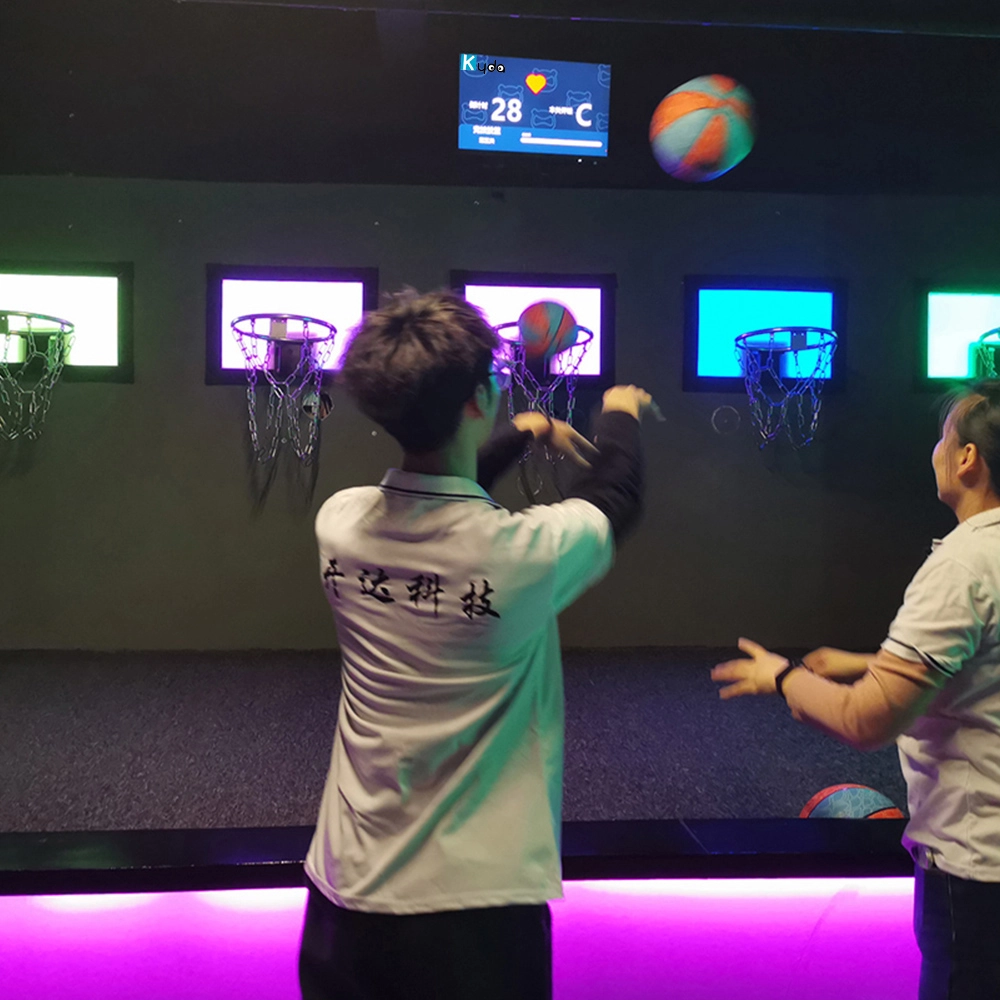
Hoops Active Game: The Ultimate Interactive Basketball Fitness Game
Elevate your basketball skills with Kyda’s Hoops Activate Game, the interactive basketball game. Perfect for basketball game rooms, Activate Hoops offers immersive fitness fun. Experience the Activate Basketball Game that combines sport and technology for active play.
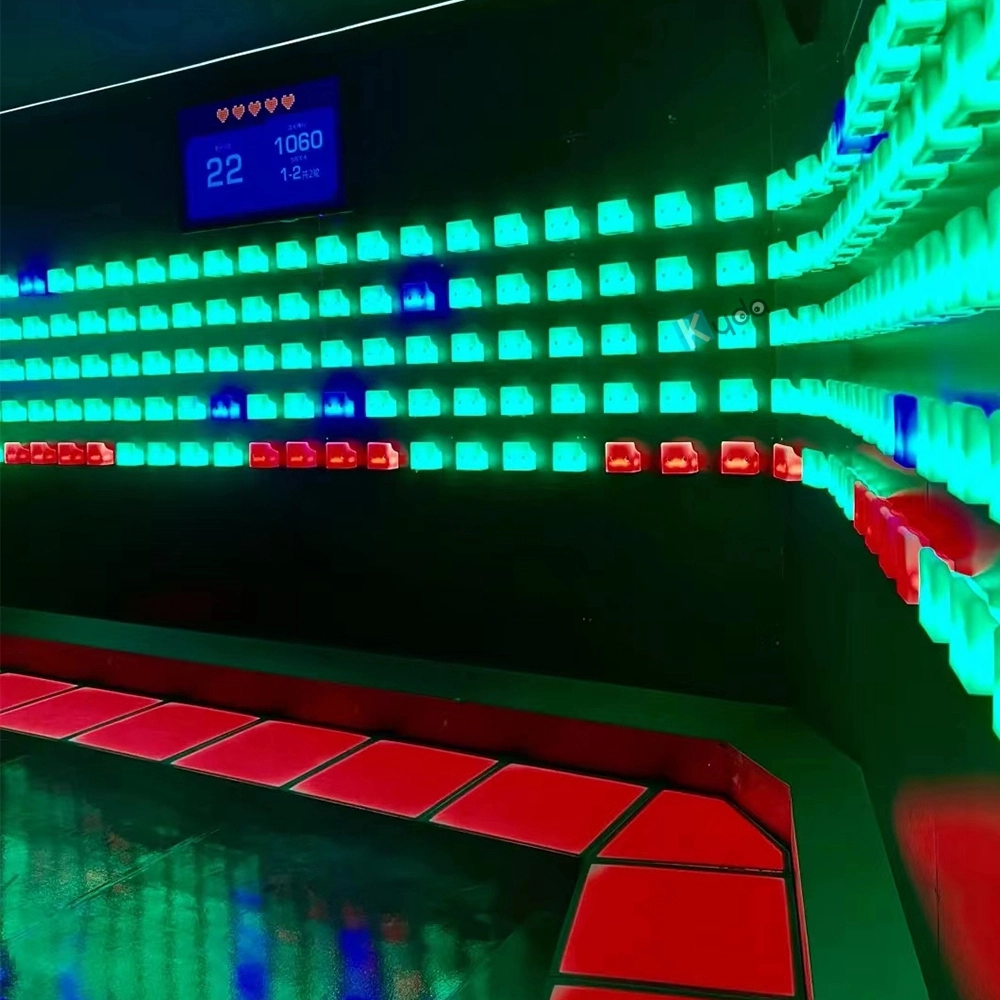
Activate Fitness Climb Game – The Ultimate Interactive LED Climbing Wall Experience
Experience the Activate Fitness Climb Game by Kyda—the interactive LED wall game. This Activate Climb Game combines fitness and fun with dynamic LED challenges, perfect for all ages. Boost agility and engagement with Kyda’s innovative interactive LED wall game today!
Let's get in touch
Email: sales@kydavr.com
Tel.: +86 188 2001 8779
Address: 501 Shixin Road, Dalong Street, Guangzhou, Guangdong, China.
© 2025 Kyda. All Rights Reserved.
 Scan QR Code
Linkedin
Ins
Facebook
Twitter
YouTube