




Top 10 Active Reaction Games for Training Faster Reflexes
- Why fast reflexes matter: performance, safety, and play
- Active Reaction Game — the modern tool for speed
- How active reaction games improve reflexes (brief science)
- How to evaluate an Active Reaction Game
- Key selection criteria for coaches, therapists and operators
- Top 10 Active Reaction Games and systems
- 1. BlazePod — portable active reaction game pods
- 2. FitLight Trainer — professional active reaction game system
- 3. Dynavision D2 — clinical/pro sports active reaction game board
- 4. Interactive LED Floor Systems — immersive active reaction game arenas
- 5. Interactive LED Wall / Reaction Wall — group-focused active reaction game
- 6. Interactive Projection Games — scalable active reaction game environments
- 7. VR and AR Reaction Games (Beat Saber, Superhot VR, custom apps) — digital active reaction game training
- 8. Laser Interactive Games / Reflex Laser Trainers — precision aiming active reaction games
- 9. Sport-Specific Reaction Systems (ball machines, smart trainers) — contextual active reaction games
- 10. Custom Active Game Rooms — bespoke multi-modal training spaces
- Comparing the top 10 Active Reaction Game systems
- Designing an effective active reaction training plan
- Progression, frequency and session structure
- Sample 6-week microcycle for athletes
- Measuring progress: what to track
- Reliable metrics for Active Reaction Game training
- Commercial vs. Custom: choosing the right path
- When to buy off-the-shelf
- When to invest in custom active game rooms
- Kyda: one-stop solutions for active game rooms and Activate gaming centers
- Kyda advantages and product focus (interactive projection games, activate interactive games, interactive LED floor, interactive LED wall, laser interactive game)
- Frequently asked questions (FAQ)
- 1. How long does it take to improve reaction time with Active Reaction Games?
- 2. Are active reaction games evidence-based?
- 3. Which system is best for a small clinic versus a large entertainment center?
- 4. Can reaction training reduce injury risk?
- 5. Do VR or AR games transfer to real-world sports performance?
- 6. How should I measure ROI for an active game room?
- References

Why fast reflexes matter: performance, safety, and play
Active Reaction Game — the modern tool for speed
Faster reflexes improve athletic performance, workplace safety, and daily decision-making. Active reaction games combine sensory stimuli, motor responses and progressive difficulty to train neural pathways responsible for perception–action coupling. Whether you are a coach, therapist, operator of an entertainment center, or an enthusiast, choosing the right Active Reaction Game can deliver measurable gains in reaction time, decision speed, and situational awareness.
How active reaction games improve reflexes (brief science)
Laboratory and applied research shows that targeted, game-like training can reduce reaction times and enhance visual attention and sensorimotor coordination. Seminal work by Green and Bavelier (2003) showed that action-video-game experience alters visual selective attention and speeds responses (Nature, 2003). More applied systems such as light-based trainers (e.g., Dynavision, FitLight, BlazePod) are used by sports scientists and clinicians to convert perceptual gains into faster motor responses in sporting and rehabilitative contexts.
How to evaluate an Active Reaction Game
Key selection criteria for coaches, therapists and operators
- Specificity: Does the game mimic the real-world context (hand, foot, eye-hand coordination)?
- Progression and adaptability: Can difficulty, stimulus timing, and spatial patterns scale with the user?
- Metrics and data: Does the system record reaction time, accuracy, and session logs for trend analysis?
- Portability and footprint: Is it mobile (pods) or room-based (walls, floors, projection)?
- Durability and cost of ownership: Suitable for commercial use vs. individual training?
- Engagement and variety: Games must be fun to ensure adherence over time.
Top 10 Active Reaction Games and systems
Below are ten widely used active reaction games or systems, with short descriptions of target use, strengths and typical users. Each entry emphasizes the phrase Active Reaction Game to align with commercial .
1. BlazePod — portable active reaction game pods
BlazePod uses wireless light pods with touch and proximity responses. It is portable, easy to program via app, and widely used by trainers for speed, agility and cognitive drills. Ideal for individual athletes, small teams and physical therapy clinics.
2. FitLight Trainer — professional active reaction game system
FitLight Trainer combines LED lights on wireless units with a tablet interface to create sequences and measure reaction time and accuracy. Used by pro teams, rehab centers and research labs for validated training protocols.
3. Dynavision D2 — clinical/pro sports active reaction game board
Dynavision provides a large circular board of lights for visually guided reaction tasks. It is a clinical standard for measuring and training visuomotor reaction time, often used in concussion rehab and elite-sport testing.
4. Interactive LED Floor Systems — immersive active reaction game arenas
Interactive LED floors project reactive targets that require foot or whole-body responses. They are excellent for multisensory reaction training, rehabilitation gait tasks, and high-turnover entertainment venues.
5. Interactive LED Wall / Reaction Wall — group-focused active reaction game
LED walls create large reaction surfaces for teams or groups. Operators use them in amusement centers and training facilities for crowd-friendly, competitive reaction challenges.
6. Interactive Projection Games — scalable active reaction game environments
Projection-based systems turn floors or walls into interactive surfaces with lower hardware cost than embedded LED floors. Great for pop-up events, educational centers, and multisensory rehab exercises.
7. VR and AR Reaction Games (Beat Saber, Superhot VR, custom apps) — digital active reaction game training
Virtual Reality games train visuomotor coordination and reduce simple reaction time in lab studies. They offer controlled scenarios and immediate feedback; appropriate for tech-savvy athletes and cognitive training programs.
8. Laser Interactive Games / Reflex Laser Trainers — precision aiming active reaction games
Laser-based systems test aiming speed and trigger timing under simulated conditions (e.g., tactical training, laser tag reaction modes). They are used by tactical teams and entertainment operators.
9. Sport-Specific Reaction Systems (ball machines, smart trainers) — contextual active reaction games
Ball launchers or sport-specific reactive trainers deliver stimulus–response practice in game-like contexts (tennis, baseball, soccer). They are best when transference to sport skill is the priority.
10. Custom Active Game Rooms — bespoke multi-modal training spaces
Integrated rooms combine floors, walls, projection and sensors for complex reaction drills. These rooms are favored by high-performance centers, rehabilitation hospitals and High Quality entertainment venues.
Comparing the top 10 Active Reaction Game systems
| System | Primary Target | Typical Users | Footprint / Portability | Evidence / Use Cases | Approx. Entry Cost |
|---|---|---|---|---|---|
| BlazePod | Hand/foot speed, cognition | Trainers, athletes, clinics | Highly portable | Commercial use in sports; many case reports | $200–$1,200 |
| FitLight | Reaction & accuracy | Pro teams, clinics | Portable wireless units | Used in peer-reviewed sport studies | $1,500–$6,000 |
| Dynavision D2 | Visuomotor reaction | Clinics, research, pro sports | Fixed cabinet | Clinical studies on concussion & rehab | $10,000–$25,000 |
| LED Floor | Whole-body & footwork | Gyms, arcades, rehab | Installed | Case studies in rehabilitation & entertainment | $10k–$100k+ |
| LED Wall | Hand-eye, group play | Family entertainment centers | Installed wall | Arcade/operator reports | $5k–$50k |
| Projection Games | Foot & hand reactions | Schools, FECs, therapy | Portable / installed | Rehab & engagement reports | $3k–$40k |
| VR / AR Games | Visuomotor & decision speed | Athletes, clinics | Portable to room-scale | Multiple lab studies on reaction improvements | $300–$15k+ |
| Laser Trainers | Aim & trigger timing | Tactical, entertainment | Portable | Operational training literature | $1k–$20k |
| Sport-Specific Systems | Contextual reaction | Sport teams | Varies | Performance studies | $500–$50k |
| Custom Game Rooms | Multi-modal training | High-performance, FECs | Installed | Case studies & ROI reports | $20k–$300k+ |
(Cost ranges are approximate and depend on customization, software bundles and installation. For up-to-date pricing consult manufacturers.)
Designing an effective active reaction training plan
Progression, frequency and session structure
To improve reflexes, prioritize short, frequent sessions (10–30 minutes), 3–5 times per week. Start with simple stimuli and longer reaction windows, then compress timing and add distractors for decision-making under pressure. Mix modality (visual, audio, tactile) to broaden neural adaptation. Track median reaction time and accuracy across sessions to ensure progressive overload without ceiling effects.
Sample 6-week microcycle for athletes
- Weeks 1–2: Baseline testing + 3 sessions/week with simple light-response drills (30 reps/session).
- Weeks 3–4: Increase unpredictability, add dual-task elements (motor + cognitive).
- Weeks 5–6: Sport-specific reactive drills (ball, partner) and high-pressure timed circuits.
Measuring progress: what to track
Reliable metrics for Active Reaction Game training
- Mean and median reaction time (ms) per session
- Response accuracy / miss rate
- Decision time under choice conditions (choice reaction time)
- Transfer assessments: sport-specific performance measures
Validated computerized reaction-time platforms provide normative data. For normative reaction-time methods see Deary et al. (2011) which provides a reliable, reproducible computerized platform for measuring reaction time used in research settings.
Commercial vs. Custom: choosing the right path
When to buy off-the-shelf
Buy compact systems (BlazePod, FitLight) when you need rapid deployment, affordability and portability for small teams or clinics. They deliver strong ROI for coaches focused on individual athlete improvements.
When to invest in custom active game rooms
Invest in custom rooms when you need immersive, multi-user experiences with branding, permanent installations, or when you operate entertainment centers where throughput and repeatability drive revenue. Custom rooms enable blended training protocols that combine LED floors, walls and projection for maximal engagement and measurable revenue per square meter.
Kyda: one-stop solutions for active game rooms and Activate gaming centers
Kyda is a one-stop solution provider of active game rooms and Activate gaming centers dedicated to the custom research, development, production, and sales of interactive and educational recreational products, as well as indoor and outdoor amusement equipment and low-cost, high-income, high-return equipment. Kyda's main products include active interactive games, interactive LED floor systems, active reaction games, brain challenge games, horror escape games, active fitness games, and interactive projection games, as well as various thrilling indoor and outdoor amusement equipment.
Kyda's team consists of professionals specializing in electronic design and development, software programming, game design, animation design, product design, multimedia design, and interior design. Leveraging the manufacturing advantages of Guangzhou, Zhongshan, Zhengzhou, and Beijing, we maintain long-term partnerships with LED light factories, advertising production factories, sheet metal factories, paint factories, electronic assembly factories, 3D plastic printing factories, and multimedia resource companies. This allows us to produce customized projects or products to meet various local needs. Our team is committed to using evolving technology, design, and execution capabilities to meet our customers' ever-changing, personalized customization needs.
Our vision is to become the world's leading active game room manufacturer.
Kyda advantages and product focus (interactive projection games, activate interactive games, interactive LED floor, interactive LED wall, laser interactive game)
Kyda’s core competitive strengths include integrated in-house R&D across electronics and software, strong manufacturing partnerships in China that lower production lead time and cost, and turnkey project capabilities from concept to installation. Kyda specializes in interactive projection games and Activate interactive games with modular interactive LED floors and walls and laser interactive games tailored to entertainment centers, educational facilities and rehabilitation clinics. Their customization capability—animation, game logic, and room design—makes it easy to align training protocols to sport, therapy or revenue objectives.
Frequently asked questions (FAQ)
1. How long does it take to improve reaction time with Active Reaction Games?
Short-term improvements (5–15% reductions in simple reaction time) can appear in 2–6 weeks with regular training (3–5 sessions/week). Larger or sport-specific transfer effects typically require 6–12+ weeks combined with on-field practice. Individual results vary based on baseline ability and training specificity.
2. Are active reaction games evidence-based?
Yes — a combination of laboratory studies (e.g., action video game research) and applied clinical/sports studies supports the efficacy of visual and multisensory reaction training. Devices like Dynavision and FitLight are used in peer-reviewed studies and clinical practice.
3. Which system is best for a small clinic versus a large entertainment center?
Small clinics and individual coaches often benefit from portable systems (BlazePod, FitLight) due to lower cost and flexibility. Large entertainment centers or high-performance facilities typically invest in installed LED floors, walls or custom rooms for scalability and brand differentiation.
4. Can reaction training reduce injury risk?
Improved perception–action coupling and quicker decision-making can contribute to safer movement patterns, but injury prevention is multifactorial. Reaction training should be combined with strength, mobility and sport-specific technique training to maximize protective effects.
5. Do VR or AR games transfer to real-world sports performance?
VR/AR can improve visuomotor skills and decision speed in controlled tasks. Transfer to sport performance depends on the degree of ecological validity—the more the virtual scenarios mimic real sport contexts, the greater the likely transfer.
6. How should I measure ROI for an active game room?
Measure ROI via utilization (sessions/day), revenue per session, customer retention, and downstream benefits (e.g., referrals). For training centers, measure athlete performance improvements and reduction in injury-related costs where applicable.
If you'd like tailored recommendations for your facility, training group or clinic — or a quote for custom interactive solutions — contact Kyda to discuss design, equipment selection and turnkey installation options. Explore product demos, technical specs and case studies to choose the right Active Reaction Game solutions for your needs.
References
- Green, C. S., & Bavelier, D. (2003). Action video game modifies visual selective attention. Nature. https://www.nature.com/articles/nature01647 (accessed 2025-11-23)
- Deary, I. J., Liewald, D., & Starr, J. M. (2011). A free, easy-to-use, computerized platform for measuring reaction time. Behavior Research Methods. https://link.springer.com/article/10.3758/s13428-010-0099-4 (accessed 2025-11-23)
- FitLight official site — product information and use cases. https://fitlight.com (accessed 2025-11-23)
- BlazePod official site — product descriptions and trainer resources. https://www.blazepod.com (accessed 2025-11-23)
- Dynavision official site — clinical and sport applications. https://dynavision.com (accessed 2025-11-23)
- Systematic reviews and industry reports on exergaming and reaction training: examples include reviews in Frontiers in Psychology and Journal of Sports Science. For summaries, see PubMed search results for video game reaction time training and exergaming rehabilitation. https://pubmed.ncbi.nlm.nih.gov (accessed 2025-11-23)
Contact / Request a quote: Reach out to Kyda for customized project proposals, product brochures and ROI estimates. Email sales@kyda.com or visit our product pages to request a demonstration.
Top led floor game Manufacturers and Suppliers in us 2026
Best light up floor game manufacturers and supplier brands in us
What is an Active Reaction Game? Complete Beginner's Guide
How Active Reaction Games Improve Cognitive Performance
For Company
Can you make decoration design for buyer’s place?
We also can assist to make decoration that is for extra.
Where is your factory?
Kydaplay office in Beijing, Guangzhou, Shenzhen;
Kydaplay workshop in Shenyang, Zhongshan.
For Led Floor for Dance Pixel Grid Room
What is the difference of Grid and Mega Grid, Pixel Grid?
Grid just interactive floor game, smaller room size can start, Add the wall LED tile call Pixel Grid;
Mega Grid add 20pcs Digital screen with 20pcs wall buttons , also need suggest bigger room size, more activate interesting games than Grid, add the wall LED tile call Pixel Grid;
Kyda accept personal customization as requirements; Grid, Mega Grid, Pixel Grid, Floorislava, Arena game, Active LED floor game, Interactive floor LED game etc that different name in different place.
How much size if we start the Megagrid floorislava?
One LED grid tile is 30*30cm, eg: room size 10*5m, which can match 32*16pcs,512pcs for total; Layout: customize the quantity and place it according to the actual venue.
For Games Grid Floor is Lava
How much size if we start the grid floor is lava?
One LED grid tile is 30*30cm,
Eg: room size 5*5m, which can match 16*16pcs,256pcs for total,
Layout: customize the quantity and place it according to the actual venue.
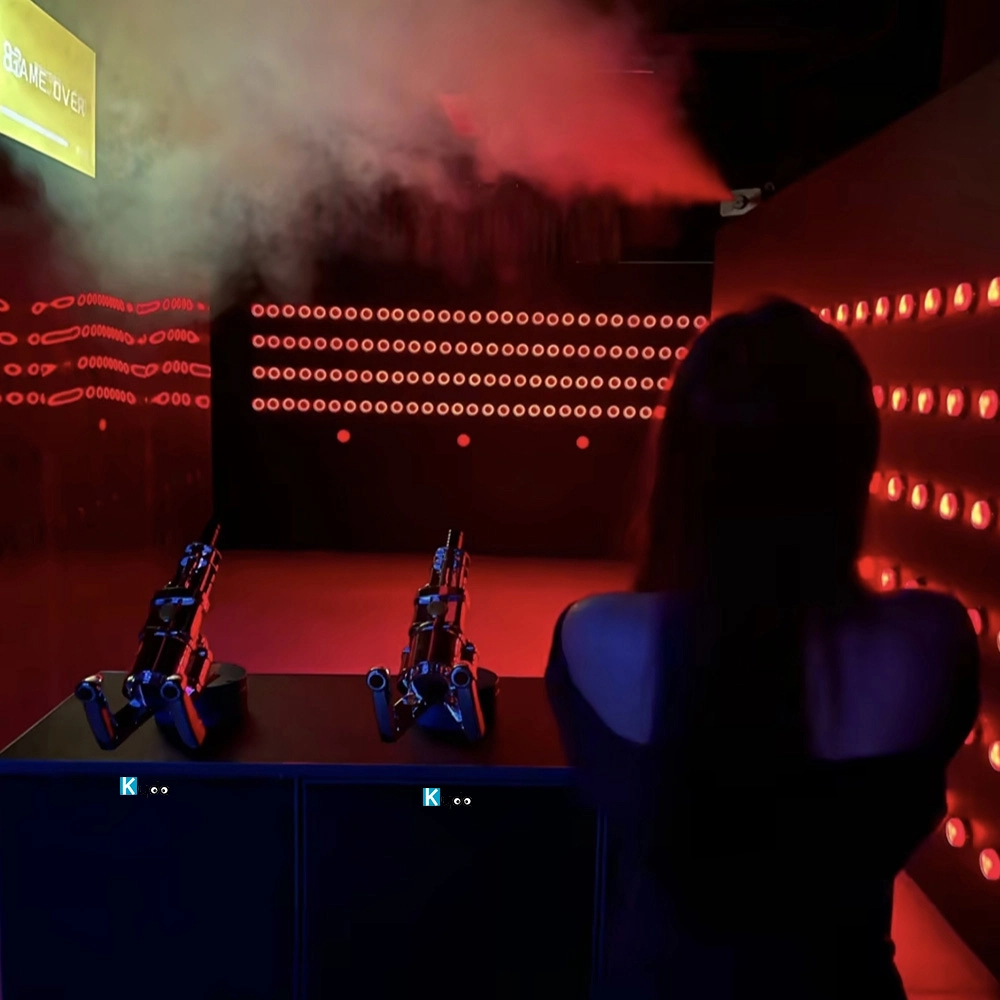
Active Reaction Laser Shooting Game Room
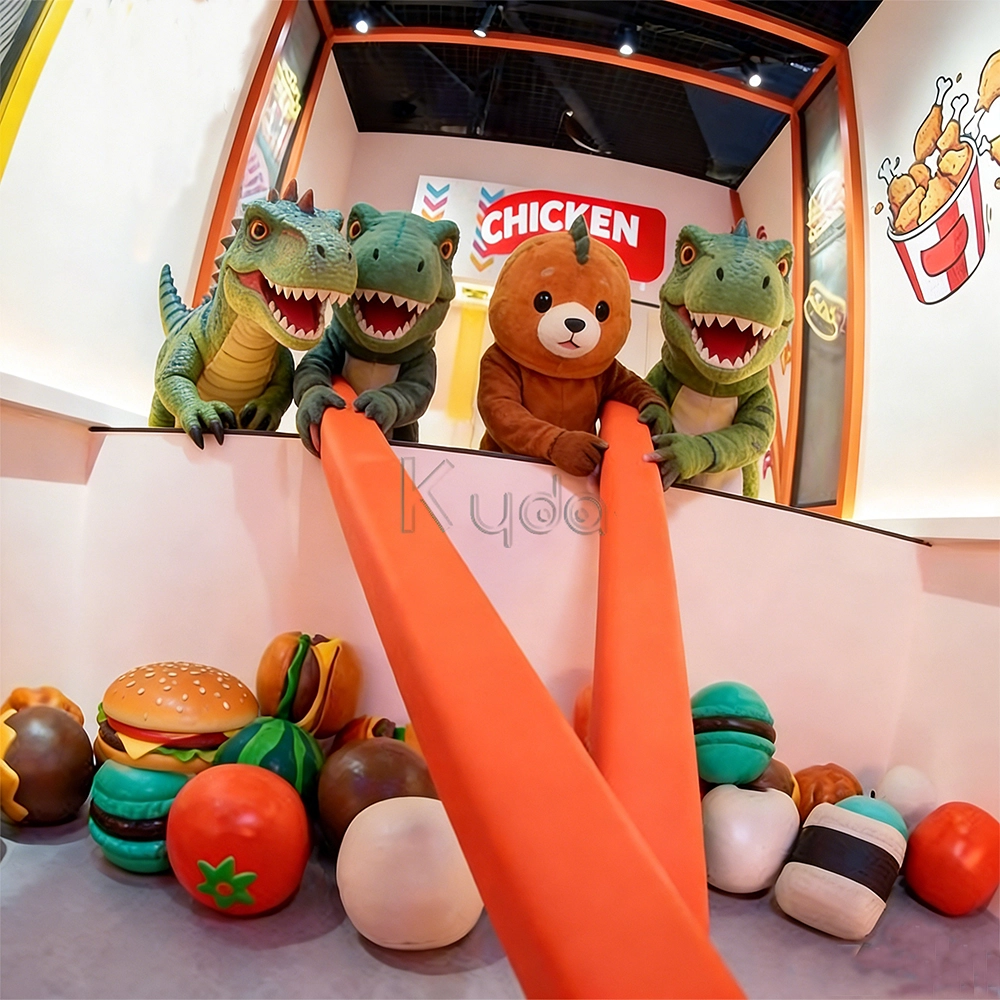
Crub Crab Giant Chopsticks Challenge Game Interactive Skill Challenge Game for Activate Game Rooms by Kyda
Crub Crab Giant Chopsticks Challenge Game is an innovative interactive challenge attraction designed for indoor entertainment centers, arcade game venues, and activate-style interactive game rooms. In this unique skill-based game, players control a pair of oversized giant chopsticks to pick up scattered snacks, toys, or prize items and place them into a collection basket within a limited time. The gameplay combines hand-eye coordination, precision control, balance, and quick reaction, creating a fun and competitive experience suitable for players of all ages.
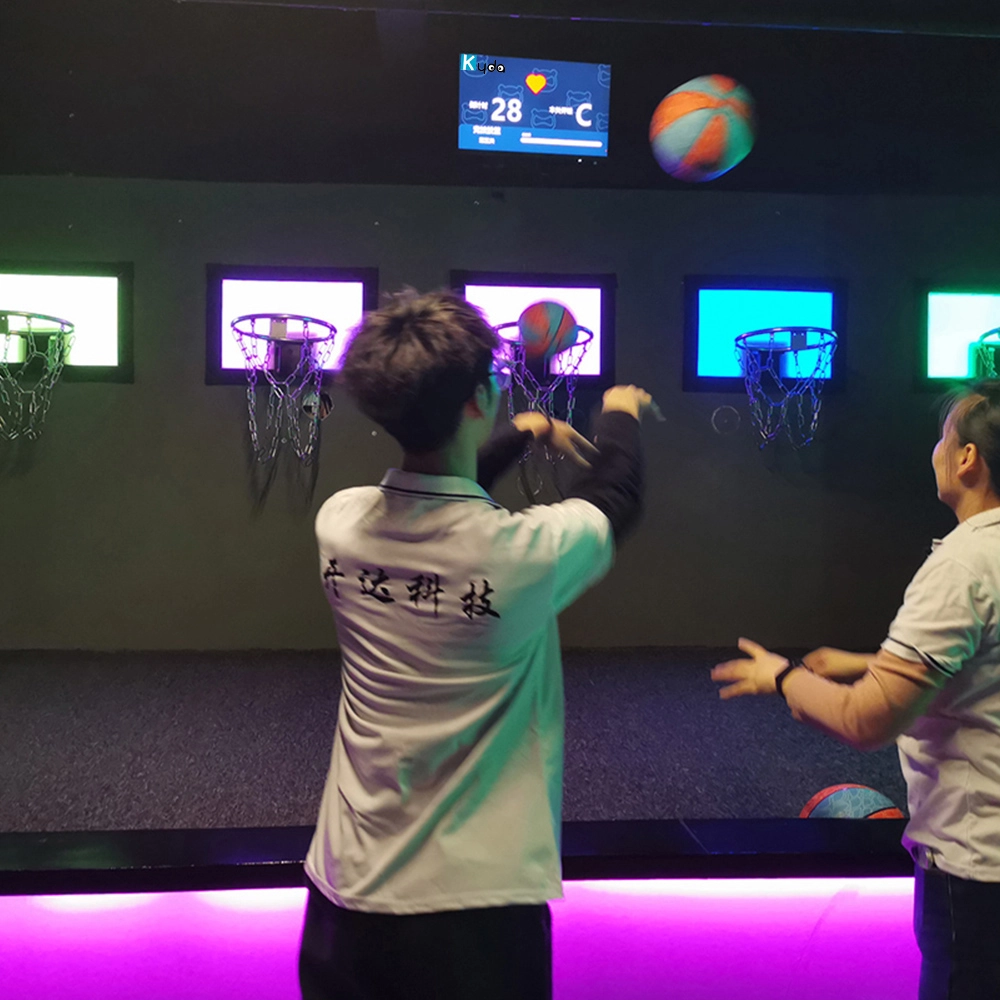
Hoops Active Game: The Ultimate Interactive Basketball Fitness Game
Elevate your basketball skills with Kyda’s Hoops Activate Game, the interactive basketball game. Perfect for basketball game rooms, Activate Hoops offers immersive fitness fun. Experience the Activate Basketball Game that combines sport and technology for active play.
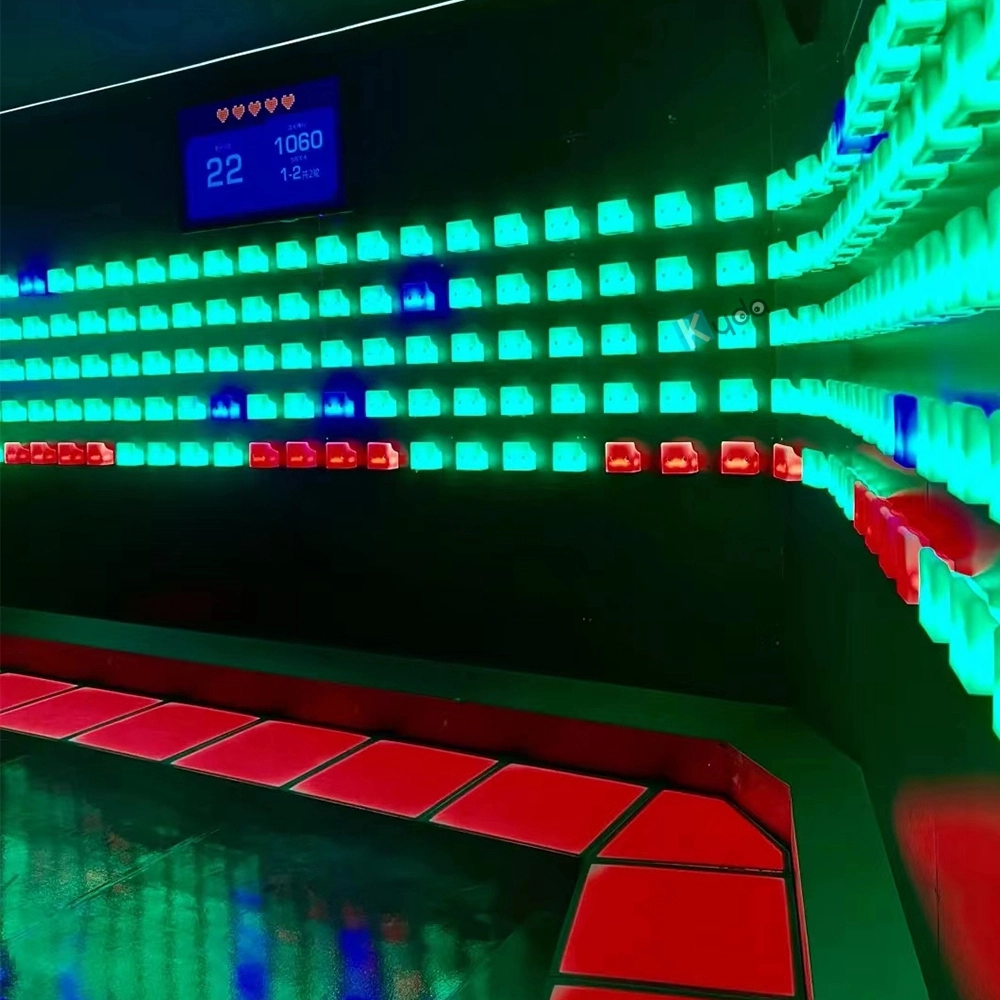
Activate Fitness Climb Game – The Ultimate Interactive LED Climbing Wall Experience
Experience the Activate Fitness Climb Game by Kyda—the interactive LED wall game. This Activate Climb Game combines fitness and fun with dynamic LED challenges, perfect for all ages. Boost agility and engagement with Kyda’s innovative interactive LED wall game today!
Let's get in touch
Email: sales@kydavr.com
Tel.: +86 188 2001 8779
Address: 501 Shixin Road, Dalong Street, Guangzhou, Guangdong, China.
© 2025 Kyda. All Rights Reserved.
 Scan QR Code
Linkedin
Ins
Facebook
Twitter
YouTube