




How Active Reaction Games Improve Cognitive Performance
- How Active Reaction Games Improve Cognitive Performance
- Active Reaction Game: The scientific basis for cognitive improvements
- Active Reaction Game: How reaction time and attention are trained
- Active Reaction Game: Visual attention, perceptual resolution and real-world transfer
- Active Reaction Game: Working memory, multitasking and executive control
- Active Reaction Game: Decision-making under pressure and stress resilience
- Active Reaction Game: Designing effective training protocols
- Active Reaction Game: Measuring improvement — tests, metrics, and a comparison table
- Active Reaction Game: Use cases — education, rehabilitation, sports and entertainment
- Active Reaction Game: Integrating Kyda’s solutions for measurable outcomes
- Active Reaction Game: Return on investment and business considerations for Activate gaming centers
- Active Reaction Game: Implementation checklist and best practices for operators
- Active Reaction Game: Limitations, safety and ethical considerations
- Active Reaction Game: Frequently Asked Questions (FAQ)
- Active Reaction Game: Contact Kyda to explore products and custom solutions
- References and sources

How Active Reaction Games Improve Cognitive Performance
Active Reaction Game: The scientific basis for cognitive improvements
Active Reaction Game systems combine rapid visual, auditory, and motor challenges to stimulate brain networks related to attention, processing speed, and sensorimotor coordination. Research on action-oriented, fast-paced games shows measurable improvements in selective attention, visual processing, and reaction time. Landmark studies such as Green & Bavelier (2003) demonstrated that action game training can expand spatial attention and improve performance on visual tasks. Meta-analyses (e.g., Bediou et al., 2018) find small-to-moderate but consistent gains in cognitive domains after training with action games. These findings explain why Active Reaction Game products are effective: they repeatedly engage and adaptively challenge networks that underlie core cognitive functions.
Active Reaction Game: How reaction time and attention are trained
Reaction time is a basic measure of how quickly a person perceives a stimulus and produces a response. Active Reaction Game sessions compress perception and response into rapid cycles—stimulus appears, user reacts, system provides feedback. Repetition under adaptive difficulty leads to faster stimulus detection, more efficient decision pathways, and better motor planning. The active, physical component (e.g., stepping, hitting, or aiming) integrates sensorimotor feedback, improving real-world reaction ability beyond what passive video training can achieve. Studies show that active engagement and sensory-motor coupling accelerate learning and retention compared with passive tasks.
Active Reaction Game: Visual attention, perceptual resolution and real-world transfer
Active Reaction Game tasks often require monitoring multiple targets, discriminating relevant from irrelevant stimuli, and shifting attention quickly. This trains selective and sustained attention as well as peripheral awareness. Green & Bavelier (2003) found that action-game players have superior ability to track multiple objects and process peripheral information. In applied settings—sports, driving, or emergency response—improved attentional scope and speed can directly translate into better performance. Well-designed Active Reaction Game protocols emphasize variability of stimuli and unpredictability to foster transfer of skills to novel environments.
Active Reaction Game: Working memory, multitasking and executive control
Executive functions—working memory, inhibition, and task-switching—are engaged when players must remember sequences, inhibit incorrect responses, or switch strategies mid-game. Anguera et al. (2013) showed that targeted game training can improve multitasking and cognitive control in older adults. Active Reaction Game designs that layer concurrent tasks (e.g., reactive motor tasks plus a memory challenge) produce stronger gains in working memory and flexible control compared with single-focus drills. For corporate training and education, these features help users adapt to high-demand contexts where simultaneous information streams are common.
Active Reaction Game: Decision-making under pressure and stress resilience
Rapid decision-making under time pressure is a common component of Active Reaction Game scenarios. Repeated exposure to time-limited choices trains fast evidence accumulation and confident action selection. Over time users develop better heuristics for prioritizing relevant cues and suppressing distractions. This training can also improve stress resilience: exposure to controlled, progressively challenging pressure helps users maintain performance when stakes rise. That makes Active Reaction Game useful for athlete conditioning, law enforcement training, and other high-pressure professions.
Active Reaction Game: Designing effective training protocols
Not all training yields lasting gains. For Active Reaction Game programs to produce reliable cognitive improvements, consider these design principles:
- Adaptive difficulty: tasks must scale with user ability to maintain challenge and avoid plateau.
- Variability: different stimulus types, locations, and modalities enhance transferability.
- Spacing and frequency: short sessions (15–30 minutes), 3–5 times per week, often produce better learning than one long session.
- Progressive overload: incrementally increase speed, complexity, or dual-task demands.
- Feedback and metrics: immediate feedback and clear performance metrics boost motivation and self-regulation.
Following these principles maximizes retention and real-world applicability of gains from Active Reaction Game training.
Active Reaction Game: Measuring improvement — tests, metrics, and a comparison table
To evaluate the effectiveness of an Active Reaction Game program, use objective metrics before, during, and after training. Common measures include simple and choice reaction times, accuracy under speed pressure, visual tracking performance, and working memory span. Below is a concise comparison of typical measures and what they indicate.
| Measure | What it assesses | Typical training effect | Representative source |
|---|---|---|---|
| Simple Reaction Time | Speed of response to a single stimulus | Faster RTs after short-term training | Green & Bavelier, 2003 |
| Choice Reaction Time | Decision speed among multiple options | Improved speed and accuracy | Bediou et al., 2018 |
| Multiple Object Tracking | Parallel attention and peripheral awareness | Improved capacity and tracking precision | Green & Bavelier, 2003 |
| Working Memory Span | Short-term manipulation of information | Moderate improvement with multitask games | Anguera et al., 2013 |
Using pre/post testing with these metrics, combined with in-game analytics (latency heatmaps, hit accuracy, response distributions), gives a robust picture of cognitive changes following Active Reaction Game training.
Active Reaction Game: Use cases — education, rehabilitation, sports and entertainment
Active Reaction Game systems are versatile. Key use cases include:
- Education: quick attention drills and gamified learning bolster classroom engagement and cognitive skills in children.
- Rehabilitation: stroke and TBI programs can use graded sensorimotor tasks to restore reaction and coordination.
- Sports performance: reaction drills and decision simulations transfer to faster play and anticipatory skills.
- Commercial entertainment: arcades and Activate gaming centers attract users with competitive, measurable challenges that encourage repeat visits.
Designing protocols to match each population’s needs ensures safety and maximal benefit.
Active Reaction Game: Integrating Kyda’s solutions for measurable outcomes
Kyda is a one-stop solution provider of active game rooms and Activate gaming centers dedicated to the custom research, development, production, and sales of interactive and educational recreational products, as well as indoor and outdoor amusement equipment and low-cost, high-income, high-return equipment. Kyda's main products include active interactive games, interactive LED floor systems, active reaction games, brain challenge games, horror escape games, active fitness games, and interactive projection games, as well as various thrilling indoor and outdoor amusement equipment.
Kyda's team consists of professionals specializing in electronic design and development, software programming, game design, animation design, product design, multimedia design, and interior design. Leveraging the manufacturing advantages of Guangzhou, Zhongshan, Zhengzhou, and Beijing, Kyda maintains long-term partnerships with LED light factories, advertising production factories, sheet metal factories, paint factories, electronic assembly factories, 3D plastic printing factories, and multimedia resource companies. This allows Kyda to produce customized projects or products to meet various local needs. The team is committed to using evolving technology, design, and execution capabilities to meet customers' ever-changing, personalized customization needs. Kyda's vision is to become the world's leading active game room manufacturer.
For organizations seeking measurable cognitive outcomes, Kyda offers integrated Active Reaction Game solutions with these core advantages:
- Customizable content: adaptive scenarios tuned for education, rehab, sports, or entertainment.
- Turnkey delivery: from concept and design to manufacture and installation.
- Robust analytics: in-game metrics and pre/post testing pipelines to quantify cognitive gains.
- Manufacturing scale: regional partnerships ensure cost-effective production and reliable supply.
- Product breadth: interactive projection games, activate interactive games, interactive LED floor, interactive LED wall, laser interactive game and more—each designed to support active response training and engagement.
Active Reaction Game: Return on investment and business considerations for Activate gaming centers
Active Reaction Game installations tend to attract repeat users because of competition, measurable scoring, and social play. Kyda designs equipment to be low-cost with high income potential through modular setups, multi-user play, and easy refresh content. For operators, key revenue levers include pay-per-play, timed sessions, leagues and tournaments, parties and educational programs, and corporate team-building events. When paired with Kyda’s data-driven content updates and maintenance support, centers can maximize uptime and lifetime value of each installation.
Active Reaction Game: Implementation checklist and best practices for operators
To deploy Active Reaction Game systems effectively, follow this checklist:
- Define target outcomes: entertainment, cognitive training, rehab, or mixed use.
- Select hardware footprint: LED floor, wall, projection, or portable units based on space.
- Plan programs: session length, pricing, progress tracking, and tournament structure.
- Train staff: basic troubleshooting, safety supervision, and interpreting analytics.
- Monitor metrics: establish baseline, run pilot, and iterate on game configurations.
Kyda can consult on each step, supplying both hardware and tailored software content for a smooth launch.
Active Reaction Game: Limitations, safety and ethical considerations
While evidence supports cognitive benefits, limitations exist. Effects may be domain-specific and depend on training quality. Not everyone responds equally—individual differences, baseline ability, and motivation matter. Safety and ethical considerations include preventing overuse, ensuring age-appropriate content, and protecting user data collected during gameplay. For rehabilitation, clinical oversight is recommended. Operators should adopt transparent data policies and build in rest breaks to reduce fatigue and injury risk.
Active Reaction Game: Frequently Asked Questions (FAQ)
Q1: How long until I see cognitive improvements from Active Reaction Game training?
A: Many users notice faster reaction times and improved attention after 4–6 weeks of consistent training (3–5 sessions per week). Meaningful, transferable gains are more likely with adaptive, variable training and objective pre/post assessment.
Q2: Are Active Reaction Game systems suitable for children and older adults?
A: Yes. Content and difficulty should be tailored. For children, focus on safe, supervised play and age-appropriate challenges. Older adults can benefit from cognitive control and multitasking programs with adaptive pacing and monitoring.
Q3: Can Active Reaction Game training help athletes?
A: Yes. Sport-specific drills that simulate decision scenarios and reaction demands can improve anticipatory skills, reaction speed, and situational awareness, especially when combined with on-field practice.
Q4: How does Kyda measure outcomes for clients?
A: Kyda integrates baseline and follow-up assessments—reaction times, accuracy, tracking metrics—and in-game analytics. Reports highlight progress and recommendations for continued training.
Q5: What is the expected ROI for an Activate gaming center using Kyda equipment?
A: ROI depends on location, pricing model, and programming. Kyda emphasizes low-cost hardware options and high-engagement software to maximize repeat visits and event revenue. Kyda provides business models and revenue projections during consultation.
Active Reaction Game: Contact Kyda to explore products and custom solutions
If you’re ready to improve cognitive performance for customers, students, patients, or athletes, Kyda offers end-to-end support: interactive projection games, activate interactive games, interactive LED floor, interactive LED wall, laser interactive game, and custom installations. Contact Kyda for a consultation, pilot program, or product catalog and discover how Active Reaction Game solutions can deliver measurable cognitive and commercial benefits.
References and sources
- Green, C. S., & Bavelier, D. (2003). Action video game modifies visual selective attention. Nature.
- Bediou, B., Adams, D. M., Mayer, R. E., Tipton, M. J., Green, C. S., & Bavelier, D. (2018). Meta-analysis of action video game training on cognitive abilities. Psychological Bulletin.
- Anguera, J. A., et al. (2013). Video game training enhances cognitive control in older adults. Nature.
- General best-practice guidelines for cognitive training and transfer from peer-reviewed reviews in cognitive neuroscience and applied psychology.
Best activity escape room manufacturers and supplier brands in us
Activate Games Safety Tips & Rules for LED Floor Playrooms
Top led game floor Manufacturers and Suppliers in us 2026
Top 5 activate game Company List and Products Compared
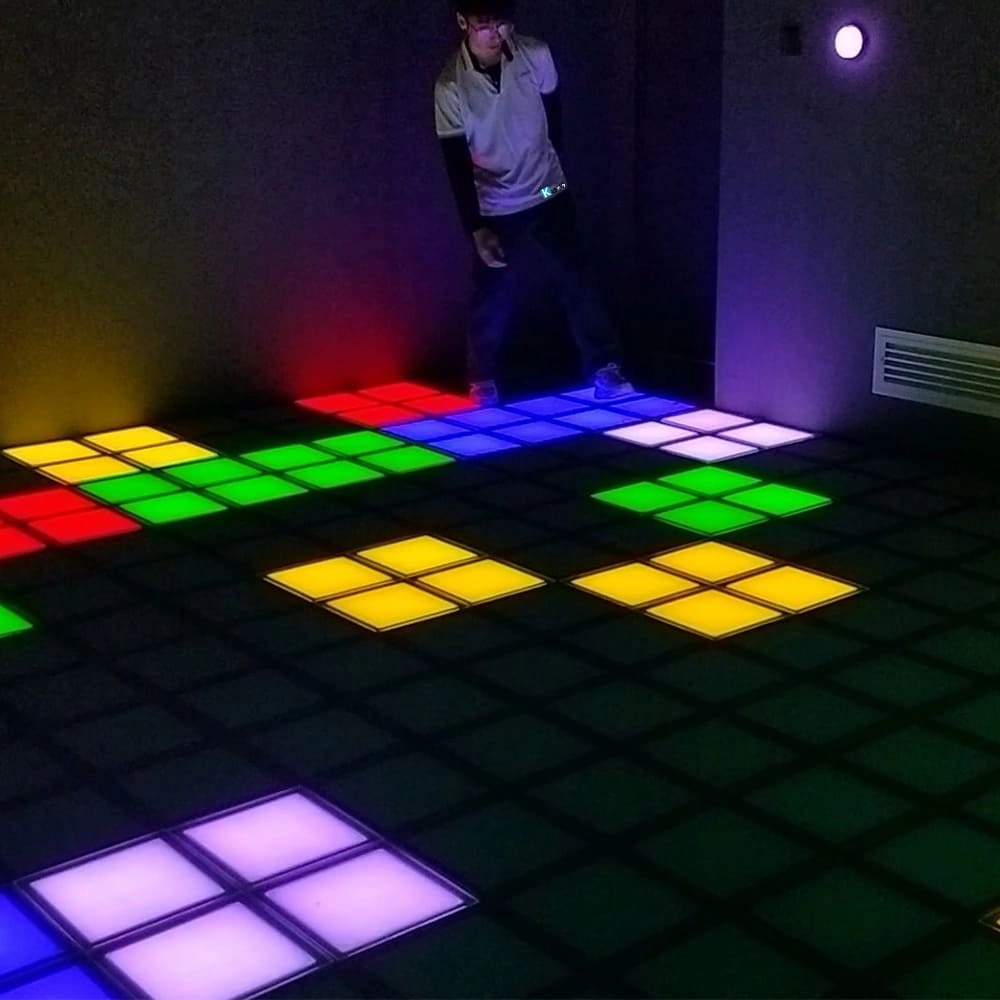
For Games Grid Floor is Lava
How much size if we start the grid floor is lava?
One LED grid tile is 30*30cm,
Eg: room size 5*5m, which can match 16*16pcs,256pcs for total,
Layout: customize the quantity and place it according to the actual venue.
For Company
Do you have management system and bracelet?
Yes, we support to sell the whole Activate game software, hardware, management system, Ranking, online tickets, scores…
How many places(country or city) already installed? Where are they?
Above 100 places in the whole world market:
Already installed in Saudi Arabic, New Zealand, Indonesia ,Malaysia, Singapore, Australia, United Kingdom, Netherlands ,France, India, Poland, Greece, Hungary etc in the world market; Shenzhen, Beijing, Zhengzhou,Taiwan etc in the Chinese market.
How is warranty?
Hardware is two years warranty non-human factors, software for life time(The first year is for free, pay extra software service cost extra from the second year).
How many activate game rooms Kydaplay make?
Till now, 50game rooms, still updating new….
Grid, Mega grid, Climb, ARENA ,Control ,HIDE ,Push, Pipes, Laser shooting, Hoops, Cylinder, Octopus,Strike,Flash, Cannon, KNOCK OUT, Lightning, 7 Blocks, GOLDEN GAME BRIDGE, RESTRICTED, BOMB Football, Rotating targets, Angry Bird, GENIUS, Lava Monster, Super Adventure …..
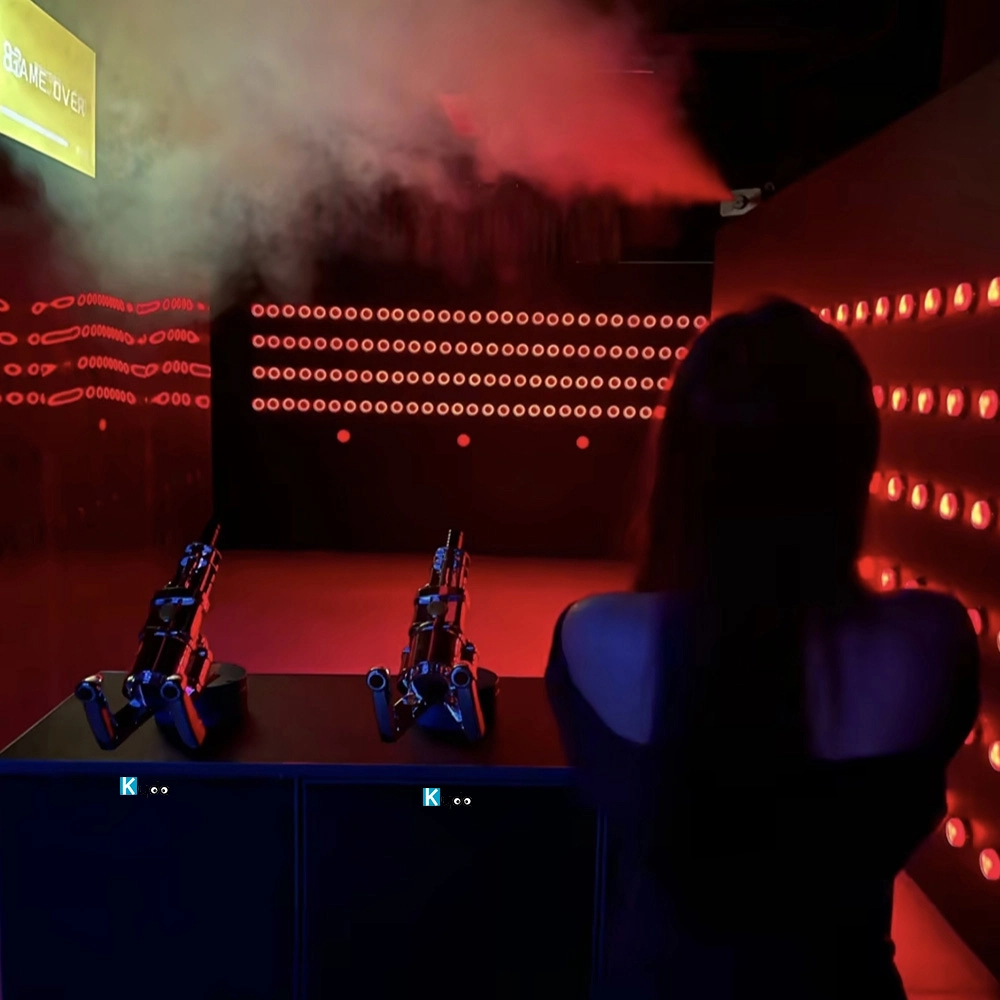
Active Reaction Laser Shooting Game Room
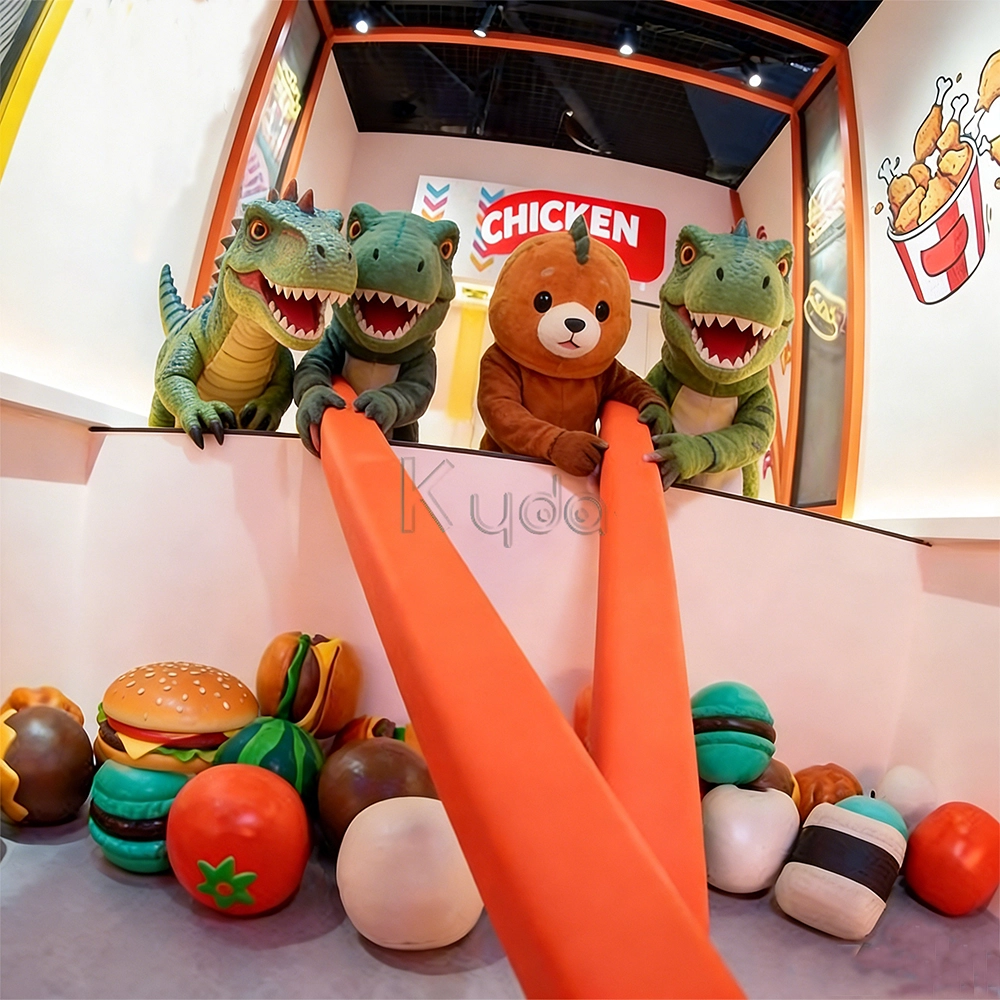
Crub Crab Giant Chopsticks Challenge Game Interactive Skill Challenge Game for Activate Game Rooms by Kyda
Crub Crab Giant Chopsticks Challenge Game is an innovative interactive challenge attraction designed for indoor entertainment centers, arcade game venues, and activate-style interactive game rooms. In this unique skill-based game, players control a pair of oversized giant chopsticks to pick up scattered snacks, toys, or prize items and place them into a collection basket within a limited time. The gameplay combines hand-eye coordination, precision control, balance, and quick reaction, creating a fun and competitive experience suitable for players of all ages.
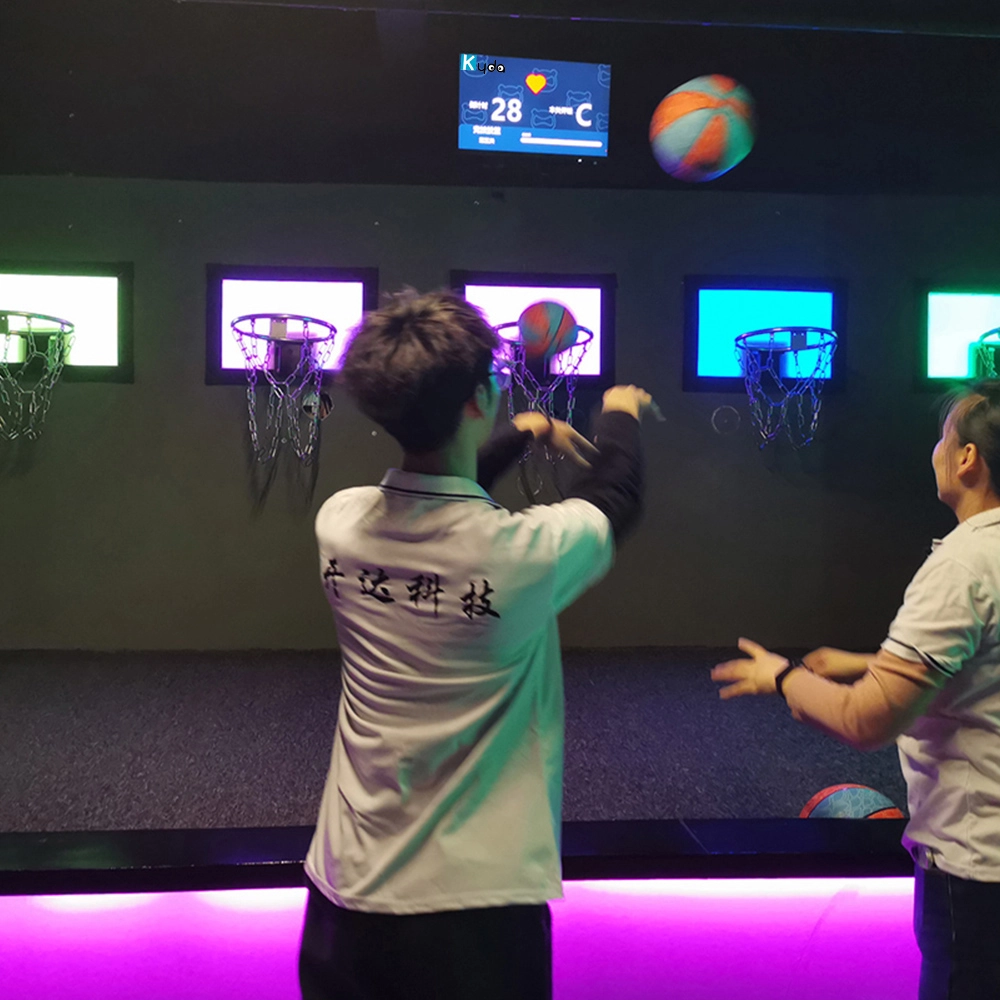
Hoops Active Game: The Ultimate Interactive Basketball Fitness Game
Elevate your basketball skills with Kyda’s Hoops Activate Game, the interactive basketball game. Perfect for basketball game rooms, Activate Hoops offers immersive fitness fun. Experience the Activate Basketball Game that combines sport and technology for active play.
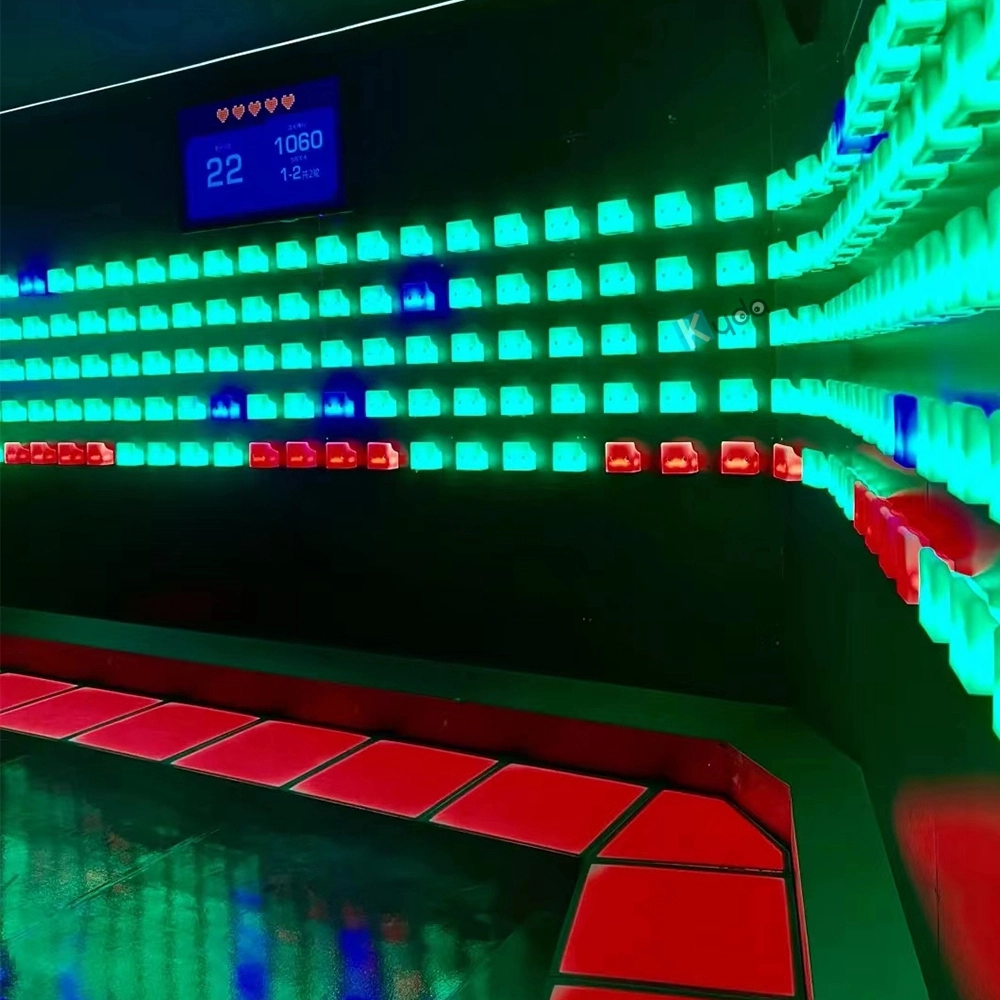
Activate Fitness Climb Game – The Ultimate Interactive LED Climbing Wall Experience
Experience the Activate Fitness Climb Game by Kyda—the interactive LED wall game. This Activate Climb Game combines fitness and fun with dynamic LED challenges, perfect for all ages. Boost agility and engagement with Kyda’s innovative interactive LED wall game today!
Let's get in touch
Email: sales@kydavr.com
Tel.: +86 188 2001 8779
Address: 501 Shixin Road, Dalong Street, Guangzhou, Guangdong, China.
© 2025 Kyda. All Rights Reserved.
 Scan QR Code
Linkedin
Ins
Facebook
Twitter
YouTube