




What is an Active Reaction Game? Complete Beginner's Guide
- Understanding Active Reaction Games: A Practical Overview
- How Active Reaction Games Work (technology & user flow)
- Common Formats and Use Cases (interactive game rooms & Activate gaming centers)
- Why Operators Choose Active Reaction Games (buy & install considerations)
- Designing for Different Business Goals (custom research & development)
- Performance Metrics and Player Psychology (measuring engagement & repeat play)
- Safety and Accessibility (installation & compliance)
- Comparing Active Reaction Games to Other Interactive Attractions (choose the right product)
- ROI and Pricing Models (purchase, lease, revenue share)
- Operational Best Practices (installation & staff training)
- Why Choose a Full-Service Supplier (custom supplier & local manufacturing advantages)
- Kyda — One-Stop Provider for Active Game Rooms
- Checklist: Selecting and Installing an Active Reaction Game (supplier & purchase guide)
- Example Floor Plan and Space Requirements
- Frequently Asked Questions (FAQ)
- Next Steps and Contact
- References
Understanding Active Reaction Games: A Practical Overview
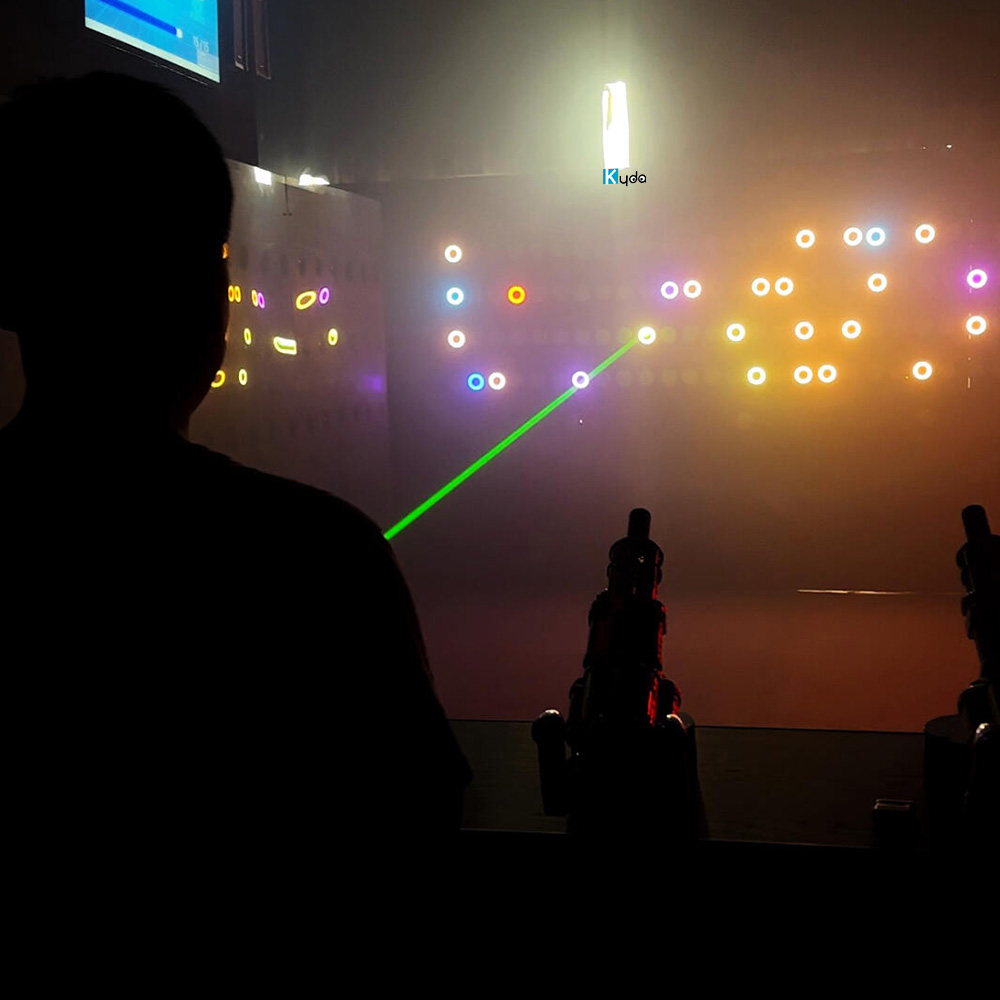
An Active Reaction Game is an interactive attraction that measures and rewards players’ physical responses to visual, audio or tactile stimuli. Typically used in entertainment centers, malls, schools, corporate events, and fitness facilities, these games combine sensors, lights, projection, and game logic to create competitive, repeatable experiences that appeal to broad age ranges. Operators value them for high throughput, low staffing needs, and strong repeat-play potential—making them a staple in modern interactive game rooms and Activate gaming centers.
How Active Reaction Games Work (technology & user flow)
At their core, Active Reaction Games use three technical layers: input sensing, stimuli presentation, and game logic/scoring. Input sensing can be pressure pads, capacitive touch, infrared/motion sensors, or camera-based tracking. Stimuli are delivered via LED arrays, projection mapping, sound, or synchronized lighting. Game logic controls difficulty, timing, scoring, and UX feedback (visual/sound effects). A typical user flow: attract mode → brief instructions → countdown → stimulus appears → player reacts → score/feedback → option to replay.
Common Formats and Use Cases (interactive game rooms & Activate gaming centers)
Active Reaction Games appear in many forms depending on target audience and location. Common formats include:
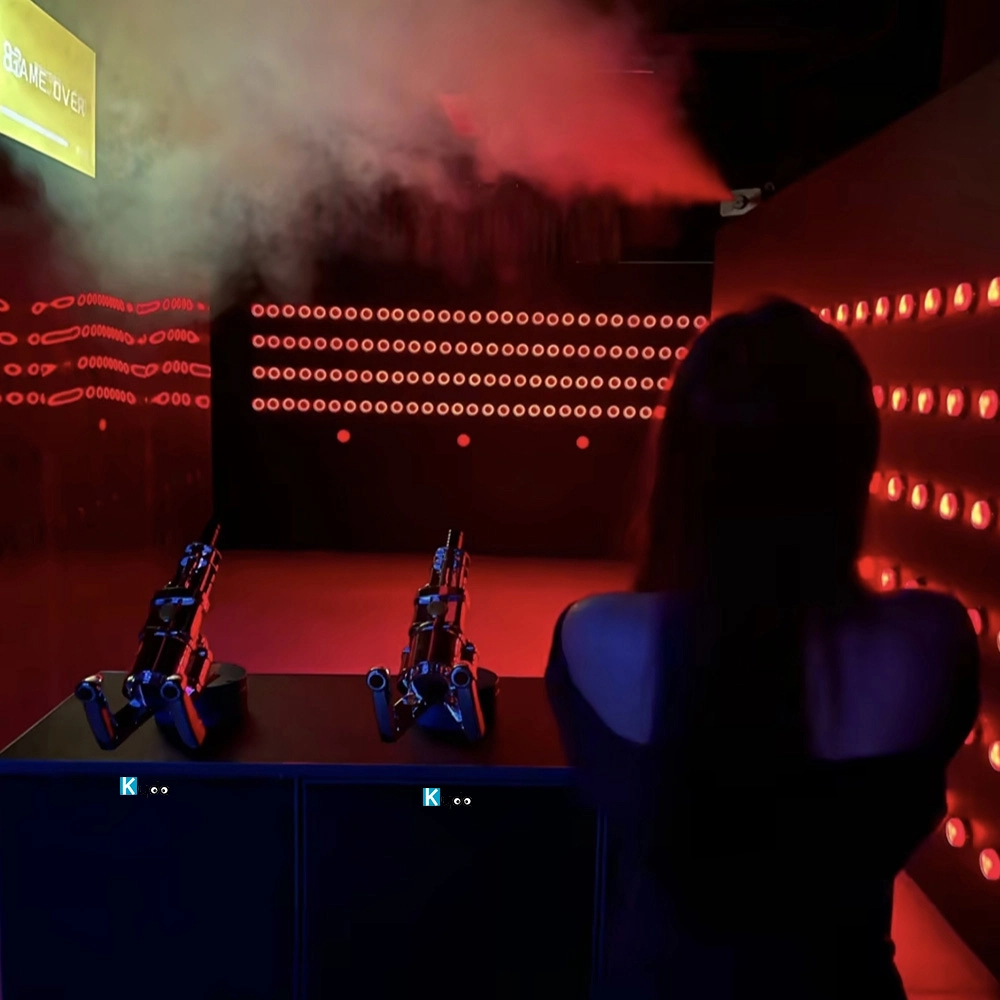
- Reaction wall/pad games: Players hit illuminated targets on walls or floors.
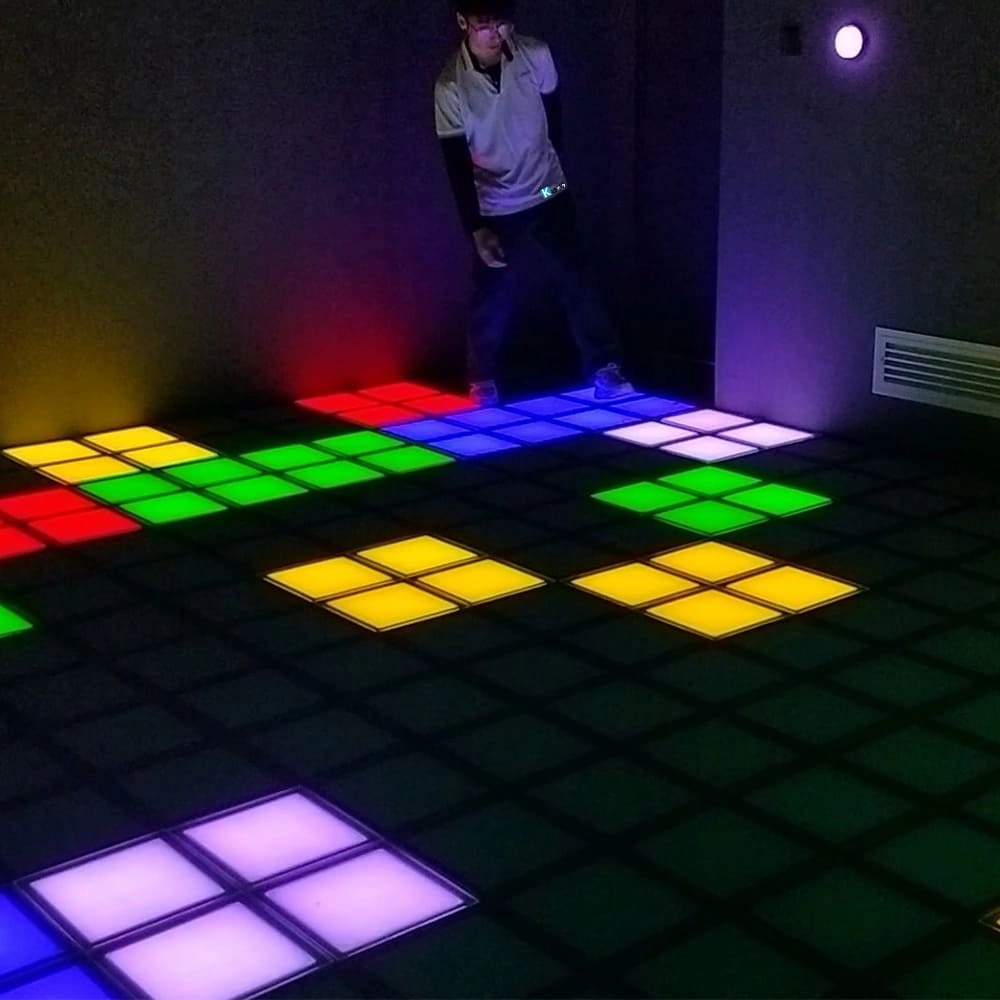
- Interactive LED floors/walls: Projection or embedded LEDs create stepping or touch targets.
- Laser or light-tag reaction games: Players react to moving beams or targets.
- Motion/challenge towers: Sequence-based challenges requiring quick movement or balancing.
Use cases include family entertainment centers (FECs), shopping mall activations, corporate team-building, school STEM demos, and health/fitness centers looking for gamified exercise.
Why Operators Choose Active Reaction Games (buy & install considerations)
Operators evaluate attractions on engagement, footprint, throughput, maintenance cost, and return on investment (ROI). Active Reaction Games often score well because they:
- Offer short sessions (1–3 minutes) allowing high throughput and steady income.
- Require minimal onboarding—most players understand the objective instantly.
- Are modular and can be customized (branding, difficulty, themes) for local markets.
- Support both pay-to-play and free-play promotional deployments (drive foot traffic).
Installation considerations: power and network access, floor/wall reinforcement for physical interactions, safety surfacing, and placement for visibility. Many suppliers provide turnkey installation and training to speed time-to-revenue.
Designing for Different Business Goals (custom research & development)
Design choices should align with business intent keywords like “custom”, “supplier”, and “install”. For example:
- High-traffic FEC: durable components, quick-reset mechanics, coin/card payment integration.
- Educational installations: adjustable difficulty, data recording for progress tracking, curriculum tie-ins.
- Corporate/team-building: multi-player cooperative modes, tournament management.
When evaluating suppliers, prioritize companies that offer R&D, on-site support, and component-level sourcing—this reduces downtime and facilitates local adaptation.
Performance Metrics and Player Psychology (measuring engagement & repeat play)
Active Reaction Games succeed when they balance challenge, feedback, and rewards. Key metrics operators track include:
- Plays per day / per machine
- Average session length
- Conversion rate from walk-by to play (attract effectiveness)
- Repeat play rate within 30 days
- Maintenance/downtime hours
From a psychological perspective, these games leverage rapid feedback loops and variable reinforcement—players see immediate results and are motivated to improve scores or compete with friends, driving repeat revenue and social sharing.
Safety and Accessibility (installation & compliance)
Safety is non-negotiable: ensure rounded edges, non-slip surfaces, ambient noise control, and ADA considerations like alternative control interfaces or adjustable height targets. Certification or compliance with local amusement equipment regulations is often required—work with suppliers who provide compliance documentation and risk assessments.
Comparing Active Reaction Games to Other Interactive Attractions (choose the right product)
Choosing the right attraction depends on space, audience, and investment. The table below compares Active Reaction Games with Interactive LED Floors and Interactive Projection Games on key commercial criteria.
| Feature / KPI | Active Reaction Game | Interactive LED Floor | Interactive Projection Game |
|---|---|---|---|
| Typical session length | 30–180 seconds | 60–300 seconds | 60–600 seconds |
| Throughput | High (short rounds) | Medium | Low–Medium |
| Initial cost | Moderate | Higher (LED panels) | Variable (projector + surface) |
| Maintenance complexity | Low–Moderate | Moderate–High | Low–Moderate |
| Customization potential | High (themes & modes) | High (visuals & mapping) | High (content-driven) |
Source: operator benchmarking and supplier case studies (see references below) show Active Reaction Games frequently deliver faster payback in limited-space commercial environments because of short session times and strong impulse-play appeal.
ROI and Pricing Models (purchase, lease, revenue share)
Pricing models vary: outright purchase, lease-to-own, revenue share, or turnkey revenue management (supplier handles coin/card and splits income). Typical considerations for ROI calculations include:
- Location footfall and conversion rates
- Price per play
- Uptime and maintenance cost
- Marketing and cross-promotional spend
A practical ROI example (illustrative): a machine at $3/play with 120 plays/day yields $360/day gross; after operating costs and downtime, many units can pay back initial equipment costs within 6–18 months in high-traffic sites. Always request supplier performance data for comparable sites.
Operational Best Practices (installation & staff training)
Best practices to maximize revenue: prime location near routes of movement, clear pricing and instructions, leaderboard displays to encourage competition, scheduled light maintenance checks, and staff training for quick resets and customer engagement. Many suppliers offer remote diagnostics and software updates to keep content fresh.
Why Choose a Full-Service Supplier (custom supplier & local manufacturing advantages)
Selecting a full-service supplier reduces friction: one partner for design, manufacturing, installation, software, and after-sales. Key vendor capabilities to evaluate include electronics design, software programming, game and animation design, mechanical product design, and onboarding support. Local or regionally partnered manufacturing facilities help lower shipping costs and accelerate deployment.
Kyda — One-Stop Provider for Active Game Rooms
Kyda is a one-stop solution provider of active game rooms and Activate gaming centers dedicated to the custom research, development, production, and sales of interactive and educational recreational products, as well as indoor and outdoor amusement equipment and low-cost, high-income, high-return equipment. Kyda's main products include active interactive games, interactive LED floor systems, active reaction games, brain challenge games, horror escape games, active fitness games, and interactive projection games, as well as various thrilling indoor and outdoor amusement equipment.
Kyda's team consists of professionals specializing in electronic design and development, software programming, game design, animation design, product design, multimedia design, and interior design. Leveraging the manufacturing advantages of Guangzhou, Zhongshan, Zhengzhou, and Beijing, Kyda maintains long-term partnerships with LED light factories, advertising production factories, sheet metal factories, paint factories, electronics assembly factories, 3D plastic printing factories, and multimedia resource companies. This allows Kyda to produce customized projects or products to meet various local needs. The team is committed to using evolving technology, design, and execution capabilities to meet customers' ever-changing, personalized customization needs.
Kyda's vision is to become the world's leading active game room manufacturer. Key product and competitive strengths include:
- Broad product range: interactive projection games, active interactive games, interactive LED floor, interactive LED wall, and laser interactive games.
- Turnkey capability: from concept and R&D to local manufacturing and installation.
- Technical depth: in-house electronics, software and multimedia design teams that enable tailored gameplay, analytics, and branding.
- Local manufacturing partnerships to reduce lead time and cost while enabling regional customization.
Choosing a supplier like Kyda can reduce time-to-market and give operators flexible options (purchase, lease, or revenue share) and localized after-sales support.
Checklist: Selecting and Installing an Active Reaction Game (supplier & purchase guide)
Before buying or leasing, use this checklist to compare suppliers:
- Request proof of concept data from similar installations (plays/day, uptime, ROI).
- Confirm maintenance SLA (response time, spare parts availability).
- Ask about software upgrade policy and content refresh frequency.
- Verify safety certifications and materials compliance for your region.
- Clarify payment integration: cashless, membership cards, vouchers, or token systems.
- Negotiate training and marketing support for launch.
Example Floor Plan and Space Requirements
Active Reaction Games can range from compact single-station units (approx. 1.5–2.5 m²) to multi-player arenas requiring 10–30+ m². For high-traffic FECs, plan for circulation space and spectator viewing areas to maximize impulse plays.
Frequently Asked Questions (FAQ)
Q1: How long does it take to install an Active Reaction Game?
A: Installation time varies—single-station units can be installed in 1–2 days; multi-station custom arenas may take 1–4 weeks including site prep. Turnkey suppliers provide a schedule during contract signing.
Q2: What is the typical lifespan and maintenance schedule?
A: With commercial-grade components, lifespan is commonly 5–10 years. Routine maintenance includes weekly surface cleaning, monthly software checks, and annual hardware inspections. Obtain an SLA from your supplier for exact terms.
Q3: Can Active Reaction Games be customized for branding or events?
A: Yes. Most systems support skinning (visual themes), custom audio, branded attract screens, and tailored game modes for events or seasonal promotions. Suppliers like Kyda specialize in customization.
Q4: Do these games require online connectivity?
A: Basic gameplay can run offline, but online connectivity enables leaderboards, remote diagnostics, software updates, and analytics. Connectivity is recommended for multi-site operators.
Q5: What is the average price per play and how do I set pricing?
A: Price per play depends on market and session length; typical ranges are $1–$5 per play. Balance local purchasing power, session duration, and expected throughput when setting price. Test pricing during launch and adjust based on demand.
Q6: Can these games support multi-player tournaments?
A: Yes. Many systems include tournament modes, timed rounds, and cloud-synced leaderboards to host competitive events—useful for marketing and driving repeat visits.
Next Steps and Contact
If you're planning an interactive game room, start with a site assessment and supplier shortlist. Request case studies, SLA terms, and customization options. For turnkey solutions, product demos, and custom project quotes, contact Kyda for consultation and site-specific proposals tailored to your business goals.
References
- International Association of Amusement Parks and Attractions (IAAPA) — Industry insights and attraction trends. https://www.iaapa.org/ (accessed 2025-11-20)
- Grand View Research — Virtual Reality (VR) in Gaming Market analysis and growth trends. https://www.grandviewresearch.com/industry-analysis/virtual-reality-vr-gaming-market (accessed 2024-12-05)
- Britannica — Reaction time overview and measurement context. https://www.britannica.com/science/reaction-time (accessed 2025-02-10)
- Statista — Amusement park and arcade industry revenue and footfall statistics (regional breakdowns). https://www.statista.com/topics/964/amusement-parks/ (accessed 2025-06-18)
- Operator case studies and supplier whitepapers — comparative performance for interactive attractions (various suppliers, aggregated 2023–2025).
Contact Kyda for a quote, demo, or site assessment to see how Active Reaction Games can fit your venue and business model.
Installing Interactive Floor Projection Games: Step-by-Step Tips
The activate games for children Cost Guide
Activate Games Safety Tips & Rules for LED Floor Playrooms
Best light floor game manufacturers and supplier brands in us
For Activate Gaming Floorislava Family Fun
How to pack the LED tile grid?
3pcs/carton, 45cartons/panel.
What is the difference of Grid and Mega Grid?
Grid just interactive floor game, smaller room size can start; Mega Grid add 20pcs Digital screen with 20pcs wall buttons, also need suggest bigger room size, more activate interesting games than Grid;
For Company
How much need invest?
Normally can choose one Grid game only or different rooms.
Please contact with Kydaplay sales manager to get the exact cost.
How to install?
Kydaplay will send detail CAD design, electronic design, installation manual, buyer can install by electronic engineer; or Kydavr can provide on-site technical support and installation as well as training once the goods are delivered at destination.
How is warranty?
Hardware is two years warranty non-human factors, software for life time(The first year is for free, pay extra software service cost extra from the second year).
Active Reaction Laser Shooting Game Room
Crub Crab Giant Chopsticks Challenge Game Interactive Skill Challenge Game for Activate Game Rooms by Kyda
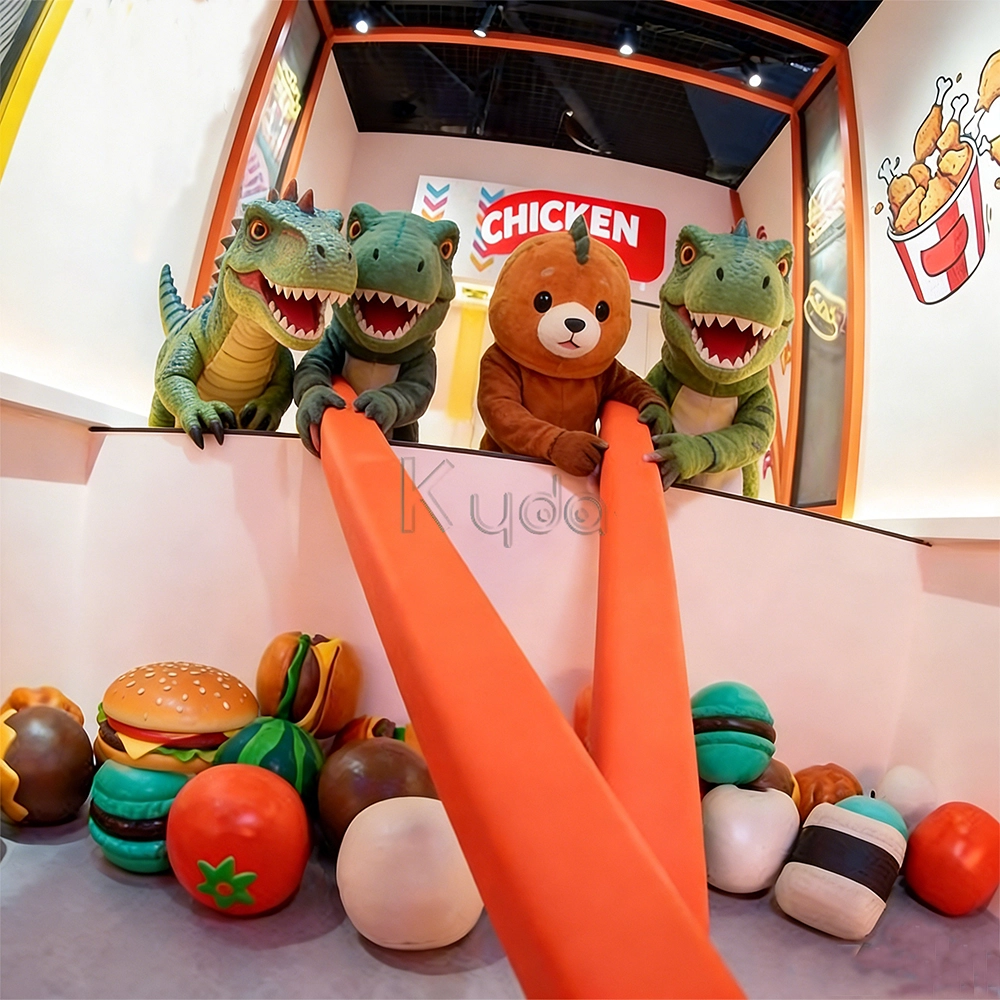
Crub Crab Giant Chopsticks Challenge Game is an innovative interactive challenge attraction designed for indoor entertainment centers, arcade game venues, and activate-style interactive game rooms. In this unique skill-based game, players control a pair of oversized giant chopsticks to pick up scattered snacks, toys, or prize items and place them into a collection basket within a limited time. The gameplay combines hand-eye coordination, precision control, balance, and quick reaction, creating a fun and competitive experience suitable for players of all ages.
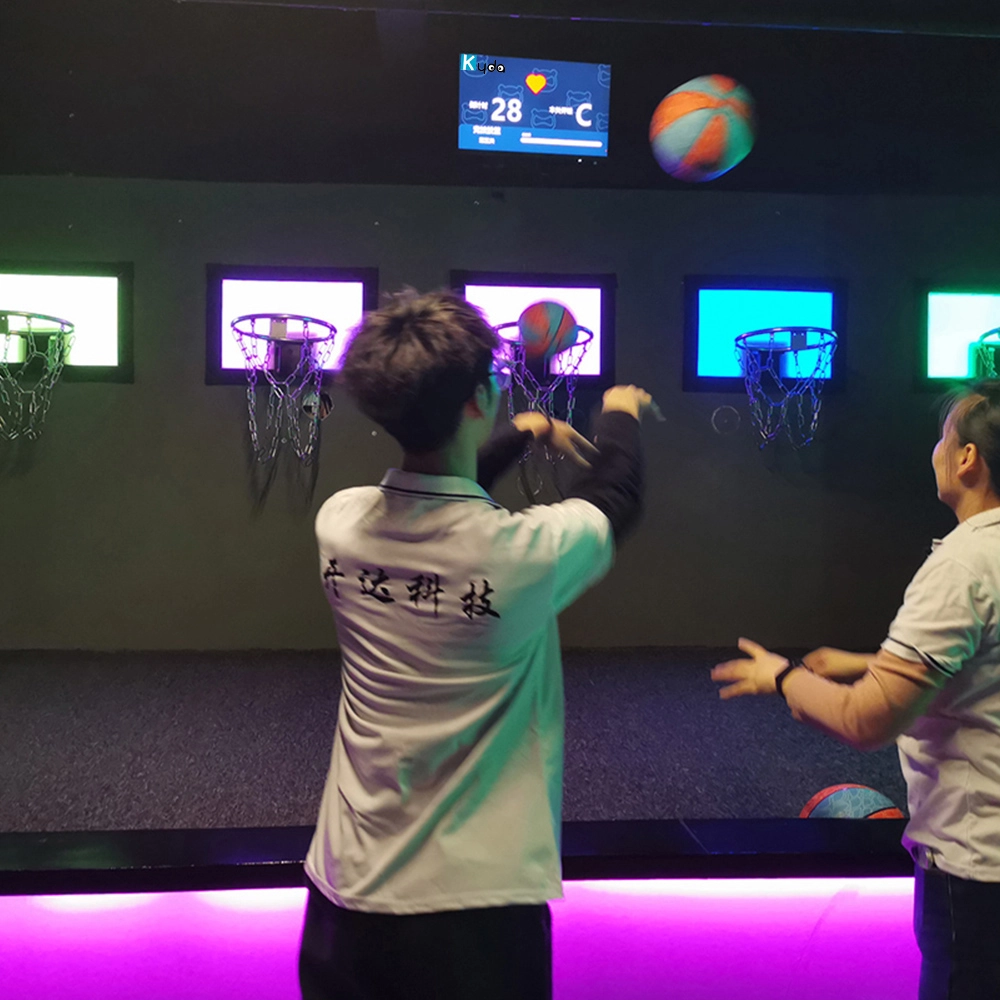
Hoops Active Game: The Ultimate Interactive Basketball Fitness Game
Elevate your basketball skills with Kyda’s Hoops Activate Game, the interactive basketball game. Perfect for basketball game rooms, Activate Hoops offers immersive fitness fun. Experience the Activate Basketball Game that combines sport and technology for active play.
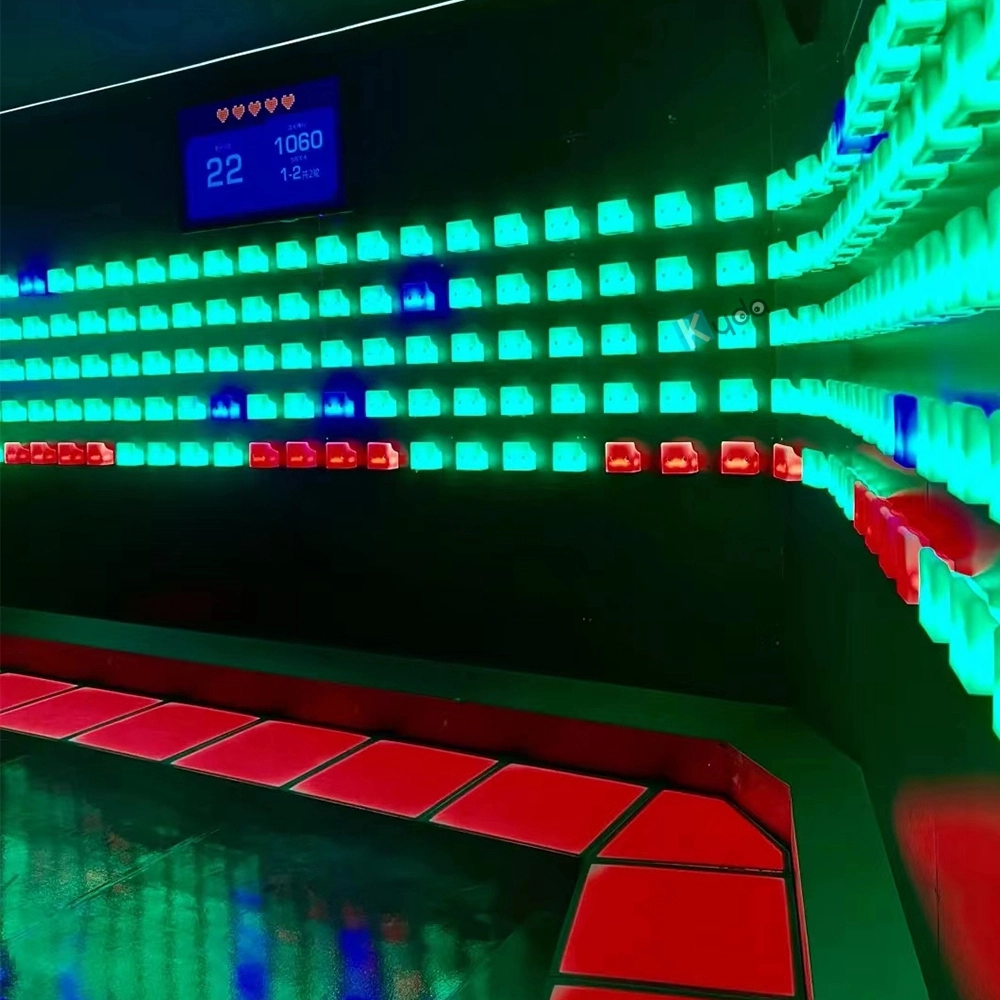
Activate Fitness Climb Game – The Ultimate Interactive LED Climbing Wall Experience
Experience the Activate Fitness Climb Game by Kyda—the interactive LED wall game. This Activate Climb Game combines fitness and fun with dynamic LED challenges, perfect for all ages. Boost agility and engagement with Kyda’s innovative interactive LED wall game today!
Let's get in touch
Email: sales@kydavr.com
Tel.: +86 188 2001 8779
Address: 501 Shixin Road, Dalong Street, Guangzhou, Guangdong, China.
© 2025 Kyda. All Rights Reserved.
 Scan QR Code
Linkedin
Ins
Facebook
Twitter
YouTube