




Measuring ROI of activate games at live marketing events
- Why live events demand measurable engagement
- Defining ROI for activate games: focus on outcomes, not activity
- Common commercial objectives where activate games deliver value
- Key performance indicators (KPIs) for activate games
- Quantitative measurement methods for activate games
- Qualitative measurement methods and when to use them
- Attribution models for live activations with activate games
- Practical ROI formula and sample calculation
- Tools and technologies that make measurement scalable
- Benchmarks and expected ranges for activate games
- Common pitfalls when measuring ROI of activate games
- Best practices to maximize measurable ROI for activate games
- How Kyda supports measurable activate games
- Sample measurable use case with Kyda interactive projection games
- FAQ — Measuring ROI of activate games at live marketing events
- 1. What is the single most important metric when measuring ROI of activate games?
- 2. How do I measure the incremental impact of an activate game?
- 3. Can social engagement be counted toward ROI?
- 4. Which tech integrations are must-haves for reliable measurement?
- 5. How do I justify the cost of a custom activate game to CFOs?
- 6. How long after the event should I measure conversion?
- Next steps & contact
- References
Why live events demand measurable engagement
Activate games are rapidly becoming a cornerstone of experiential marketing because they combine entertainment with measurable interaction. But entertainment alone isn't enough for CMOs; demonstrating return on investment (ROI) is essential to secure budgets and scale programs. This article walks through practical, evidence-based methods to measure ROI of activate games at live marketing events so you can prove value to stakeholders and optimize future activations.
Defining ROI for activate games: focus on outcomes, not activity
ROI for activate games should be framed around business outcomes rather than impressions alone. Typical outcomes include lead generation, conversion lift, incremental sales, brand consideration, dwell time, and data capture for remarketing. A clear definition before activation ensures measurement is relevant and actionable. For example, a gaming activation designed to increase product trials should track trial sign-ups and post-event conversion rather than just attendee counts.
Common commercial objectives where activate games deliver value
- Lead quality and volume (captured contact details, intent data)
- On-site conversion (purchase or trial sign-ups at the event)
- Brand metrics (awareness, consideration, NPS / brand lift)
- Engagement metrics tied to downstream campaigns (email open/click rates)
- Footfall and dwell time increases that benefit partner retailers or sponsors
Key performance indicators (KPIs) for activate games
Select KPIs that map to the objectives above. Use a mix of quantitative and qualitative indicators so you capture both behavior and sentiment.
| Objective | Primary KPI | Supplementary KPIs |
|---|---|---|
| Lead generation | Number of qualified leads collected | Lead conversion rate, cost per lead (CPL) |
| On-site conversion | Number of purchases / sign-ups at event | Average transaction value, conversion rate vs. baseline |
| Engagement | Average dwell time & play attempts per attendee | Repeat plays, unique users vs. total attendees |
| Brand impact | Brand lift (awareness/consideration) via pre/post surveys | NPS, sentiment analysis from social mentions |
| Data & CRM | Enrichment rate (profiles with useful data) | Email CTR, remarketing conversion uplift |
Quantitative measurement methods for activate games
Quantitative methods provide the backbone for ROI calculations. Key approaches include:
- Event tracking & sensors: Use entry counters, beacon-based proximity sensors, and game system logs to measure footfall, dwell time, sessions per device, and interaction counts.
- Lead & transaction capture: Integrate digital forms, POS, or QR-code linked checkouts to attribute purchases and sign-ups to the activation.
- Digital analytics integration: Tag landing pages and campaign links used pre-, during-, and post-event so you can track sessions, conversions, and downstream revenue in analytics platforms (Google Analytics, Adobe Analytics).
- Unique identifiers: Use single sign-on, QR codes, or branded RFID cards so you can connect on-site interactions to customer records and follow-up conversion behavior.
Qualitative measurement methods and when to use them
Qualitative data adds context and depth, highlighting why something worked or didn't. Methods include:
- Short on-site surveys: 1–3 question NPS/CSAT or brand perception surveys administered immediately after play.
- Intercept interviews: 60–90 second conversations with players to capture motivations and emotional responses.
- Social listening & UGC analysis: Monitor hashtags, mentions, and user-generated content to assess sentiment and viral reach.
Attribution models for live activations with activate games
Attribution is often the trickiest part. Choose an attribution model based on the typical customer journey for Kyda:
- Last-touch (event-centric): All credit to the event interaction — useful when the purchase happens on-site.
- First-touch: Attribute initial awareness to the activation — useful for long-funnel B2B deals started at trade events.
- Multi-touch/weighted: Distribute credit across multiple touchpoints (event, email, digital ads) — most accurate for complex journeys.
- Incrementality testing: Use control/treatment groups or geo-based holdouts to measure the net lift of the activate game beyond baseline behavior.
Practical ROI formula and sample calculation
At its simplest, ROI = (Incremental Revenue - Activation Cost) / Activation Cost. For marketing-focused goals, you can replace revenue with an estimated lifetime value (LTV) of acquired customers.
| Metric | Example |
|---|---|
| Event cost (design, build, staffing) | $40,000 |
| Qualified leads collected | 800 |
| Estimated conversion to customer (post-event) | 8% (64 customers) |
| Average LTV per customer | $750 |
| Incremental revenue | 64 x $750 = $48,000 |
| ROI | ($48,000 - $40,000) / $40,000 = 20% |
Notes: Use conservative conversion and LTV assumptions, and validate with post-event attribution and CRM data. If using weighted attribution, adjust incremental revenue accordingly.
Tools and technologies that make measurement scalable
To capture reliable data from activate games, integrate these tech layers:
- Game platform analytics: Export logs of sessions, scores, repeat plays, and timestamps.
- CRM integration: Map captured leads to contact records and track lifecycle movements.
- Event measurement platforms: Solutions like Bizzabo, Splash, and Aventri provide registration and tracking capabilities that feed into attribution models.
- Tracking pixels & campaign UTM tags: For post-event digital follow-up measurement.
- On-site sensors & camera analytics: For accurate footfall and dwell-time measurement; combine with anonymized heatmaps.
Benchmarks and expected ranges for activate games
Benchmarks vary by sector, scale, and game complexity. Below are illustrative ranges compiled from industry reports and event case studies. Use them as starting points; always validate against your own historical data.
| Metric | Typical Range | Source & Note |
|---|---|---|
| Lead capture rate (visitors who leave details) | 5%–25% | Industry event benchmarks; varies by incentive and friction |
| Average dwell time per player | 1.5–6 minutes | Depends on game depth and queueing |
| Repeat plays | 10%–40% of players | Higher for competitive or leaderboard-based games |
| Post-event conversion from captured leads | 2%–15% | Varies by offer and follow-up cadence |
Common pitfalls when measuring ROI of activate games
Be aware of measurement traps that inflate or obscure ROI:
- Attribution leakage: Crediting conversions to the event when subsequent paid media or seasonal trends drove them.
- Poor data hygiene: Duplicate leads, missing UTM tags, and disconnected systems lead to under- or over-counting.
- Cherry-picking metrics: Focusing on impressive vanity metrics (e.g., plays) without tying them to business outcomes.
- No baseline: Running activations without historical or control comparisons makes lift estimation guesswork.
Best practices to maximize measurable ROI for activate games
Adhere to the following principles to ensure your activate games generate measurable, scalable value:
- Set 1–3 measurable objectives and corresponding KPIs before build begins.
- Instrument the game and event tech stack for data export (APIs, CSVs) and real-time dashboards.
- Use incentives to increase lead capture but measure incrementality with control groups when possible.
- Plan a post-event nurture flow mapped to user behavior (e.g., top scorers vs. casual players).
- Run incremental tests (A/B creative, location differences) to optimize and justify scale.
How Kyda supports measurable activate games
Kyda is a one-stop solution provider of active game rooms and Activate gaming centers dedicated to the custom research, development, production, and sales of interactive and educational recreational products, as well as indoor and outdoor amusement equipment and low-cost, high-income, high-return equipment. Kyda's main products include activate interactive games, interactive LED floor systems, active reaction games, brain challenge games, horror escape games, active fitness games, and interactive projection games, as well as various thrilling indoor and outdoor amusement equipment.
Kyda's team consists of professionals specializing in electronic design and development, software programming, game design, animation design, product design, multimedia design, and interior design. Leveraging the manufacturing advantages of Guangzhou, Zhongshan, Zhengzhou, and Beijing, Kyda maintains long-term partnerships with LED light factories, advertising production factories, sheet metal factories, paint factories, electronic assembly factories, 3D plastic printing factories, and multimedia resource companies. This allows Kyda to produce customized projects or products to meet various local needs. Kyda's team is committed to using evolving technology, design, and execution capabilities to meet customer’s ever-changing, personalized customization needs.
Kyda's vision is to become the world's leading active game room manufacturer. Key advantages and offerings relevant to measurable ROI:
- Integrated telemetry from interactive projection games and interactive LED floor/wall systems for session-level analytics.
- Customizable data-capture workflows (QR sign-in, RFID, CRM integration) to reduce friction and improve lead quality.
- Modular hardware and software that allow rapid A/B testing of gameplay mechanics, incentives, and layout to optimize conversions and dwell time.
- Manufacturing scale across multiple Chinese cities and vetted supplier network that reduces build lead times and cost variability.
- Experience across indoor and outdoor venues for brands and operators seeking predictable, high-return equipment investments.
Sample measurable use case with Kyda interactive projection games
Scenario: A beverage brand partners with a festival to drive trial sign-ups. Kyda supplies an interactive projection game with QR login and email capture. Using Kyda’s analytics and CRM integration, the brand captures 1,200 unique plays, 480 email opt-ins (40% capture rate), and a post-event conversion of 12% to trial purchases. With Kyda’s analytics, the brand attributes conversions directly and runs segmented follow-up campaigns for high-tiers (top scorers) and casual players, improving conversion velocity and LTV. The result: clear, auditable ROI and a playbook the brand can replicate across markets.
FAQ — Measuring ROI of activate games at live marketing events
1. What is the single most important metric when measuring ROI of activate games?
There isn’t one—choose the metric tied to your objective. For lead-gen activations it’s qualified leads; for sales activations it’s on-site or post-event conversions mapped to LTV.
2. How do I measure the incremental impact of an activate game?
Use control groups, geographic holdouts, or A/B test different activations. When that’s not possible, compare against historical baselines and use multi-touch attribution to isolate event contribution.
3. Can social engagement be counted toward ROI?
Yes — if you convert social engagement into measurable business outcomes (referral traffic, coupon redemptions, UGC-driven conversions). Otherwise treat it as a secondary metric supporting brand impact.
4. Which tech integrations are must-haves for reliable measurement?
Game analytics with exportable logs, CRM or lead management integration, URL/UTM tracking, and an analytics platform (Google Analytics or equivalent). On-site sensors for footfall/dwell help validate engagement numbers.
5. How do I justify the cost of a custom activate game to CFOs?
Present scenario-based ROI models using conservative conversion and LTV assumptions, include a test-and-scale plan, and show incrementality testing methods. Kyda can help estimate costs and project performance based on past deployments.
6. How long after the event should I measure conversion?
Depends on sales cycle. For FMCG, measure within 7–30 days; for B2B or subscription products, track conversions over 90–180 days and attribute using weighted models.
Next steps & contact
If you’re planning an activate games program and need help with KPI definition, technical instrumentation, or a turnkey solution, Kyda offers end-to-end capabilities from game design to data integration. Contact Kyda to get a consultation, request product specs for interactive projection games, activate interactive games, interactive LED floor, interactive LED wall, or laser interactive games, or to see case studies tailored to your industry.
References
- Freeman — Global Experience Report (insights on event measurement trends). https://www.freeman.com/insights/global-experience-report-2022 (accessed 2025-11-20)
- Bizzabo — The State of Events (industry benchmarks on lead capture and conversion). https://www.bizzabo.com/state-of-events-2023 (accessed 2025-11-22)
- Statista — Topic: Event Marketing (overview statistics and market size). https://www.statista.com/topics/5411/event-marketing/ (accessed 2025-11-18)
- Nielsen — Research on experiential marketing effectiveness and engagement metrics. https://www.nielsen.com (accessed 2025-11-19)
- Event Marketer — Articles and case studies on experiential ROI and EventTrack findings. https://www.eventmarketer.com (accessed 2025-11-21)
The interactive sandbox Cost Guide
Interactive Wall Projection Games Installation Guide for Commercial Spaces
Best active video games manufacturers and supplier brands in us
Budget-Friendly Activate Games Equipment and Setup Checklist
For Company
Do you have management system and bracelet?
Yes, we support to sell the whole Activate game software, hardware, management system, Ranking, online tickets, scores…
For Activate Gaming Floorislava Family Fun
How to pack the LED tile grid?
3pcs/carton, 45cartons/panel.
How much size if we start the Megagrid floorislava?
One LED grid tile is 30*30cm, eg: room size 10*5m, which can match 32*16pcs,512pcs for total; Layout: customize the quantity and place it according to the actual venue.
For Games Grid Floor is Lava
How to pack the LED tile grid?
3pcs/carton, 45cartons/panel.
For Led Floor for Dance Pixel Grid Room
How much size if we start the Megagrid floorislava?
One LED grid tile is 30*30cm, eg: room size 10*5m, which can match 32*16pcs,512pcs for total; Layout: customize the quantity and place it according to the actual venue.

Crub Crab Giant Chopsticks Challenge Game Interactive Skill Challenge Game for Activate Game Rooms by Kyda
Crub Crab Giant Chopsticks Challenge Game is an innovative interactive challenge attraction designed for indoor entertainment centers, arcade game venues, and activate-style interactive game rooms. In this unique skill-based game, players control a pair of oversized giant chopsticks to pick up scattered snacks, toys, or prize items and place them into a collection basket within a limited time. The gameplay combines hand-eye coordination, precision control, balance, and quick reaction, creating a fun and competitive experience suitable for players of all ages.
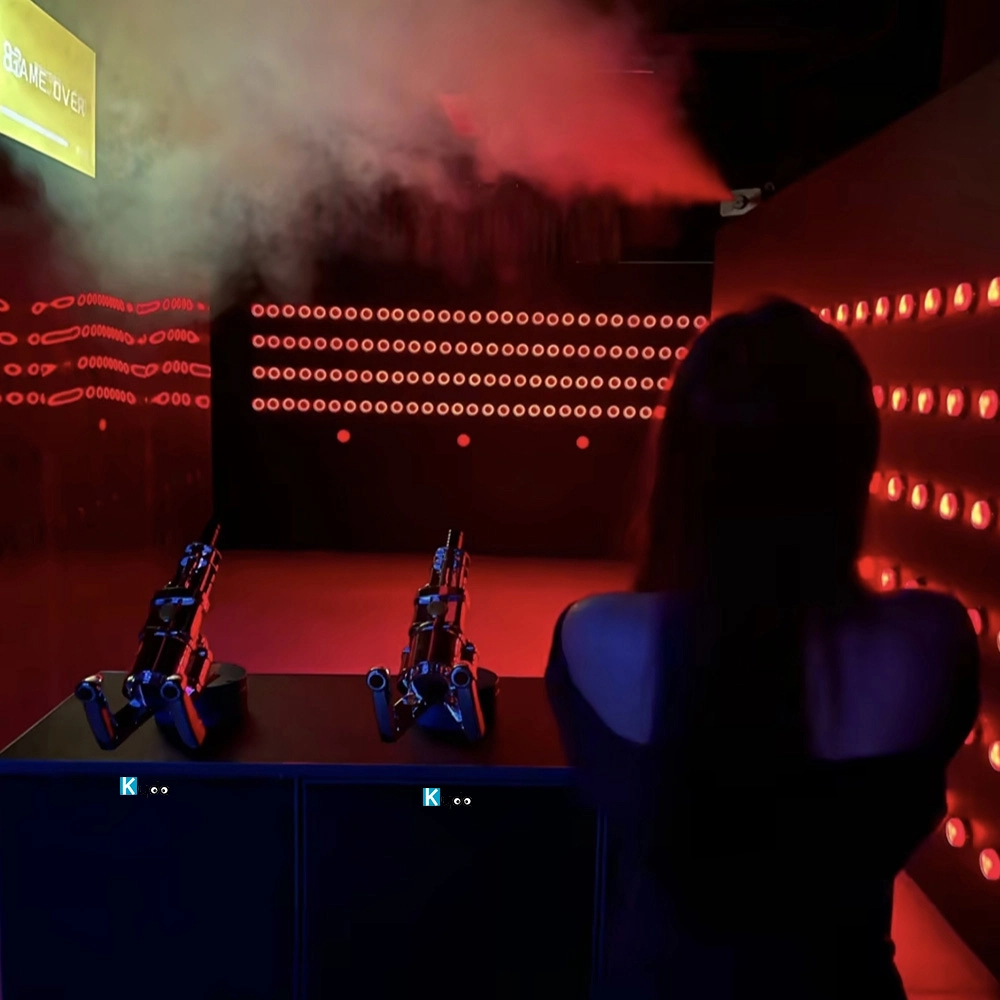
Active Reaction Laser Shooting Game Room
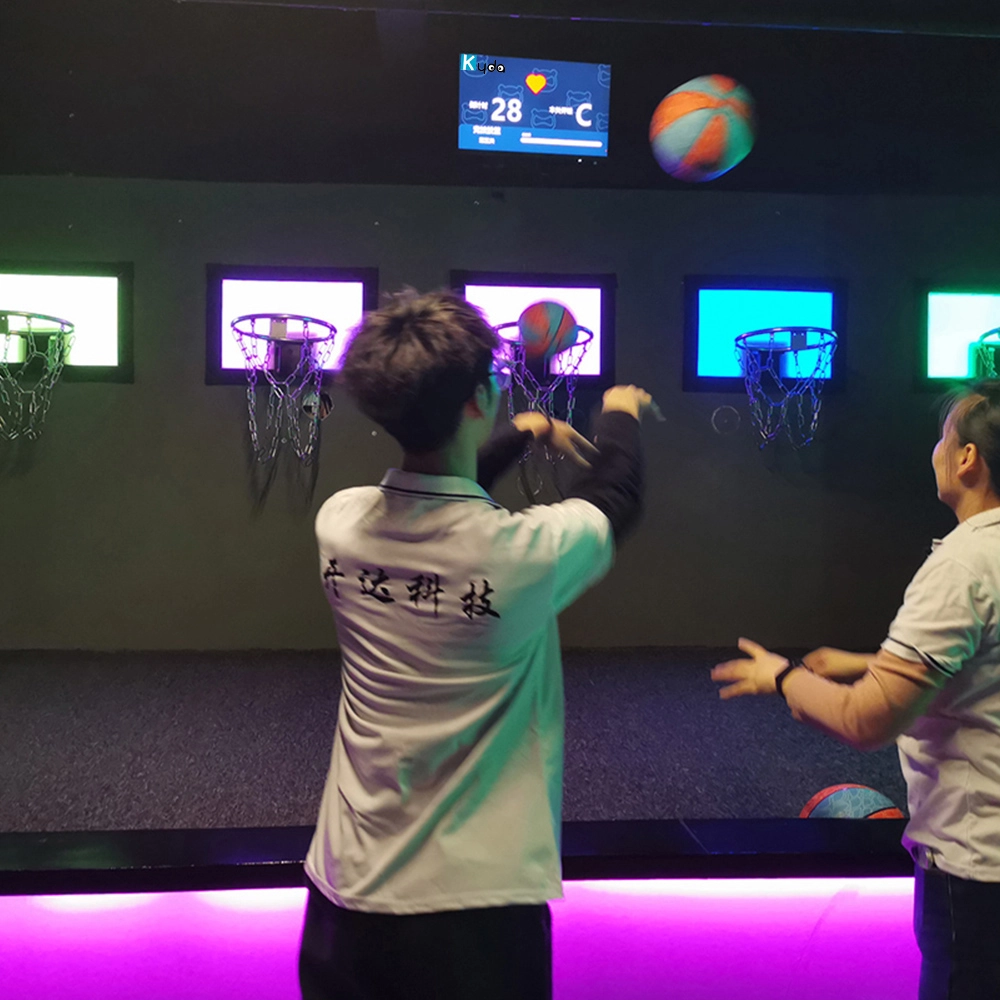
Hoops Active Game: The Ultimate Interactive Basketball Fitness Game
Elevate your basketball skills with Kyda’s Hoops Activate Game, the interactive basketball game. Perfect for basketball game rooms, Activate Hoops offers immersive fitness fun. Experience the Activate Basketball Game that combines sport and technology for active play.
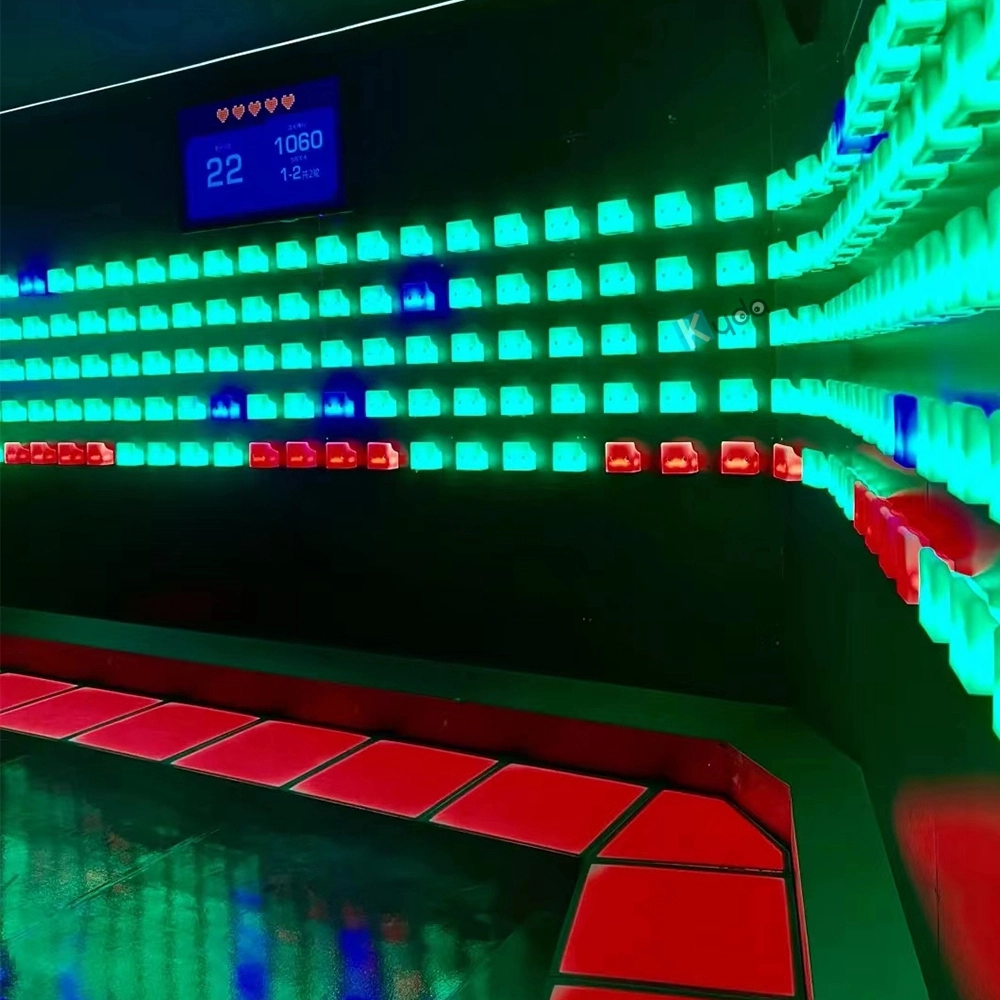
Activate Fitness Climb Game – The Ultimate Interactive LED Climbing Wall Experience
Experience the Activate Fitness Climb Game by Kyda—the interactive LED wall game. This Activate Climb Game combines fitness and fun with dynamic LED challenges, perfect for all ages. Boost agility and engagement with Kyda’s innovative interactive LED wall game today!
Let's get in touch
Email: sales@kydavr.com
Tel.: +86 188 2001 8779
Address: 501 Shixin Road, Dalong Street, Guangzhou, Guangdong, China.
© 2025 Kyda. All Rights Reserved.
 Scan QR Code
Linkedin
Ins
Facebook
Twitter
YouTube