




Offline activate games for trade shows and retail activations
- Why Offline Activate Games Drive Engagement at Events
- What we mean by activate games and why offline matters
- Designing activate games for trade shows: objectives, audience, and logistics
- Common activate games for trade shows
- Measuring ROI for activate games at trade shows and retail activations
- Best practices for retail activations with activate games
- Accessibility, safety, and venue compliance for activate games
- Case studies and performance benchmarks (practical expectations)
- Kyda — One-stop solution for active game rooms and activate gaming centers
- Kyda products & competitive advantages for trade shows and retail activations
- Implementation checklist and budget considerations for offline activate games
- Frequently Asked Questions (FAQ)
- 1. What are the most effective activate games for a 3 x 3 m trade show booth?
- 2. How do I measure the success of an offline activate games campaign?
- 3. Do activate games work for B2B trade shows or are they only for consumer activations?
- 4. What are quick wins for reducing queue times at popular game activations?
- 5. How do I ensure data privacy compliance when capturing player information?
- 6. Can I rent activate games instead of buying, and what are typical rental terms?
- Contact and next steps
- References
Why Offline Activate Games Drive Engagement at Events
Offline activate games have become one of the most effective tools for experiential marketers who want to cut through show-floor noise and retail clutter. Rather than passive ad impressions, activation games create sensory, competitive, and shareable moments that extend dwell time, increase qualified lead capture, and generate social amplification. In settings where attention is scarce — trade shows, pop-up retail activations, mall kiosks — well-designed activate games can convert curiosity into measurable commercial outcomes: on-site purchases, contact-data capture, appointments, and social follows.
What we mean by activate games and why offline matters
Activate games refers to interactive, often physical or mixed-reality experiences created to engage audiences and elicit a direct response — e.g., play, sign up, redeem. Offline activate games focus on in-person mechanics (reaction pads, LED floors, skee-ball style skill, projection, laser tag, escape-room elements) and differ from purely mobile or web-based gamification in that they leverage bodily movement, social competition, and multi-sensory cues. For trade shows and retail, offline approaches typically produce higher average dwell times and stronger memory encoding, which translates into better brand recall and conversion potential (see references).
Designing activate games for trade shows: objectives, audience, and logistics
Design begins with three decisions: what commercial outcome you want (lead capture, product trial, direct sale, data collection), who your audience is (industry professionals vs. consumers vs. families), and what the physical constraints are (booth size, power, venue rules). Each decision informs the game mechanics, staffing needs, time per play, and integration with CRM or lead-scanning systems.
- Objective alignment — Choose mechanics that map directly to KPIs. For example, time-based reaction games are great for brief demos and spending a small prize; skill games with repeat plays are suited to product trials and cross-sell offers.
- Audience matching — Trade show attendees typically value short, memorable interactions with clear incentives. Retail shoppers often prefer games with instant rewards or discounts redeemable in-store.
- Operational planning — Consider power, Wi-Fi, booth layout, queue management, prize inventory, and data capture (badge scan, phone SMS opt-in, or staff-entered lead forms).
Common activate games for trade shows
Examples that work reliably in trade show environments include:
- Reaction games (speed/accuracy on pressure pads or touch panels)
- Interactive LED floor/wall games (footstep or hand-triggered visuals)
- Projection-based motion games (large visual canvases that respond to movement)
- Skill games (mini-skee, ball drop, target shooting with safe props)
- Escape or puzzle experiences (short-form, single-room challenges)
Measuring ROI for activate games at trade shows and retail activations
Return on investment (ROI) from activate games should be measured with a mixture of quantitative and qualitative KPIs. Quantitative metrics include number of plays, unique participants, lead conversion rate, on-site sales, email opt-ins, and social shares. Qualitative metrics include brand recall, sentiment, and the tone of conversations with staff and attendees.
Below is a practical comparison table of common activate game types and how they typically perform across engagement dimensions (qualitative guidance based on industry practice and case studies):
| Game Type | Typical Engagement Time | Best Use Case | Estimated Footprint | Lead Capture Ease |
|---|---|---|---|---|
| Interactive LED Floor / Wall | 30–90 sec per play | Brand spectacle, family engagement | 6–20 m² | High (photo + opt-in) |
| Reaction / Active Reaction Games | 15–60 sec per play | Quick demos, competitions | 4–12 m² | Very High (badge/scan integration) |
| Interactive Projection Games | 30–120 sec | Immersive storytelling, product demos | 10–30 m² | High (scan + social share) |
| Skill / Prize Games | 30–180 sec | Promotions, product trials, instant rewards | 4–15 m² | Medium (manual entry possible) |
| Mini Escape / Puzzle Rooms | 5–20 min | Deep brand storytelling, VIP demos | 15–50 m² | High (appointment-based leads) |
Note: The table provides typical ranges; exact outcomes depend on design, placement, staffing, and incentive quality. For trade shows, credible industry sources show that live experiences are considered core to event marketing strategies — for example, Bizzabo’s State of Events reports that the majority of event marketers prioritize live events for engagement and measurable business outcomes (Bizzabo, 2022).
Best practices for retail activations with activate games
Retail activations require additional sensitivity to the shopping environment. You must balance entertainment with purchase convenience. Best practices include:
- Seamless path-to-purchase — Provide instant discounts, QR-code coupons, or scan-to-redeem that tie the play directly to in-store purchase conversion.
- Minimal queue friction — Use single-player station plus remote waiting displays or return-time tickets for popular games.
- Clear incentivization — Communicate exactly what players get (discount, sample, entry into sweepstakes) to increase participation.
- Data capture that respects privacy — Use explicit consent flows and keep forms short (name + email/phone) for better conversion.
- Cross-promotion — Combine games with product placements and staff-led demos to close the sale during or immediately after play.
Accessibility, safety, and venue compliance for activate games
Complying with venue rules and accessibility is non-negotiable. Ensure ADA-accessible experiences where possible, provide alternatives for people with limited mobility (e.g., hand-operated controls for a floor game), maintain safe physical distances, secure cables and heavy equipment, and follow electrical and fire-code guidance. Always confirm insurance and venue approvals in writing before installing interactive hardware.
Case studies and performance benchmarks (practical expectations)
Published experiential marketing case studies show strong results when activate games are matched to audience intent. While precise numbers vary, some benchmarks you can reasonably plan for:
- Average dwell time: 30–90 seconds for short-form games; 5–15 minutes for puzzle rooms.
- Lead conversion: 5–25% conversion from participant to qualified lead when a clear incentive + easy capture is used.
- Social amplification: Well-promoted activations with photogenic elements can achieve 10–30% of participants posting social content when an easy sharing mechanism is provided.
These numbers align with broader event-marketing analyses that point to high perceived value from live interactions (Bizzabo, 2022; PwC consumer research on experience-driven commerce, 2018).
Kyda — One-stop solution for active game rooms and activate gaming centers
Kyda is a one-stop solution provider of active game rooms and Activate gaming centers dedicated to the custom research, development, production, and sales of interactive and educational recreational products, as well as indoor and outdoor amusement equipment and low-cost, high-income, high-return equipment. Kyda’s main products include activate interactive games, interactive LED floor systems, active reaction games, brain challenge games, horror escape games, active fitness games, and interactive projection games, as well as various thrilling indoor and outdoor amusement equipment.
Kyda’s team consists of professionals specializing in electronic design and development, software programming, game design, animation design, product design, multimedia design, and interior design. Leveraging the manufacturing advantages of Guangzhou, Zhongshan, Zhengzhou, and Beijing, Kyda maintains long-term partnerships with LED light factories, advertising production factories, sheet metal factories, paint factories, electronic assembly factories, 3D plastic printing factories, and multimedia resource companies. This allows Kyda to produce customized projects or products to meet various local needs. The team is committed to using evolving technology, design, and execution capabilities to meet customers’ ever-changing, personalized customization needs. Kyda’s vision is to become the world’s leading active game room manufacturer.
Kyda products & competitive advantages for trade shows and retail activations
Key strengths and differentiators:
- Product breadth — interactive projection games, activate interactive games, interactive LED floor, interactive LED wall, and laser interactive game solutions that suit both compact retail footprints and larger trade-show exhibits.
- Customization depth — full-stack capability from electronics and software to physical production and multimedia content, enabling tailored mechanics and branding integration.
- Manufacturing partnerships — direct relationships with multiple factories reduce lead times and cost, making Kyda suitable for both pilot activations and scaled rollouts.
- Technical reliability — teams of embedded-electronics and software engineers reduce integration risk on-site (power, sensors, networking).
- Commercial model — Kyda offers options for outright purchase, rental for short-term activations, or turnkey design-and-build for permanent installations.
Implementation checklist and budget considerations for offline activate games
Before you sign off on design, confirm this checklist:
- Objectives: Define 1–3 KPIs (leads, sales, impressions).
- Audience: Confirm expected attendee demographics and average dwell time.
- Mechanic: Choose game type that maps to KPI and fits footprint.
- Data flow: Determine lead-capture method (badge scan, SMS, QR, staff entry) and CRM integration.
- Power and network: Validate power availability, Wi‑Fi/mesh requirements, and backup plans.
- Staffing: Plan trained operators to manage throughput and capture qualifying info.
- Safety & compliance: Secure permits, insurance, and venue approvals.
- Measurement: Set dashboards and post-event analysis cadence.
Budget ranges are highly variable, but consider these planning tiers:
- Small pop-up activation (single game station, rental): low 4‑figures USD
- Booth-level activation (multiple stations, branded install): mid 4‑ to low 5‑figures USD
- Immersive mini-rooms or custom-build exhibits: high 5‑ to 6‑figures USD
Kyda can provide rental and purchase options across these tiers and create custom ROI models based on projected leads and conversions.
Frequently Asked Questions (FAQ)
1. What are the most effective activate games for a 3 x 3 m trade show booth?
For small footprints, choose compact reaction games, touch-trigger LED wall elements, or a projection-based floor pad that requires minimal hardware. Aim for short play cycles (15–60 seconds) and prioritize quick lead capture like QR-code scanning.
2. How do I measure the success of an offline activate games campaign?
Track quantitative KPIs (number of plays, unique participants, lead capture count, on-site conversions, social shares) and qualitative feedback (surveys, staff reports). Use baseline comparisons to previous events or parallel non-gamified activations to understand lift.
3. Do activate games work for B2B trade shows or are they only for consumer activations?
Activate games can be highly effective in B2B settings when the game supports a professional outcome — for example, a timed skills challenge that segues into a technical demo, or a leaderboard that drives competitive networking among industry professionals. Keep the tone professional and align incentives to business value (consultations, whitepapers, demos).
4. What are quick wins for reducing queue times at popular game activations?
Implement single-person stations plus fast-turn mini-games, use digital return tickets for later play windows, and deploy attendants to manage flow. Pre-registration or appointment windows via QR codes can spread demand across the day.
5. How do I ensure data privacy compliance when capturing player information?
Collect the minimum necessary data, use explicit opt-in language, display a simple privacy notice at point-of-capture, and ensure captured data is stored securely and used only for the stated purpose. Consult local regulations (e.g., GDPR in the EU) for specific legal requirements.
6. Can I rent activate games instead of buying, and what are typical rental terms?
Yes. Many suppliers (including Kyda) offer rental options for short-term activations. Typical rental packages include delivery, on-site setup, tech support, and pick-up. Terms vary but often are priced per day or per event week, with additional fees for customization and staffing.
Contact and next steps
If you’re planning a trade show or retail activation and want a turnkey solution for activate games — from concept and design to on-site installation and post-event analytics — contact Kyda to discuss custom interactive products and rental options. View product demos, request a quote, or schedule a consultation to map your KPIs to the right game mechanics and budget.
References
- Bizzabo, State of Events Report 2022 — https://www.bizzabo.com/resources/state-of-events-2022 (accessed Aug 2022)
- PwC, Experience is Everything: Here’s how to get it right (Consumer Intelligence Series) — https://www.pwc.com/us/en/industries/consumer-markets/publications/consumer-intelligence-series/pwc-consumer-intelligence-series-customer-experience.pdf (published 2018)
- Center for Exhibition Industry Research (CEIR) — https://www.ceir.org/ (industry data and exhibition ROI research, accessed 2024)
- Grand View Research, Virtual Reality Market Size — https://www.grandviewresearch.com/industry-analysis/virtual-reality-vr-market (market growth context for interactive tech, accessed 2024)
- Event Marketer, experiential marketing case studies and trends — https://www.eventmarketer.com/ (accessed 2024)
Escape Room Team-Building Activities for Companies
Measuring ROI: Interactive Floor Projection Games for Events
How to Choose the activate floor game manufacturer and supplier ?
Custom Activate Interactive Game Manufacturers and Suppliers
For Led Floor for Dance Pixel Grid Room
What is the difference of Grid and Mega Grid, Pixel Grid?
Grid just interactive floor game, smaller room size can start, Add the wall LED tile call Pixel Grid;
Mega Grid add 20pcs Digital screen with 20pcs wall buttons , also need suggest bigger room size, more activate interesting games than Grid, add the wall LED tile call Pixel Grid;
Kyda accept personal customization as requirements; Grid, Mega Grid, Pixel Grid, Floorislava, Arena game, Active LED floor game, Interactive floor LED game etc that different name in different place.
Can we just buy one game room of Pixel Grid?
Yes, If you start the activate game at the first time. We have more than above 50 different activate interactive challenge game rooms for options.
For Company
Where is your factory?
Kydaplay office in Beijing, Guangzhou, Shenzhen;
Kydaplay workshop in Shenyang, Zhongshan.
Can you customize the game software and hardware?
Yes, Kydaplay accept customize software with hardware.
Do you have management system and bracelet?
Yes, we support to sell the whole Activate game software, hardware, management system, Ranking, online tickets, scores…
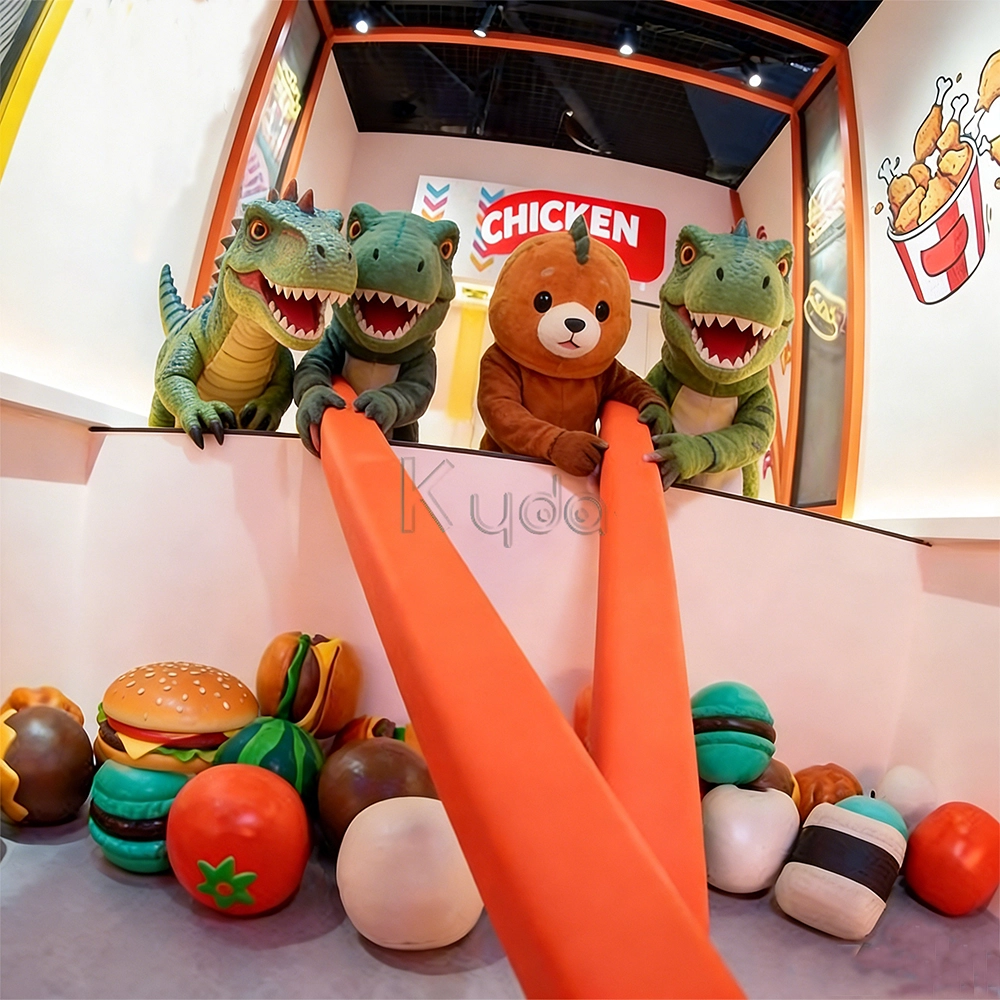
Crub Crab Giant Chopsticks Challenge Game Interactive Skill Challenge Game for Activate Game Rooms by Kyda
Crub Crab Giant Chopsticks Challenge Game is an innovative interactive challenge attraction designed for indoor entertainment centers, arcade game venues, and activate-style interactive game rooms. In this unique skill-based game, players control a pair of oversized giant chopsticks to pick up scattered snacks, toys, or prize items and place them into a collection basket within a limited time. The gameplay combines hand-eye coordination, precision control, balance, and quick reaction, creating a fun and competitive experience suitable for players of all ages.
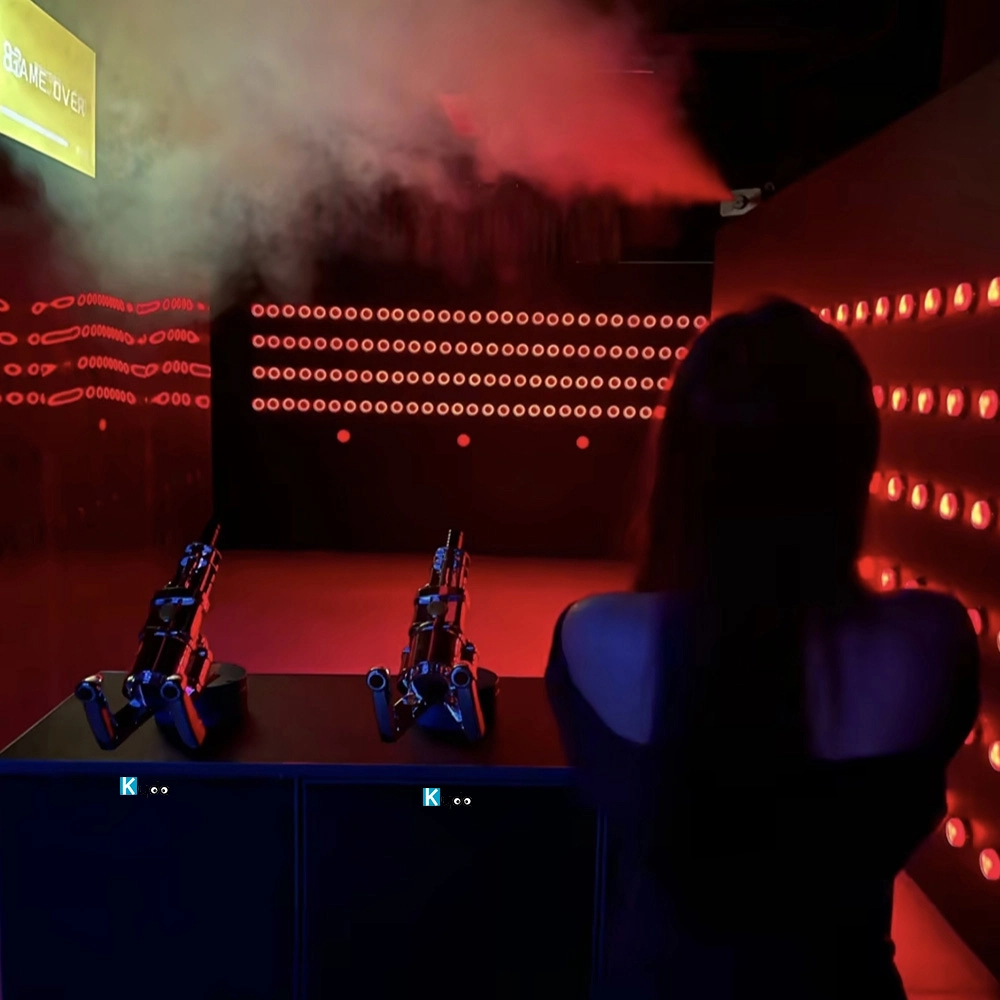
Active Reaction Laser Shooting Game Room
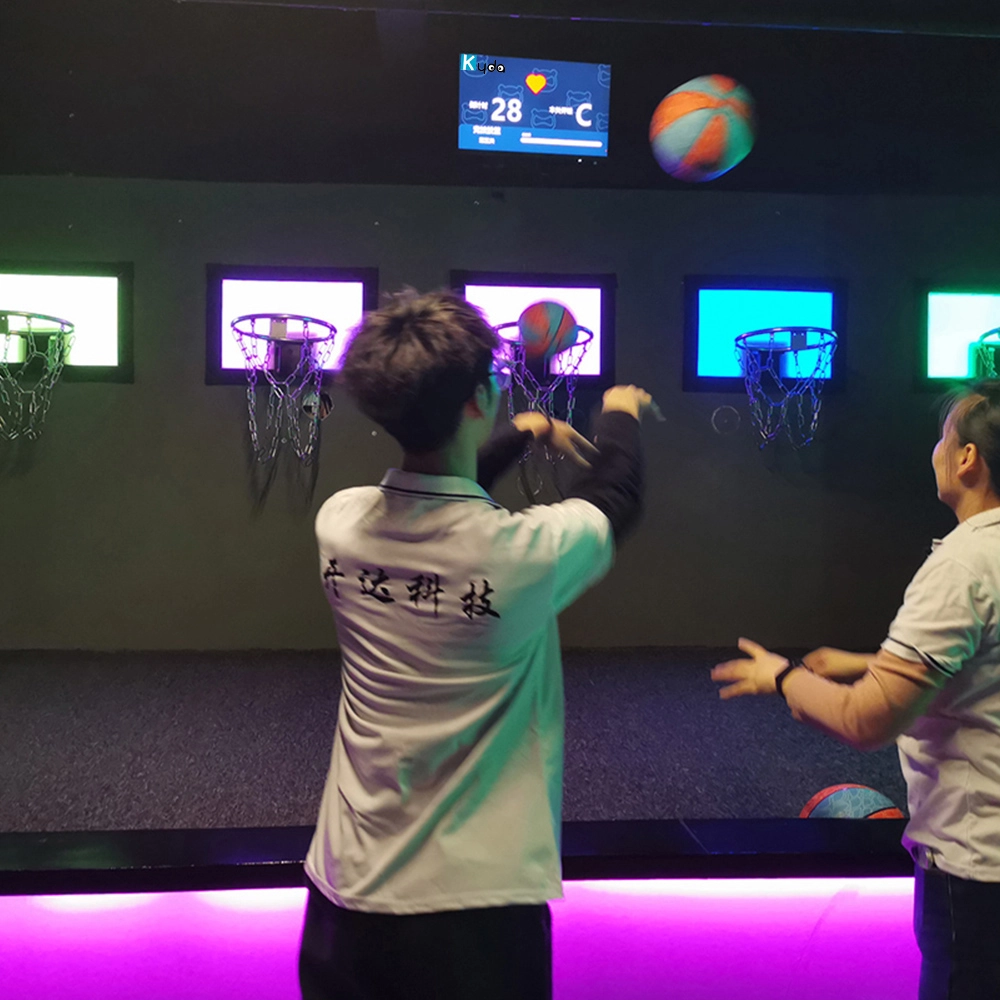
Hoops Active Game: The Ultimate Interactive Basketball Fitness Game
Elevate your basketball skills with Kyda’s Hoops Activate Game, the interactive basketball game. Perfect for basketball game rooms, Activate Hoops offers immersive fitness fun. Experience the Activate Basketball Game that combines sport and technology for active play.
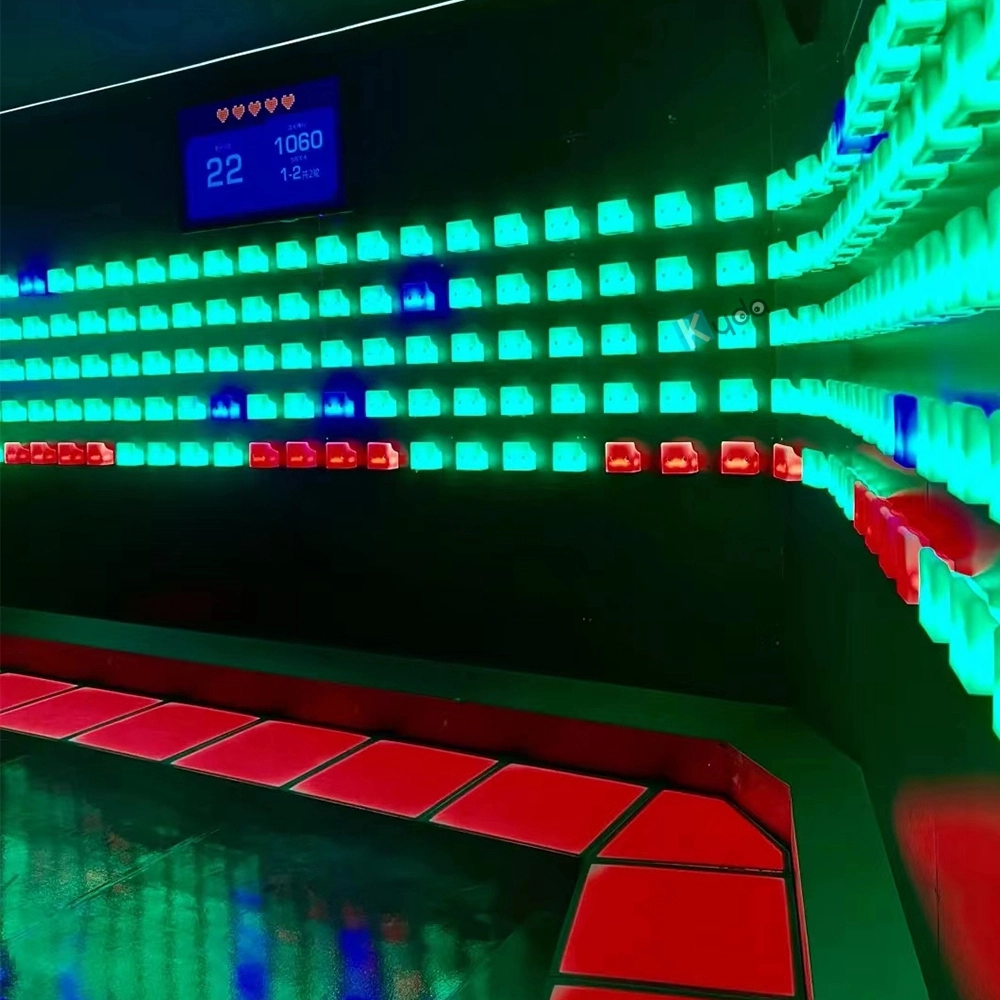
Activate Fitness Climb Game – The Ultimate Interactive LED Climbing Wall Experience
Experience the Activate Fitness Climb Game by Kyda—the interactive LED wall game. This Activate Climb Game combines fitness and fun with dynamic LED challenges, perfect for all ages. Boost agility and engagement with Kyda’s innovative interactive LED wall game today!
Let's get in touch
Email: sales@kydavr.com
Tel.: +86 188 2001 8779
Address: 501 Shixin Road, Dalong Street, Guangzhou, Guangdong, China.
© 2025 Kyda. All Rights Reserved.
 Scan QR Code
Linkedin
Ins
Facebook
Twitter
YouTube