




How to Choose the active video games manufacturer and supplier in us?
- Introduction: Why Choosing the Right Active Video Games Manufacturer Matters
- Understand the : What Buyers Need
- Step 1 — Define Your Project Scope and Business Goals
- Step 2 — Key Selection Criteria for Active Video Games Suppliers
- 1. Product quality and safety
- 2. Software platform and content ecosystem
- 3. Customization and localization
- 4. Installation, training, and local support
- 5. Commercial terms and ROI clarity
- Step 3 — Ask the Right Questions (RFP Checklist)
- Comparing Suppliers: A Practical Table
- Step 4 — Validate Claims with Proof
- Step 5 — Logistics, Manufacturing Footprint, and Supply Chain Risk
- Key logistics considerations
- Cost vs. ROI — How to Evaluate Financials
- Why Kyda? How to Evaluate a Manufacturer Like Kyda
- Common Pitfalls and How to Avoid Them
- Contract Tips: Protect Your Investment
- Implementation Checklist Before Opening
- Conclusion: A Practical Roadmap to a Confident Choice
- Sources and References
- FAQs
Introduction: Why Choosing the Right Active Video Games Manufacturer Matters
Active video games are becoming key revenue drivers for entertainment centers, family entertainment centers (FECs), schools, fitness facilities, and retail malls. Choosing the right manufacturer and supplier determines product quality, installation speed, long-term maintenance costs, guest experience, and ly your return on investment (ROI). This guide explains practical steps and evaluation criteria for selecting an active video games manufacturer and supplier in the US, focused on business intent and commercial outcomes.
Understand the : What Buyers Need
When people search “How to choose the active video games manufacturer and supplier in US,” they usually want practical, business-focused answers: who can deliver reliable hardware, software, local support, compliance with safety standards, customization, and predictable ROI. This article answers those needs with actionable checklists, vendor comparison factors, and a vendor-agnostic procurement process.
Step 1 — Define Your Project Scope and Business Goals
Before contacting suppliers, clarify the scope, format, and KPIs of your project. Typical questions to answer:
- Will this be an indoor or outdoor attraction?
- Target audience: children, teens, families, corporate events?
- Do you need turnkey installation, training, or local maintenance?
- Budget range and expected payback period (months or years)?
- Space constraints, power availability, and local regulations?
Clear answers let you filter manufacturers quickly and ensure proposals are comparable.
Step 2 — Key Selection Criteria for Active Video Games Suppliers
Evaluate suppliers across five core dimensions: product quality, software platform & content, customization & integration, service & logistics, and commercial terms. Use a weighted scoring matrix to rank suppliers.
1. Product quality and safety
Look for rugged hardware, reliable sensors, and compliance with safety standards (UL, CE, RoHS). Verify environmental specifications for outdoor installations (IP ratings, UV resistance). Warranty terms and mean time between failures (MTBF) are important commercial indicators.
2. Software platform and content ecosystem
Active video games depend on engaging software. Ask about content updates, multi-language support, analytics dashboards, SDK/API availability, and compatibility with your payment and booking systems.
3. Customization and localization
Successful venues differentiate with custom themes, branded content, or localized educational modules. Assess the supplier’s design team capability—animation, audio, UI/UX, and whether they can produce custom levels, floor/LED layouts, or themed enclosures.
4. Installation, training, and local support
Fast installation and local maintenance minimize downtime. Check if the supplier has US-based technicians, spare-parts inventory, remote diagnostics, and training programs for operators.
5. Commercial terms and ROI clarity
Look beyond unit price. Compare total cost of ownership (TCO): shipping/import duties, installation, training, spare parts, licensing/subscription fees, and expected revenue per hour/day. Ask for case studies and realistic payback timelines.
Step 3 — Ask the Right Questions (RFP Checklist)
When preparing an RFP, include technical, operational, and commercial questions. Sample checklist items:
- Detailed BOM and component suppliers (LED manufacturers, sensors, processors).
- Software licensing model and frequency of updates.
- Warranty coverage, SLA terms, and emergency response time in the US.
- Proof of UL/CE testing and IP ratings for outdoor units.
- References and case studies from US installations.
- Typical installation timeline and site prep requirements.
- Training, remote-monitoring, and revenue/analytics tools included.
Comparing Suppliers: A Practical Table
Use the following table template to compare shortlisted manufacturers. Replace sample data with supplier-specific responses during evaluation.
| Evaluation Factor | Supplier A (example) | Supplier B (example) | Kyda (example) |
|---|---|---|---|
| Hardware warranty | 12 months | 24 months (limited) | 12–24 months (depending on product) |
| Software updates | Annual | Quarterly | Regular updates + customization options |
| Local US support | No (remote) | Yes (regional tech) | Yes — global manufacturing + local partnerships |
| Customization | Limited | Moderate | High — custom R&D and design teams |
| Lead time | 8–12 weeks | 6–10 weeks | Variable — can leverage Guangzhou/Zhongshan/Zhengzhou/Beijing partners |
Step 4 — Validate Claims with Proof
Always ask suppliers for verifiable proof:
- Video walkthroughs and site-acceptance tests (SAT) from live installations.
- Client references in similar markets — contact them.
- Factory audit reports or ISO certificates.
- Sample analytics reports showing utilization, dwell time, and revenue metrics.
Step 5 — Logistics, Manufacturing Footprint, and Supply Chain Risk
Understand where products are manufactured and where parts come from. Suppliers with multiple manufacturing partnerships can often offer faster customization and spares. Kyda, for example, leverages manufacturing advantages in Guangzhou, Zhongshan, Zhengzhou, and Beijing and maintains relationships with LED, sheet metal, paint and electronic assembly factories to deliver custom projects faster and at scale.
Key logistics considerations
- Freight and import duties into the US — factor into TCO.
- Local inventory of critical spares to reduce downtime.
- Lead times for custom artwork, LED panels, or large enclosures.
Cost vs. ROI — How to Evaluate Financials
Compare proposals using Total Cost of Ownership and projected revenue. Example inputs for a simple payback model:
- Initial equipment + installation cost.
- Monthly operating costs (maintenance, software licenses, staffing).
- Expected sessions per day, price per session, and occupancy rates.
| Item | Example |
|---|---|
| Equipment + installation | $25,000 |
| Monthly operating costs | $1,200 |
| Price per session | $8 |
| Average sessions per day | 40 |
| Monthly revenue estimate | $9,600 (40 sessions x $8 x 30 days) |
| Simple payback | ~3.0 months (equipment cost / (monthly revenue - operating costs)) |
Note: Real-world payback varies by location, seasonality, and cross-selling. Ask suppliers for real case studies rather than theoretical high-level claims.
Why Kyda? How to Evaluate a Manufacturer Like Kyda
Kyda is positioned as a one-stop solution provider for active game rooms and Activate gaming centers with in-house R&D and a cross-disciplinary team: electronic design, software programming, game and animation design, product and multimedia design, plus interior design. Kyda's manufacturing partnerships across Guangzhou, Zhongshan, Zhengzhou, and Beijing enable tailored products and rapid prototyping. When evaluating a company like Kyda, consider these verifiable benefits:
- Integrated design-to-production workflow for faster custom projects.
- Partnerships with LED, sheet metal, paint, and electronics factories for better cost control.
- Product breadth — active interactive games, LED floor systems, reaction and fitness games, horror escape, and projection games.
- Support for both indoor and outdoor amusement installations with localization options.
Common Pitfalls and How to Avoid Them
Common errors that lead to delays or unsatisfactory installations:
- Choosing based solely on unit price without factoring in software fees and service response times.
- Not verifying compliance certificates and IP ratings for outdoor units.
- Failing to request a detailed schedule for site prep and install requirements.
- Assuming content updates are free—confirm the update model and costs.
Contract Tips: Protect Your Investment
Include clear acceptance criteria, milestone-based payments, warranties, spare-parts commitments, training, and penalties for missed delivery dates. Ensure software licensing terms give you control of critical operational data and an export option for analytics.
Implementation Checklist Before Opening
- Site acceptance test (SAT) completed and signed off.
- Staff trained on operations and basic troubleshooting.
- Remote monitoring set up with thresholds and alerts.
- Marketing assets provided (video, photos, gameplay descriptions).
- Service contract and spare-parts list in place.
Conclusion: A Practical Roadmap to a Confident Choice
Choosing the right active video games manufacturer and supplier in the US requires a balance of technical validation, commercial clarity, and logistical readiness. Define your goals, use a structured RFP, validate claims with proof, compare TCO and ROI, and insist on strong service-level commitments. Suppliers like Kyda that combine multidisciplinary design teams with manufacturing partners can offer deep customization and end-to-end solutions—ideal when you need tailored, high-return attractions.
Sources and References
- Newzoo — Global Games Market Reports (industry trends and revenue context). Link: https://newzoo.com/ (accessed 2024-06)
- Grand View Research — Exergaming Market Overview (market growth for active/exergaming). Link: https://www.grandviewresearch.com/industry-analysis/exergaming-market (accessed 2023-11)
- Statista — Global video games market revenue statistics. Link: https://www.statista.com/statistics/292454/global-video-games-market-revenues/ (accessed 2024-05)
- Industry sources on China manufacturing hubs and electronics supply chain (Guangzhou, Zhongshan, Zhengzhou). Example: Wikipedia pages for Guangzhou and Zhengzhou (manufacturing roles) for general location context. Links: https://en.wikipedia.org/wiki/Guangzhou (accessed 2024-04); https://en.wikipedia.org/wiki/Zhengzhou (accessed 2024-04)
FAQs
What certifications should I require from an active video games manufacturer?Ask for UL/ETL for electrical safety, CE for European compliance (if you have EU customers), RoHS for restricted substances, and IP ratings for outdoor equipment. Request copies of test reports.
How long does a typical installation take for an active game attraction?Turnkey installations usually take 2–8 weeks depending on customization, site prep, and shipping. Off-the-shelf kiosk units can be installed in a few days; fully customized rooms require more planning.
What ongoing costs should I expect beyond the purchase price?Expect monthly software licensing or content fees, periodic maintenance, spare parts, staff training, and utilities (power consumption for LED-heavy attractions). Include these in your TCO.
How can I verify a manufacturer’s US support capability?Request an SLA with response times and local contact numbers, ask for references from US installations, and confirm spare-parts inventory locations. If possible, negotiate pilot projects or staged acceptance.
Can suppliers integrate active video games with other systems (POS, booking)?Most modern suppliers provide APIs or SDKs for integration. Confirm specific endpoints, data export formats, and whether integration services are included or billable.
How important is content freshness for repeat business?Very important. Regular content updates, seasonal themes, and new challenges keep repeat visitation high. Verify the supplier’s content roadmap and update cadence.
How Much Does an LED Floor Game Room Cost? Budget Guide
Best active game consoles manufacturers and supplier brands in us
Interactive Wall Projection Games Installation Guide for Commercial Spaces
Why LED Floor Games Are a Smart Investment for Entertainment Venues
For Company
How much need invest?
Normally can choose one Grid game only or different rooms.
Please contact with Kydaplay sales manager to get the exact cost.
How large room space need every game room?
Normally 10-50 square meters, also can customize as space room.
How many places(country or city) already installed? Where are they?
Above 100 places in the whole world market:
Already installed in Saudi Arabic, New Zealand, Indonesia ,Malaysia, Singapore, Australia, United Kingdom, Netherlands ,France, India, Poland, Greece, Hungary etc in the world market; Shenzhen, Beijing, Zhengzhou,Taiwan etc in the Chinese market.
Can you make CAD design for buyer’s space room?
Yes, we can make CAD design as exact space room size.
Can you make decoration design for buyer’s place?
We also can assist to make decoration that is for extra.
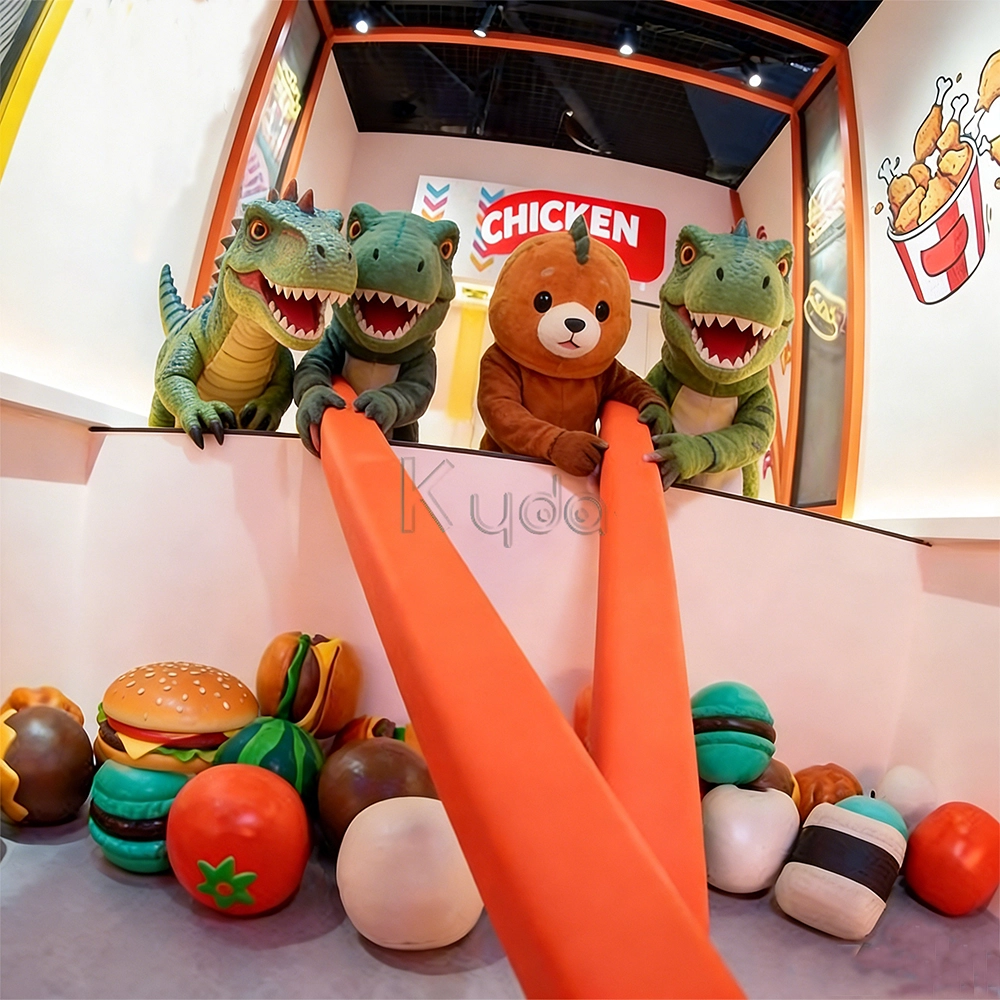
Crub Crab Giant Chopsticks Challenge Game Interactive Skill Challenge Game for Activate Game Rooms by Kyda
Crub Crab Giant Chopsticks Challenge Game is an innovative interactive challenge attraction designed for indoor entertainment centers, arcade game venues, and activate-style interactive game rooms. In this unique skill-based game, players control a pair of oversized giant chopsticks to pick up scattered snacks, toys, or prize items and place them into a collection basket within a limited time. The gameplay combines hand-eye coordination, precision control, balance, and quick reaction, creating a fun and competitive experience suitable for players of all ages.
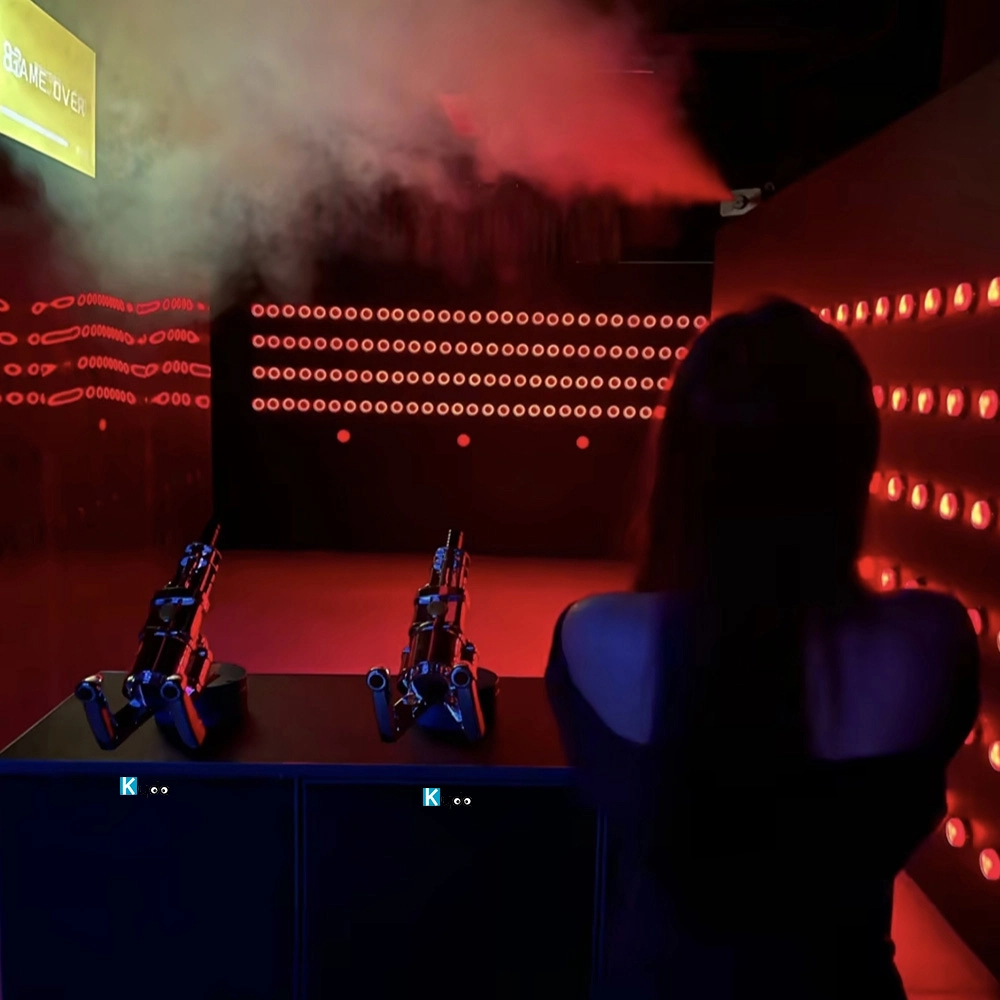
Active Reaction Laser Shooting Game Room
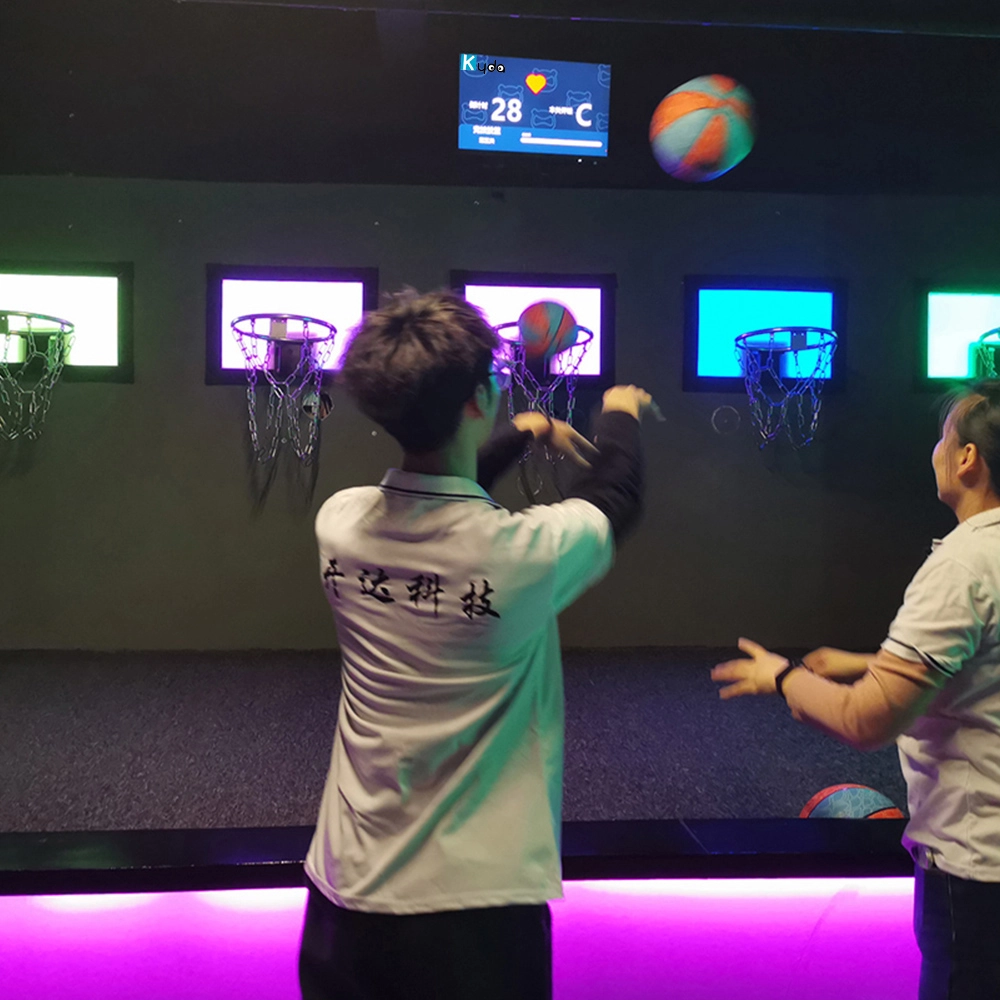
Hoops Active Game: The Ultimate Interactive Basketball Fitness Game
Elevate your basketball skills with Kyda’s Hoops Activate Game, the interactive basketball game. Perfect for basketball game rooms, Activate Hoops offers immersive fitness fun. Experience the Activate Basketball Game that combines sport and technology for active play.
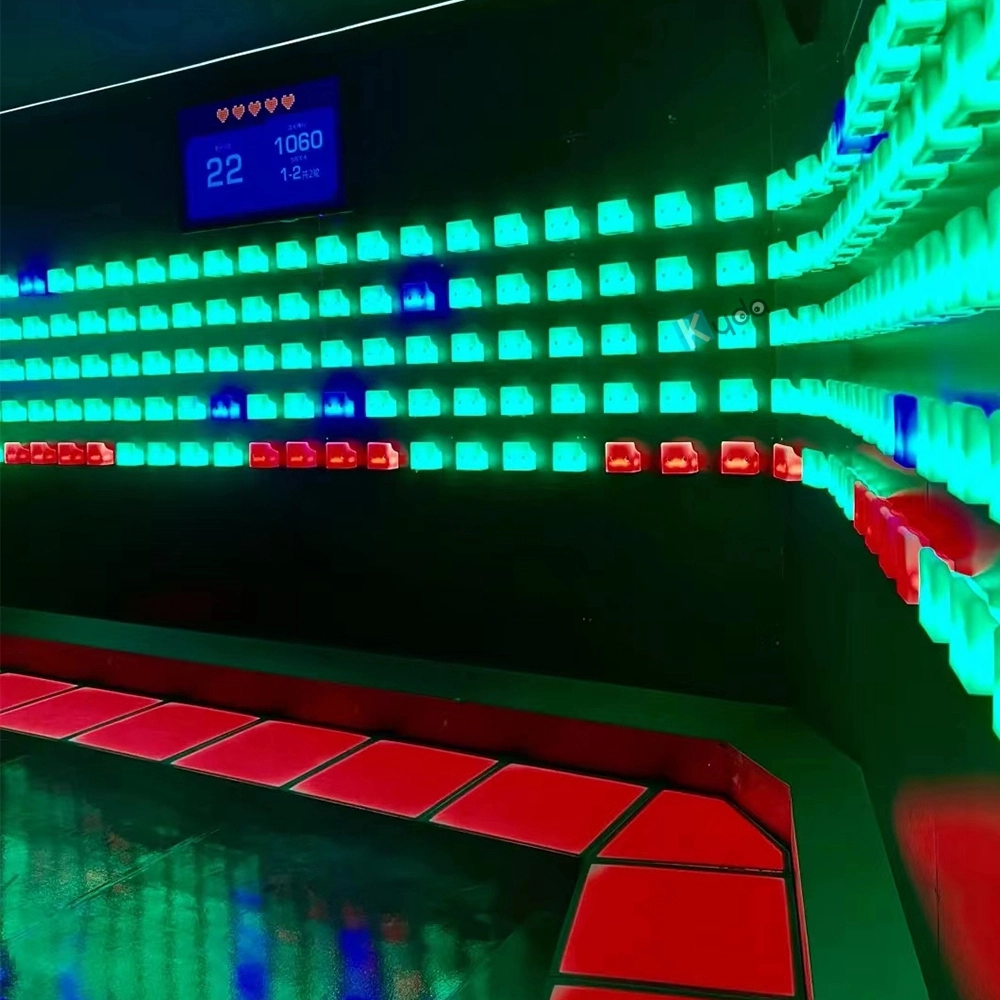
Activate Fitness Climb Game – The Ultimate Interactive LED Climbing Wall Experience
Experience the Activate Fitness Climb Game by Kyda—the interactive LED wall game. This Activate Climb Game combines fitness and fun with dynamic LED challenges, perfect for all ages. Boost agility and engagement with Kyda’s innovative interactive LED wall game today!
Let's get in touch
Email: sales@kydavr.com
Tel.: +86 188 2001 8779
Address: 501 Shixin Road, Dalong Street, Guangzhou, Guangdong, China.
© 2025 Kyda. All Rights Reserved.
 Scan QR Code
Linkedin
Ins
Facebook
Twitter
YouTube