




Short Answer
An interactive floor is a floor-based digital game or activity system that detects player movement or input and responds with visual, audio, or gameplay feedback.
Two common formats are:
- Interactive projection floors, which project digital content onto a physical floor and use sensing or tracking technology to respond to players.
- Interactive LED floors, which use illuminated or digital floor panels as the active game surface.
Interactive floors are used in active game rooms, family entertainment centers, indoor amusement venues, fitness-oriented attractions, educational activity spaces, and other environments where physical movement is part of the experience.
For B2B buyers, choosing an interactive floor is not only a technology decision. The project should also consider venue type, player experience, available space, player capacity, installation conditions, software and game content, maintenance, supplier scope, and whether the buyer needs equipment only or a complete interactive game-room solution.
What Exactly Is an Interactive Floor?
An interactive floor belongs to the broader category of interactive entertainment and active-play systems.
Its defining feature is that the player's physical movement becomes part of the interface.
Instead of controlling the experience mainly through a joystick, button, touchscreen, or handheld controller, the player interacts by moving across the floor.
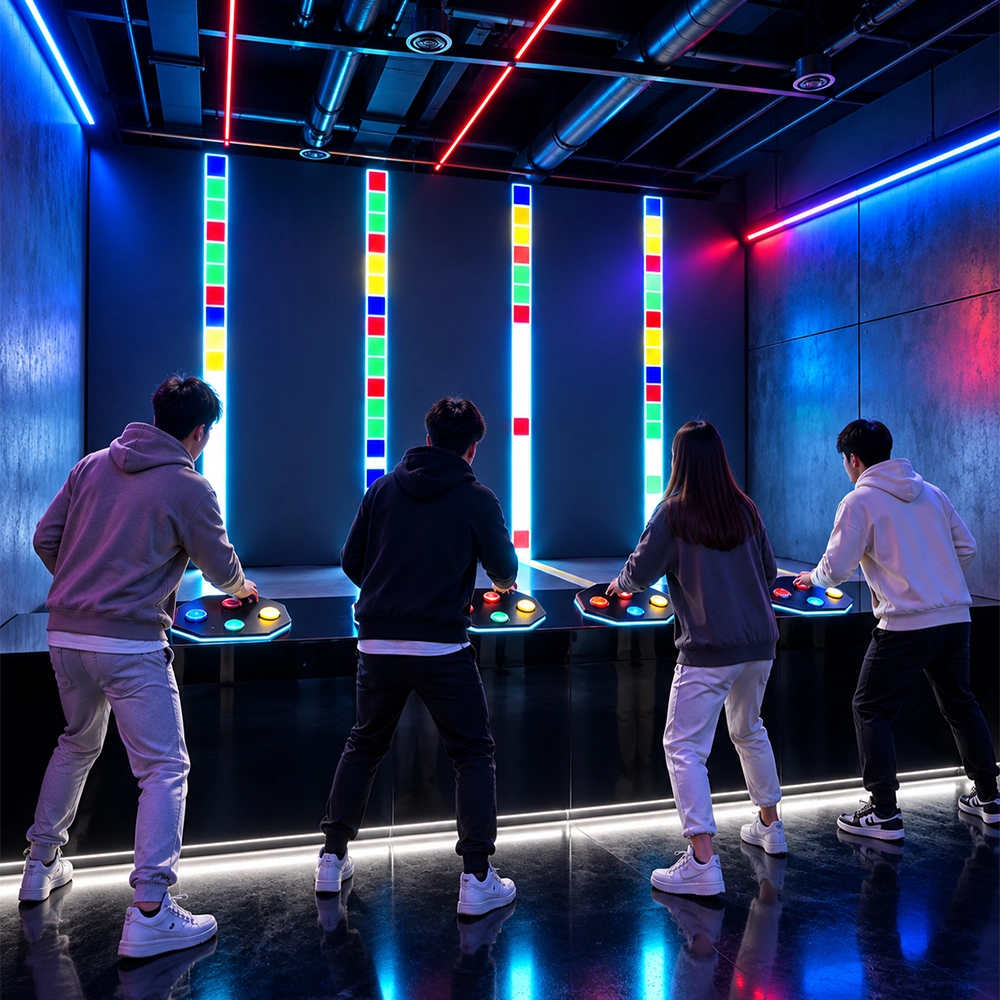
Depending on the game, players may step on targets, avoid specific zones, follow moving paths, react to changing colors, repeat visual sequences, compete for points, race against a timer, coordinate with teammates, or complete physical movement challenges.
The floor is therefore more than a display surface. It becomes part of the input system, game field, and physical interaction space.
How Does an Interactive Floor Work?
An interactive floor typically combines four functional elements:
- A play surface
- A method for displaying game information
- A method for detecting player actions
- Software that determines how the game responds
For example, a game may display several zones and ask a player to step on a particular color.
The system detects the player's position, determines whether the action is correct, updates the score or game state, and generates the next visual prompt.
The technology used to create that interaction depends on the type of floor.
What Are the Main Types of Interactive Floors?
Two major formats are particularly relevant to commercial buyers.
Interactive Projection Floor
An interactive projection floor uses projected digital content combined with tracking or sensing technology.
The physical floor serves as the display area while projectors create the visible game environment.
Interactive LED Floor
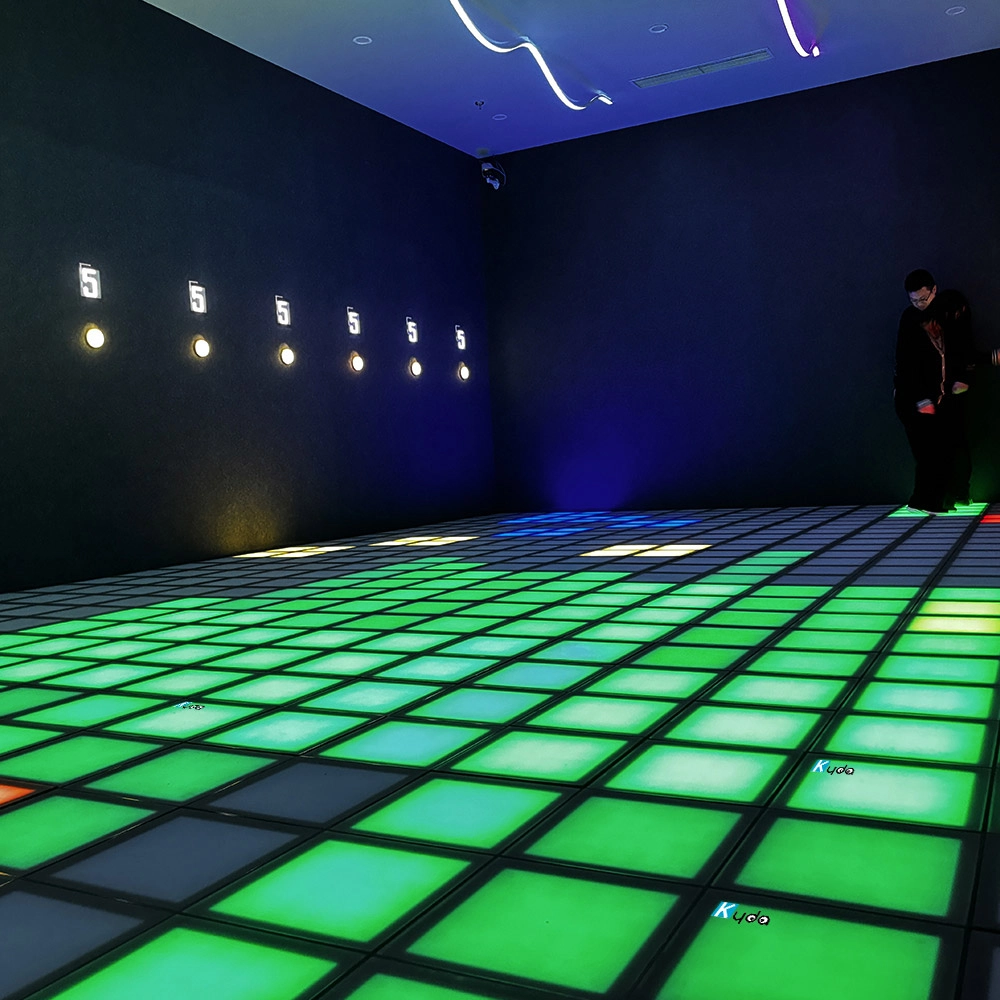
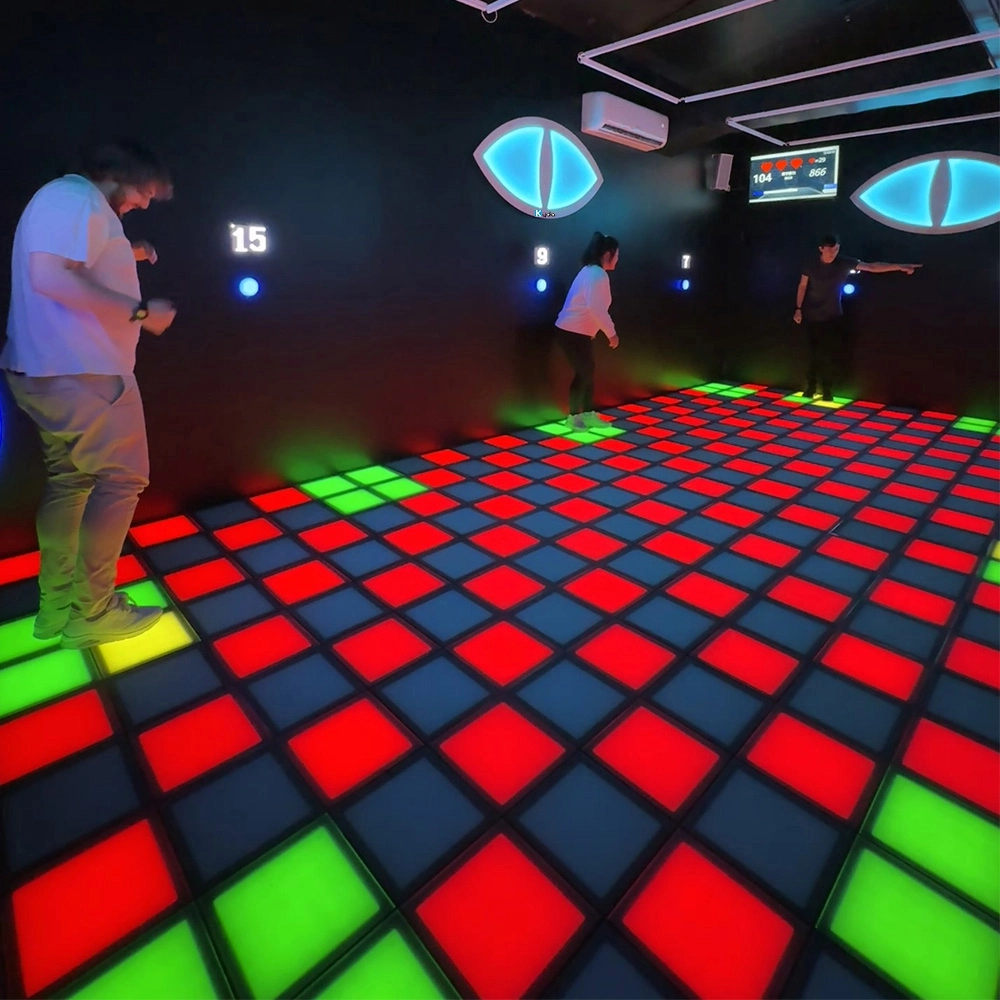
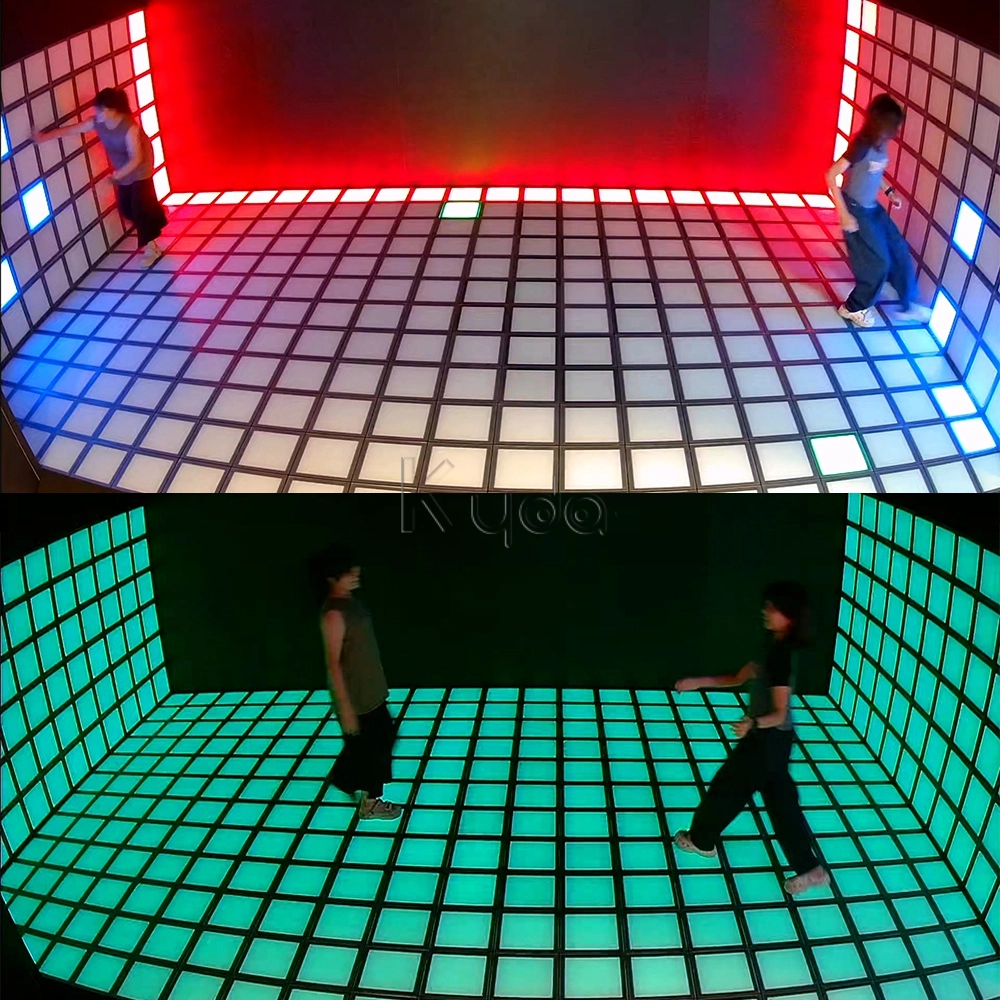
An interactive LED floor uses illuminated or digital floor modules as the game surface itself.
The panels can change color, indicate targets, display patterns, or guide players through challenges.
| Decision Area | Interactive Projection Floor | Interactive LED Floor |
|---|---|---|
| Main display method | Projected digital graphics | Illuminated or digital floor panels |
| Player interaction | Tracking or sensing of movement | Interaction with defined floor zones or panels |
| Visual flexibility | Strong for changing scenes and themes | Strong for defined illuminated game patterns |
| Physical floor | Existing or prepared surface can form display area | Floor modules become part of the system |
| Key site considerations | Lighting, projection distance, tracking, floor finish | Floor configuration, installation, access, module layout |
| Typical game direction | Projection games, immersive content, flexible themes | Reaction, timing, memory, team and zone-based games |
Neither format is universally better. The correct choice depends on the experience the venue wants to create.
What Is an Interactive Projection Floor?
An interactive projection floor turns a physical floor area into a digital game surface using projected content.
Players may see moving targets, characters, paths, scoring zones, animated effects, educational content, obstacles, or themed environments.
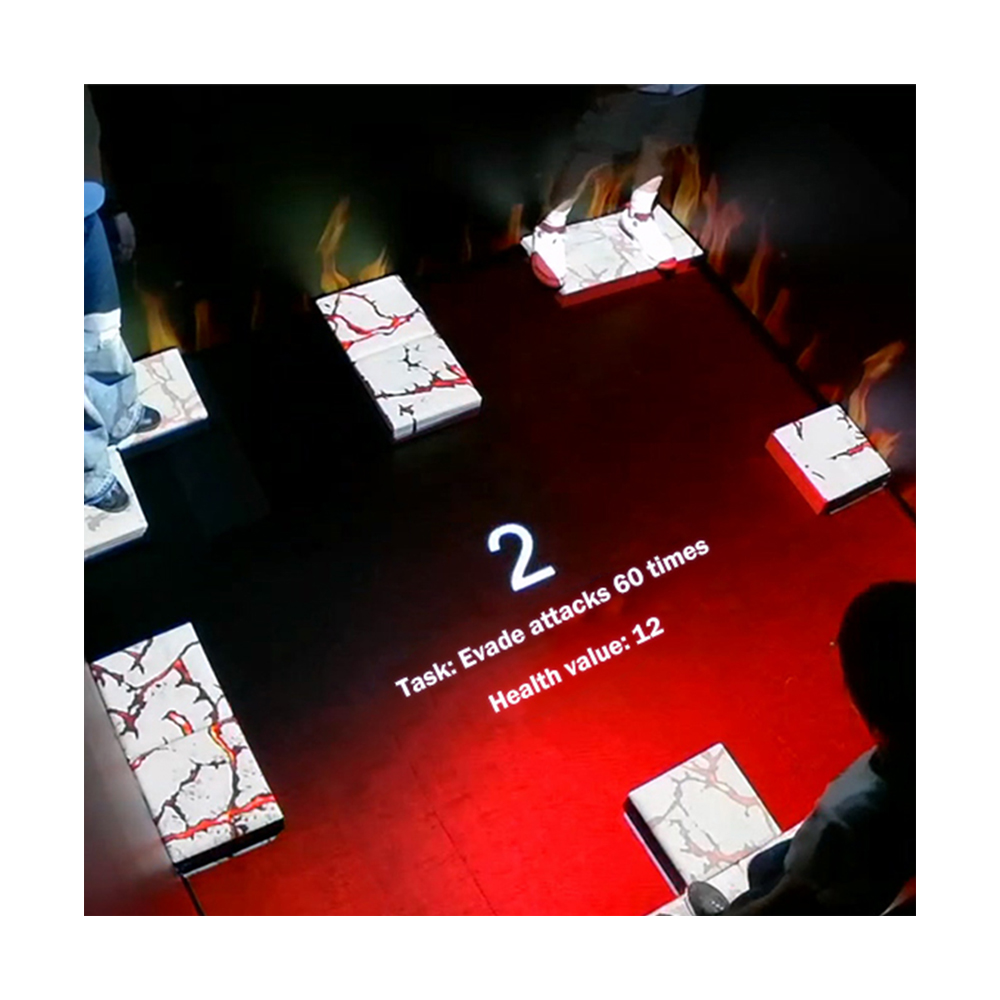
Tracking or sensing technology detects how players move within the projected area, and software changes the content according to those movements.
This can make projection useful when a venue wants to use the same physical area for multiple digital themes or games.
Important project conditions may include:
- Ambient lighting
- Projector location
- Projection distance
- Ceiling conditions
- Floor finish and color
- Tracking coverage
- Equipment mounting
- Player circulation
- Maintenance access
A projection floor that performs well in one environment should not automatically be assumed to perform identically in another.
Buyers evaluating this technology can also review KYDA's Interactive Projection Games product category to understand how projection-based attractions fit into its wider active-game offering.
What Is an Interactive LED Floor?
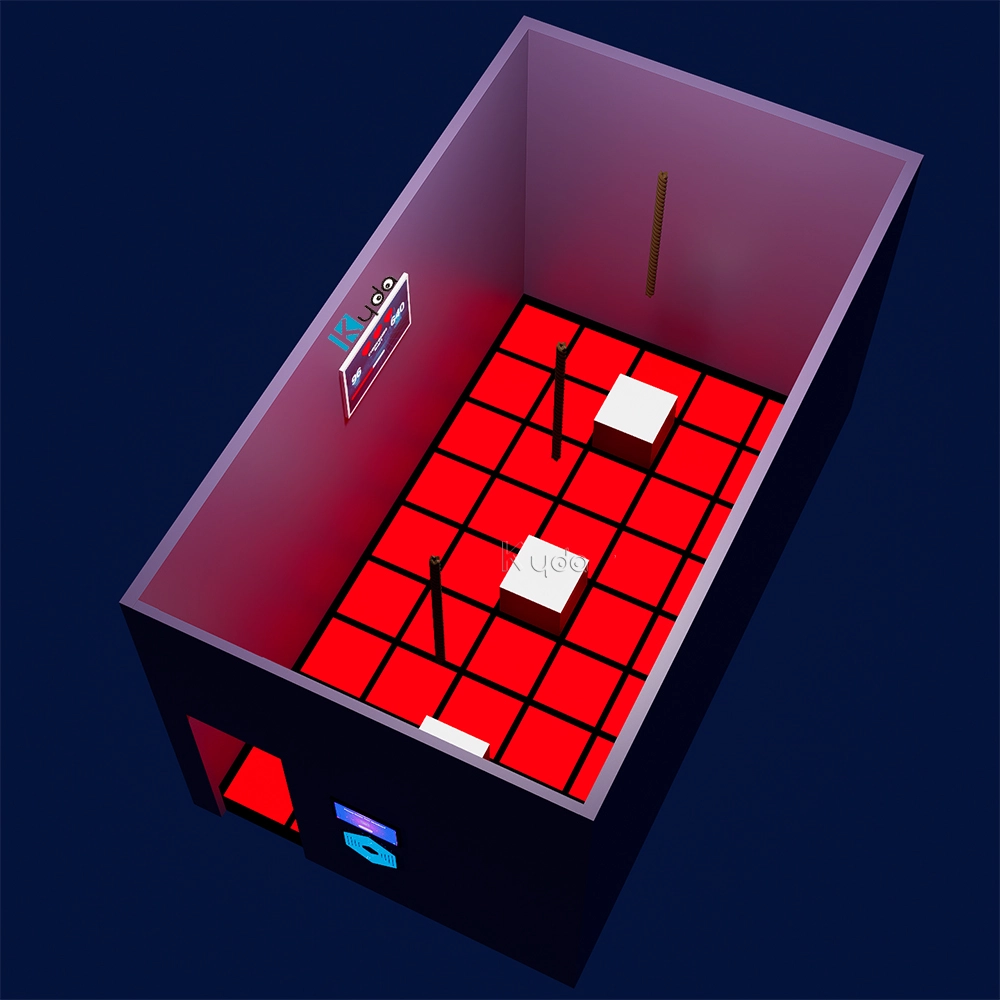
An interactive LED floor uses illuminated or digital floor sections as the primary game surface.
Depending on the game, panels may change colors, display targets, mark safe or restricted zones, create sequences, indicate routes, or respond to player actions.
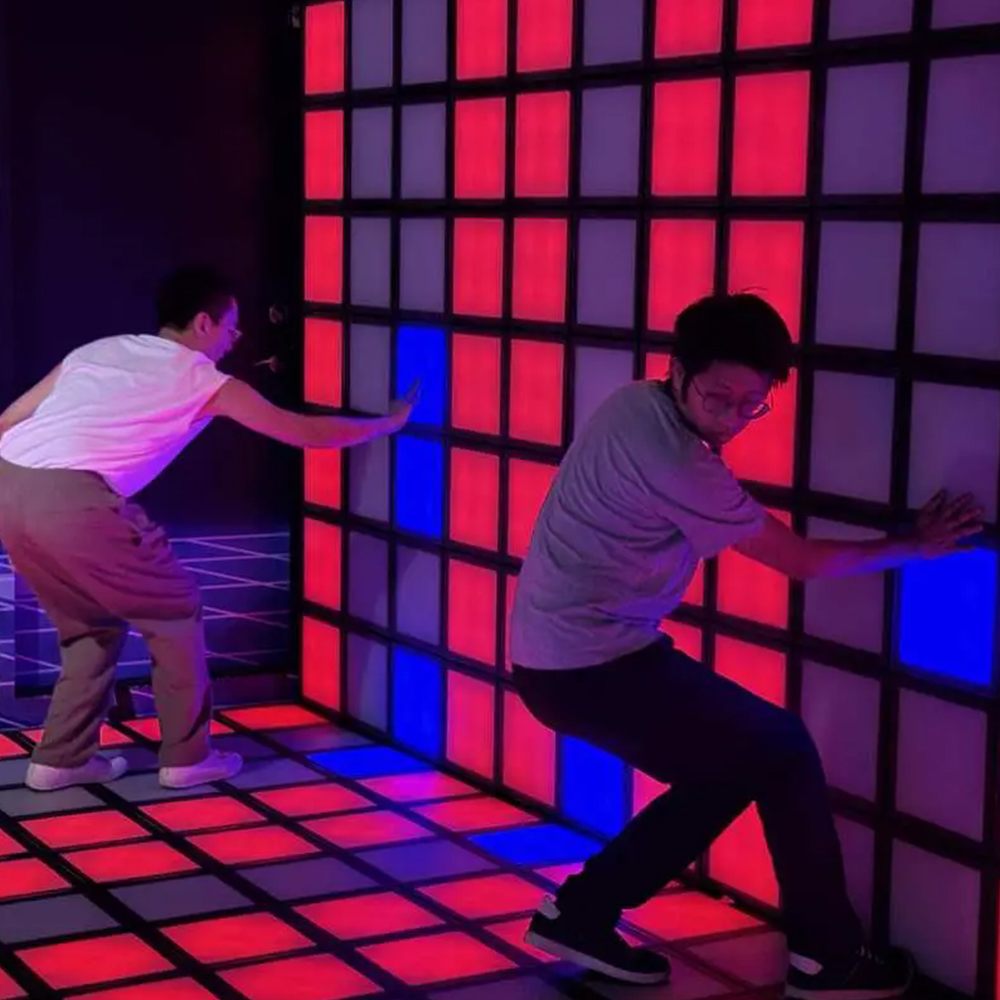
This format is particularly suitable for concepts involving:
- Reaction
- Timing
- Memory
- Movement
- Competition
- Team play
- Zone control
The buyer therefore needs to consider gameplay as well as physical installation, surrounding circulation, equipment access, and future maintenance.
Interactive Projection Floor vs. LED Floor: How Should Buyers Choose?
The better option depends on the intended application.
An interactive projection floor may be a better fit when the project prioritizes flexible digital scenes, changing themes, projection-based immersion, or multiple content concepts on the same physical floor area.
An interactive LED floor may be a better fit when the project prioritizes defined play zones, visible floor interaction, reaction challenges, timing-based games, movement between illuminated areas, or team competition.
Buyers should also evaluate:
- Lighting
- Available floor area
- Ceiling conditions
- Required player capacity
- Installation method
- Maintenance access
- Game format
- Venue design
The comparison should lead to a best-fit scenario, not a claim that one technology is better in every situation.
What Can Players Do on an Interactive Floor?
The activity depends on the software and game design.
Common interaction patterns include reaction games, memory games, avoidance games, team games, competitive games, fitness-oriented activities, and educational activities.
For buyers, this means hardware alone does not define the commercial usefulness of the attraction.
Game content and interaction design matter as well.
Where Are Interactive Floors Used?
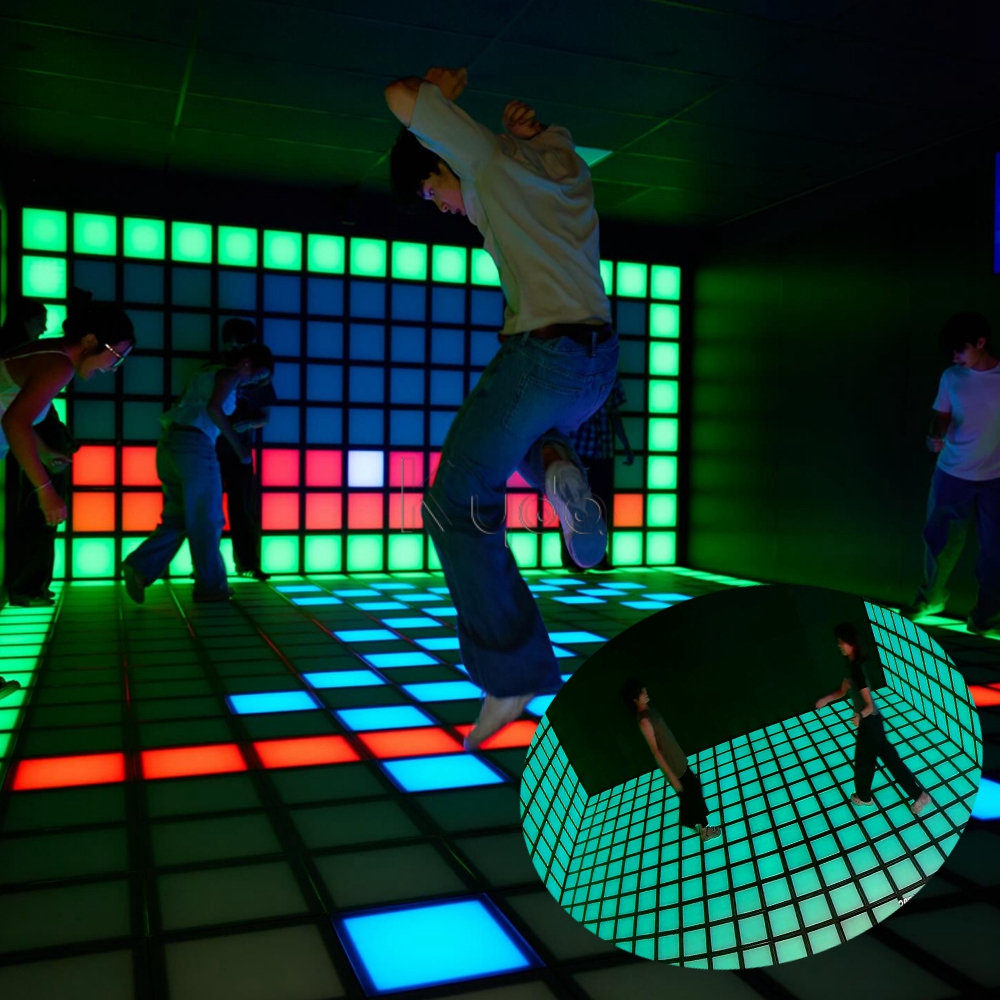
Active Game Rooms
The interactive floor can operate as one activity zone within a larger multi-game environment.
Family Entertainment Centers
It can provide physical, visually understandable gameplay for visitors who want active participation rather than passive screen entertainment.
Indoor Amusement Venues
The floor can be combined with other interactive attractions to create a broader entertainment mix.
Fitness and Active Entertainment Concepts
Reaction, movement, timing, and competition can support game-based physical activity.
Educational or Activity Spaces
Interactive floors may support movement-based group activities or learning concepts.
The useful question is therefore not only “Where can an interactive floor be installed?” but “What experience should the interactive floor create for this venue?”
What Business Role Can an Interactive Floor Play in a Venue?
For a commercial venue, the interactive floor becomes part of the customer experience.
Depending on the concept, it may help create an active-play zone, add multiplayer interaction, support team competition, diversify the attraction mix, turn floor space into an interactive environment, or combine entertainment with physical movement.
Buyers should also consider operating questions:
- How long does a game session last?
- How many people can participate?
- Where do waiting players stand?
- Does the game require staff assistance?
- How easily can first-time players understand the rules?
- How does the attraction fit with nearby games?
These conditions determine whether the attraction fits operationally as well as technically.
Interactive Floor vs. Traditional Arcade Game
Traditional Arcade: Cabinet → Display → Fixed Controls → Player
Interactive Floor: Open Play Area → Player Movement → Digital Response
Traditional arcade equipment can be compact and self-contained.
Interactive floors generally require more consideration of movement space, player flow, installation conditions, surrounding clearance, and floor or projection requirements.
One format does not replace the other. A venue may use both when they support different customer behaviors.
How Much Space Does an Interactive Floor Need?
There is no single floor size that applies to every project.
The required area depends on:
- Interactive floor type
- Game design
- Number of simultaneous players
- Player movement
- Equipment layout
- Surrounding clearance
- Entry and exit flow
- Queue space
- Nearby attractions
This is more reliable than choosing equipment from a product image and trying to fit it into the venue afterward.
How Many Players Can Use an Interactive Floor?
Player capacity is specific to the system and game.
Buyers should distinguish between:
- Physical capacity of the play area
- Recommended number of players
- Number of simultaneously active players
- Team configuration
- Spectator or queue area
For a commercial operator, the more useful question is: How many players can complete the intended game experience comfortably and efficiently?
That affects both player experience and venue throughput.
Is an Interactive Floor Suitable for Children, Adults, or Mixed Groups?
Suitability depends on game design rather than floor technology alone.
Different player groups may require different:
- Difficulty
- Movement intensity
- Game duration
- Instructions
- Visual design
- Reaction speed
- Team structure
The target audience should therefore be defined before finalizing game content and equipment configuration.
Can an Interactive Floor Be Customized?
Yes, but “customization” can refer to several different services.
Content Customization
Graphics, themes, visual branding, and game content.
Game Customization
Rules, difficulty, scoring, or interaction logic.
Equipment Configuration
The physical arrangement of the system for a particular venue.
Venue-Level Customization
Integration with other attractions, room layout, visual design, and operating flow.
These services should not be treated as interchangeable.
A supplier that can change graphics does not automatically provide complete venue planning. The quotation should state exactly what form of customization is included.
What Should Buyers Check Before Choosing an Interactive Floor?
- Venue Type — active entertainment, family entertainment, amusement, fitness, education, or another application.
- Target Players — age range, group type, and expected behavior.
- Player Experience — reaction, competition, teamwork, fitness, memory, immersion, or learning.
- Available Space — actual usable interaction area rather than total room dimensions.
- Player Capacity — desired number of active players.
- Technology Type — projection, LED, or another format.
- Software and Content — games and software included with the system.
- Installation Conditions — what the site must provide before installation.
- Maintenance — which components require access, inspection, service, or replacement.
- Supplier Scope — equipment only or broader project services.
Better buying question: “Which configuration best fits our venue and operating requirements?”
Equipment Only or Complete Interactive Game-Room Solution?
Equipment-Only Purchase
This may fit buyers who already have:
- A confirmed layout
- Technical planning
- Local installation resources
- Electrical preparation
- Site contractors
- A defined attraction mix
In this model, the supplier may mainly provide equipment, software, documentation, and product support.
Complete Interactive Game-Room Project
A broader project may also require:
- Venue planning
- Attraction selection
- Room layout
- Game combination
- Visual integration
- Installation coordination
- Setup
- Testing
- Operating preparation
KYDA's current Solutions page describes active game-room projects that can combine interactive projection games, LED floors and walls, and other active interactive attractions.
For buyers planning several attractions, the better question may therefore be: “How should the interactive floor fit into the complete game-room concept?”
What Should Be Included in an Interactive Floor Quotation?
The quotation should make the supply boundary clear.
Depending on the project, buyers may need to check whether a proposal includes:
- Core hardware
- Projection or floor equipment
- Sensors
- Controllers
- Computers
- Software
- Game content
- Mounting components
- Cables
- Installation accessories
- Technical documentation
- Installation
- Setup
- Testing
- Training
- Spare parts
- Technical support
A lower quotation may simply include less.
How Should Buyers Compare Interactive Floor Quotations?
Compare bids using the same scope categories.
| Scope | Supplier A | Supplier B | Supplier C |
|---|---|---|---|
| Core equipment | Included | Included | Included |
| Software | Included | Included | Optional |
| Game content | Included | Limited | Included |
| Site planning | Included | Excluded | Limited |
| Installation | Included | Excluded | Optional |
| Testing / setup | Included | Check | Optional |
| Spare parts | Optional | Optional | Included |
| Technical support | Included | Included | Included |
| Local work | Buyer | Buyer | Buyer |
The table is only an example. Actual procurement comparison should use the specific project scope.
The purpose is to compare Same Requirement → Same Scope Category → Commercial Difference instead of comparing headline prices only.
What Installation Conditions Should Buyers Confirm?
Installation requirements depend on the technology and site.
Before ordering, clarify:
- Who is responsible for installation?
- What floor preparation is required?
- What ceiling or mounting conditions apply?
- What electrical preparation is required?
- Is network access required?
- Where will controllers or computers be installed?
- What tools are required?
- What local labor is needed?
- Is remote guidance available?
- Is on-site support available?
- Who performs final testing?
Without that relationship, an equipment quotation may leave important implementation responsibilities unresolved.
What Should Buyers Ask About Software and Game Content?
Interactive floors are software-driven attractions as well as physical equipment.
Buyers should ask:
- Which games are included?
- Which games fit the intended application?
- Can difficulty be adjusted?
- Can visual themes be changed?
- Is customization available?
- How are software issues supported?
- Are additional games available?
- Does the system require internet access?
- How are content updates handled?
The answers should relate to the actual system being proposed. Buyers should not assume all interactive floor suppliers use the same software or content model.
What Should Buyers Ask About Maintenance?
Maintenance requirements depend on whether the system uses projection equipment, LED modules, sensors, controllers, computers, or other components.
Useful questions include:
- Which components require inspection?
- Which parts may wear over time?
- How are replacement parts identified?
- Are spare parts available?
- What cleaning procedures apply?
- How is software maintained?
- Can technical issues be diagnosed remotely?
- How is equipment accessed for service?
For LED systems, physical access to floor modules may be relevant. For projection systems, access to projectors and tracking equipment may be relevant.
Maintenance should therefore be considered during layout planning rather than only after installation.
What Supplier Capabilities Should a Buyer Verify?
For KYDA specifically, the company's current website states that it carries out custom R&D, production, and sales of interactive entertainment products and maintains software-engineering and engineering-design capabilities.
Its About page also identifies manufacturing facilities in Zhongshan and Shenyang and states that more than 100 active interactive game projects have been delivered across over 30 countries and regions.
KYDA's Service Support page further describes support including design and engineering consultation, installation guidance, on-site technical assistance for applicable projects, remote troubleshooting, maintenance training, and software/game-system support.
These are useful capability signals, but buyers should still confirm which services are actually included in the specific quotation and project scope.
For additional verification, buyers can review About KYDA, KYDA Projects, and KYDA Service Support.
What Are Common Interactive Floor Procurement Mistakes?
Choosing Based on Appearance Alone
A visually impressive demonstration does not prove that the system fits another venue's dimensions, lighting, audience, or operating model.
Ignoring the Target Player
A game designed for one audience may not create the right experience for another.
Ignoring Surrounding Space
The visible game surface is not the only space requirement. Entry, exit, circulation, staff access, and queueing can also matter.
Comparing Unequal Quotations
One proposal may include equipment only while another includes software, installation, planning, or technical services.
Assuming Installation Is Included
Installation responsibility should be explicit.
Treating Hardware as the Entire Product
Game content, software, support, and interaction design also affect the experience.
Ignoring Maintenance Access
Equipment that cannot be accessed conveniently can create operating difficulties later.
Planning One Attraction Without Considering the Venue
A technically suitable floor can still be a poor project fit if it conflicts with surrounding attractions or customer flow.
How Should Buyers Evaluate an Interactive Floor Supplier?
Product Definition
Can the supplier clearly explain what system is being proposed and how it works?
Application Fit
Can the supplier explain why that system fits the intended venue and target players?
Project Discovery
Does the supplier ask about room dimensions, venue type, player group, game objectives, player capacity, and installation conditions?
Scope Clarity
Can the supplier separate hardware, software, game content, installation, customization, project planning, and technical support?
Technical Documentation
Can the supplier provide the information required for site preparation and installation?
Installation and Support
Can the supplier explain what installation guidance, on-site or remote support, maintenance assistance, and software support are available for the project?
Evidence of Delivery Capability
Can the buyer review company background, manufacturing capability, project examples, and service information before placing an order?
The goal is to evaluate the supplier as a project partner for the defined scope, not only as a source of equipment.
What Information Should Buyers Prepare Before Requesting a Quote?
A useful RFQ should provide enough project context for the supplier to recommend an appropriate configuration.
Provide, when available:
- Project country or location
- Venue type
- Room dimensions
- Floor plan
- Ceiling information where relevant
- Target audience
- Intended game style
- Desired player capacity
- Preferred technology, if already known
- Required equipment scope
- Installation requirement
- Customization requirement
- Project stage
- Target opening schedule
- Site photos
- Reference images
Not every item has to be finalized.
That is more useful than guessing missing specifications.
Frequently Asked Questions
Is an interactive floor the same as an interactive projection floor?
No. An interactive floor is the broader category. An interactive projection floor is one type of interactive floor that uses projected content and sensing or tracking technology. Interactive LED floors are another type.
Is an interactive floor suitable for a family entertainment center?
It can be, if the game style, player capacity, space requirement, and operating model fit the venue. Buyers should evaluate the target audience and attraction mix rather than selecting the system based only on visual effects.
Which is better: an interactive projection floor or an LED floor?
Neither is always better. Projection is often useful when flexible digital content and themes are important, while an LED floor may be a better fit for defined floor zones and reaction-based gameplay. Site and operating conditions should determine the choice.
What information is needed before requesting an interactive floor quotation?
Useful information includes venue type, project location, room dimensions, target users, desired player capacity, preferred game style, installation requirements, and available drawings or photos.
Does an interactive floor quotation always include installation and software?
Not necessarily. Equipment, software, game content, installation, setup, customization, and technical support may be quoted separately. Buyers should compare the actual scope of each proposal.
Can an interactive floor be part of a complete active game room?
Yes. An interactive floor can operate as a standalone attraction or as one component of a larger active game room containing projection, reaction, fitness, wall, or other interactive game formats.
What Should Buyers Do Next?
If you are still comparing floor technologies, review KYDA's Interactive Projection Games to understand one of the main interactive-floor approaches.
If the floor will form part of a larger multi-attraction venue, review KYDA's Active Game Room Solutions to consider the attraction as part of the complete room layout and operating concept.
If you want to validate supplier capability before discussing a project, review About KYDA, Projects, and Service Support.
When you have basic venue dimensions, target players, preferred game concept, or a floor plan, you can contact KYDA to discuss the project requirements and determine what technical information is still needed.
Final Answer: An Interactive Floor Connects Physical Movement With Digital Gameplay
An interactive floor is a digital active-play system that detects player actions and turns movement across a floor area into real-time game responses.
The two common approaches are interactive projection floors and interactive LED floors.
For B2B buyers, choosing the right interactive floor requires more than comparing visual effects.
If the buyer only needs a defined attraction, an equipment-level purchase may be appropriate.
If the interactive floor will be part of a larger entertainment venue or active game room, the project may require broader planning around attraction mix, layout, installation, operation, and support.
The best interactive floor is therefore not the system with the most features. It is the system whose technology, game content, physical configuration, and delivery scope match the actual venue and business requirement.
 Scan QR Code
Linkedin
Ins
Facebook
Twitter
YouTube