




From Walk-In Play to Weekly Leagues: A New Opportunity for Active Gaming Venues
Active gaming venues can offer more than individual visits and occasional parties. As competitive socialising gains attention across the attractions industry, operators have an opportunity to organize weekly team challenges, beginner competitions, and seasonal events. This article explains how to build a practical event format around interactive game rooms, fair scoring, manageable operations, and a clear reason for groups to return.
- Competitive Socialising Is Becoming a Broader Venue Strategy
- What Is an Active Gaming League?
- Give Each Event a Clear Audience
- Design a Competition People Can Understand Quickly
- Combine Different Skills in a Team Challenge
- Make Scores Comparable Across Different Games
- Use Weekday Programming Carefully
- Build a Small Seasonal Calendar
- Give Teams a Reason to Share Their Experience
- Make the Booking Page Answer the Organizer’s Questions
- Measure Whether the Format Deserves to Continue
- Plan Event Capability When Selecting Your Rooms
- Create an Occasion People Can Put in Their Calendar
- FAQ
A group finishes its first visit to an active gaming center. Everyone has a favorite room. Someone wants another attempt at the reaction challenge. Another player is convinced the team could improve its laser maze result.
Then comes a useful question for the operator:
“When should we come back?”
A venue can answer with its opening hours. It can also offer something more specific: a beginner challenge night next Thursday, a workplace team competition, or a short season in which the group can track its progress.
That second answer creates an appointment.
For active gaming operators, this is a practical opportunity within competitive socialising: organizing the experience so that guests have a shared reason to return on a particular day.
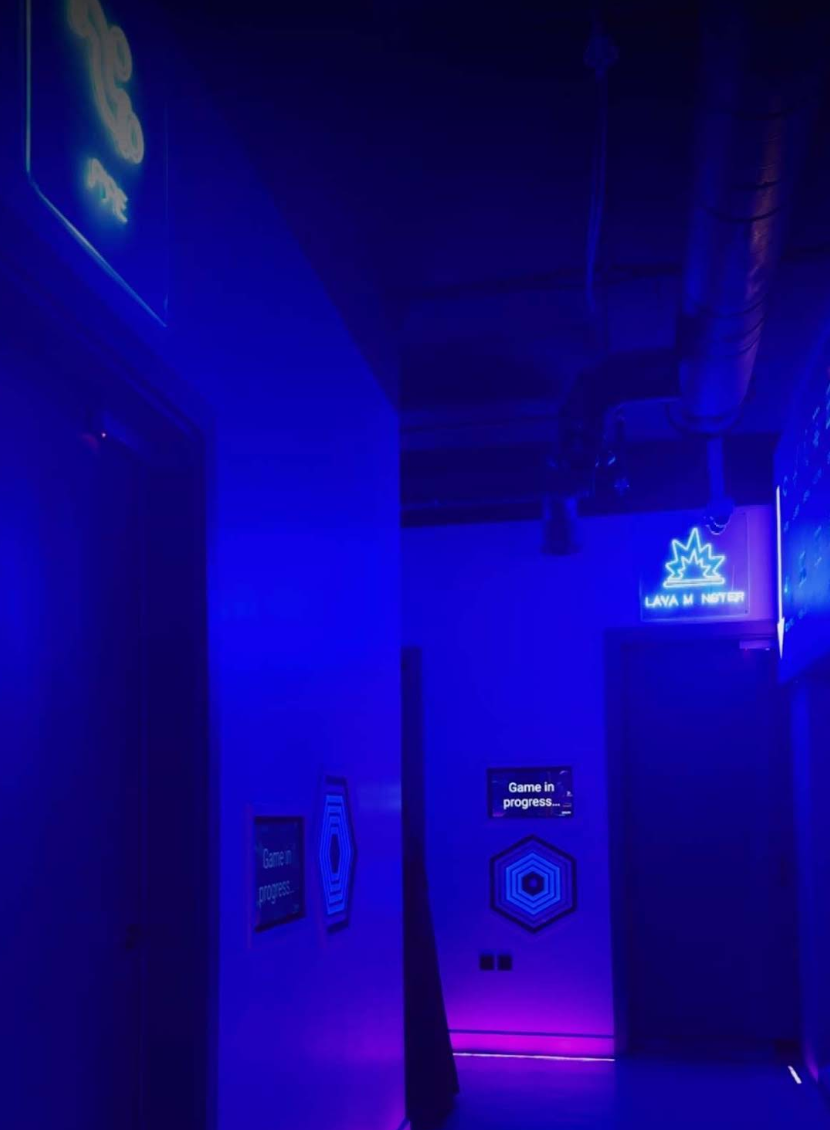
Competitive Socialising Is Becoming a Broader Venue Strategy
Competitive socialising combines accessible games with an enjoyable group outing. The competition gives people something to do together, while the surrounding experience makes the visit worth organizing.
At IAAPA Expo Europe in September 2026, an industry panel examined the relationship between competitive socialising, experience design, operations, brand identity, and repeat visitation. The discussion reflects continuing industry attention to the complete guest experience around the game. IAAPA
For active gaming venues, our interpretation is straightforward: interactive rooms can become the foundation for a planned calendar of social activities.
A reaction wall can host a short team contest. A selection of physical and puzzle rooms can form a multi-round challenge. A familiar game can become the setting for a new event through a different team format or competition structure.
The equipment provides the activity. The operator gives people an occasion to participate.
What Is an Active Gaming League?
An active gaming league is a recurring competition in which individuals or teams complete defined interactive challenges over several scheduled rounds, using consistent rules to determine results.
It does not need to resemble a professional sports tournament.
A small venue could begin with four teams meeting once a week for a short season. A larger center might offer separate sessions for beginners, workplace groups, and experienced players.
The essential elements are:
· A published schedule.
· Clearly defined team sizes.
· A selected set of games.
· Consistent scoring rules.
· A process for recording results.
· A clear season ending or final event.
A league differs from a general leaderboard because participants know when the next round takes place and how it connects to previous results.
It also differs from a membership. A membership provides access under agreed terms; a league provides an organized competition. Operators can offer either independently.
Give Each Event a Clear Audience
“Everyone is welcome” can be a useful message, but it is not a complete event design.
First-time visitors may want simple instructions and a relaxed introduction. Experienced players may prefer consistent settings and a more demanding challenge. Corporate organizers need predictable timings and an activity that accommodates different abilities.
Start by choosing one audience and one purpose.
|
Event format |
Intended audience |
Main purpose |
|
Beginner Challenge Night |
First-time players and casual groups |
Introduce the games in a friendly format |
|
Workplace Team Cup |
Local companies and organizations |
Offer a structured group outing |
|
Weekly Team League |
Friends and returning players |
Build a recurring competition |
|
Family Team Session |
Families meeting the selected games’ participation requirements |
Encourage shared participation |
|
Seasonal Challenge Event |
New and returning guests |
Create a time-limited occasion |
These are suggested operating formats, not claims about guaranteed demand.
A venue should test interest locally before committing to a large event calendar.
Design a Competition People Can Understand Quickly
A competition becomes difficult to sell when explaining it takes longer than playing it.
Guests should understand what they are booking, how long the event lasts, what their team will do, and how a winner is determined.
A practical starting format might include:
· One practice round.
· Three selected challenges.
· A published points system.
· A final result announcement.
The number of rooms and rounds should match the venue’s actual capacity and staffing.
Avoid adding complicated rules simply to make the event appear more advanced. A clear format helps first-time participants feel comfortable and gives staff fewer exceptions to manage.
For early trials, a single-session team cup may be easier to operate than a multi-week league. It allows the venue to test the briefing, timing, and scoring process before asking guests to commit to a season.
Combine Different Skills in a Team Challenge
A multi-room event offers an opportunity to recognize more than speed or physical strength.
Depending on the selected equipment, a competition could combine:
· Reaction and observation.
· Accuracy and coordination.
· Puzzle solving.
· Communication and teamwork.
· Movement and timing.
This variety can give different team members a meaningful role.
For example, a player who finds one physical challenge demanding may contribute strongly to a pattern-based game. Another may excel at coordinating the group’s actions.
Participation requirements still need to be checked for every selected room. A varied program does not automatically make every activity suitable for every guest.
When planning with a supplier, explain the intended audience and event format so the room mix can be reviewed accordingly.
Make Scores Comparable Across Different Games
A common challenge in multi-room competitions is combining different score types.
One room may award points. Another may measure completion time. A third may count successful actions. Adding those raw numbers together can give one game an unintended influence over the final result.
A multi-room competition needs an agreed method for translating individual game results into comparable event points.
One simple option is placement-based scoring.
|
Team placement in each challenge |
Illustrative event points |
|
First |
10 |
|
Second |
8 |
|
Third |
6 |
|
Fourth |
4 |
This is an example for event planning, not a default KYDA software function.
Before launching, define how ties, incomplete rounds, technical interruptions, and team substitutions will be handled. Use the same settings and attempt limits for participants competing in the same category.
Where automatic event scoring is required, confirm the exact functionality with the supplier. A room leaderboard does not necessarily include league scheduling, season standings, or cross-game points conversion.
A small pilot can use a staff-managed results sheet if the process is accurate and manageable.
Use Weekday Programming Carefully
A recurring event can give an operator a specific offer to promote during selected weekday periods.
However, an event does not become profitable simply because it fills a quiet time slot.
Include the full operating requirement:
· Event preparation and briefing.
· Staff coordination.
· Room access.
· Results recording.
· Cleaning and changeover.
· Any included refreshments or awards.
· The effect on ordinary guest bookings.
If an event occupies popular rooms, the venue should also consider the ticket sales it may displace.
Begin with a limited pilot during a suitable period. Review contribution after event-specific costs, rather than judging success only by attendance.
The objective is to find a format that guests value and the venue can deliver consistently.
Build a Small Seasonal Calendar
A venue does not need a new attraction for every marketing campaign.
It can create a fresh occasion around existing games by changing the event structure, team category, or challenge selection, where the equipment permits.
An illustrative calendar could look like this:
|
Period |
Suggested program |
Main change |
|
First month |
Beginner Team Cup |
Short introduction and practice round |
|
Second month |
Workplace Challenge Series |
Company teams and scheduled group sessions |
|
Third month |
Team League Pilot |
Consistent teams competing across several dates |
|
Seasonal period |
Special Challenge Night |
Event presentation and selected challenge mix |
Seasonal presentation should remain separate from claims about software capability. New visual themes, game modes, or content may require development and approval.
Even without software changes, an operator can vary the event name, hosting style, team format, and awards.
The strongest calendar is one the team can maintain reliably.
Give Teams a Reason to Share Their Experience
An organized event naturally produces a story.
A team improves its previous result. Two groups reach the final with equal points. A first-time player makes the decisive contribution.
These moments can support more specific marketing than a general video of people playing.
With participants’ permission, a venue could publish:
· A team result photograph.
· A short highlight from the final round.
· A weekly standings update.
· An invitation to the next beginner event.
· A brief explanation of the next challenge.
Use clear context in the caption: what the event was, who it was designed for, and how another group can join.
For example:
Thursday Team Challenge: three interactive games, one shared team score, and a practice round before the competition begins. Book your team for the next session.
The message gives potential visitors a concrete activity to consider.
Make the Booking Page Answer the Organizer’s Questions
The person arranging a group outing needs practical information.
An event page should explain:
· Suitable team size.
· Total scheduled duration.
· Arrival and briefing arrangements.
· Participation requirements.
· What the price includes.
· Whether the group shares the venue with other guests.
· How results are determined.
· What happens if someone arrives late.
For a multi-week league, also state the season dates, attendance expectations, substitution rules, and cancellation terms.
Keep inquiry and booking routes easy to find. A corporate organizer may need a quotation, while a group of friends may be ready to reserve a place immediately.
The page should support both situations where the venue offers them.
Measure Whether the Format Deserves to Continue
Before the pilot begins, decide what would make the event worthwhile.
Useful measures include:
|
Measure |
What it helps assess |
|
Paid teams per event |
Demand for the format |
|
Repeat team bookings |
Interest beyond the first visit |
|
Contribution after event costs |
Commercial viability |
|
Staff time per event |
Operating workload |
|
Actual event duration |
Reliability of the schedule |
|
Participant feedback |
Clarity, enjoyment, and perceived fairness |
Look for patterns across several sessions.
A first event may attract curiosity without producing repeat bookings. A smaller event may still be worth developing if participants return and delivery becomes more efficient.
Feedback should also guide the competition format. If beginners repeatedly feel outmatched, separate categories or introductory sessions may be more useful than a larger prize.
Plan Event Capability When Selecting Your Rooms
Operators considering recurring competitions should discuss that goal before approving equipment and software.
Important questions include:
· Can the selected games use consistent difficulty settings?
· How are results recorded and retrieved?
· Can teams be identified across the proposed rooms?
· Which competition functions are included?
· What requires manual coordination or custom development?
· How are interrupted rounds handled?
· Can the proposed schedule accommodate preparation and changeover?
KYDAGAMES provides interactive challenge room solutions covering different forms of movement, reaction, coordination, and problem solving. An event-focused project should assess how the proposed room combination, scoring configuration, and operating layout fit the intended program.
The final scope needs to be confirmed for the specific project.
Create an Occasion People Can Put in Their Calendar
A memorable first visit gives guests something to talk about. A well-organized next event gives them something to arrange.
For an active gaming venue, weekly challenges and short leagues are worth testing because they connect the equipment to a social routine: a team, a date, a shared objective, and another opportunity to improve.
Start with one audience and a simple format. Run a manageable pilot, review the results, and expand only when the guest response and operating economics support it.
Planning an active gaming venue with team competitions or recurring group events?
Share your floor plan, target audience, expected team sizes, and intended event format with KYDAGAMES. We can discuss a room combination and system scope suited to your project.
Explore KYDAGAMES project examples or visit www.kydagames.com to discuss your venue.
FAQ
What is an active gaming league?
An active gaming league is a recurring competition in which players or teams complete defined interactive challenges over scheduled rounds. It uses consistent rules, an agreed scoring method, and a clear process for determining season results.
Can an existing active gaming venue organize team competitions?
Potentially, yes. The operator should review room capacity, game settings, scoring access, staffing, and scheduling first. A small competition can use manual coordination, while automated season standings or cross-room scoring may require additional software capability.
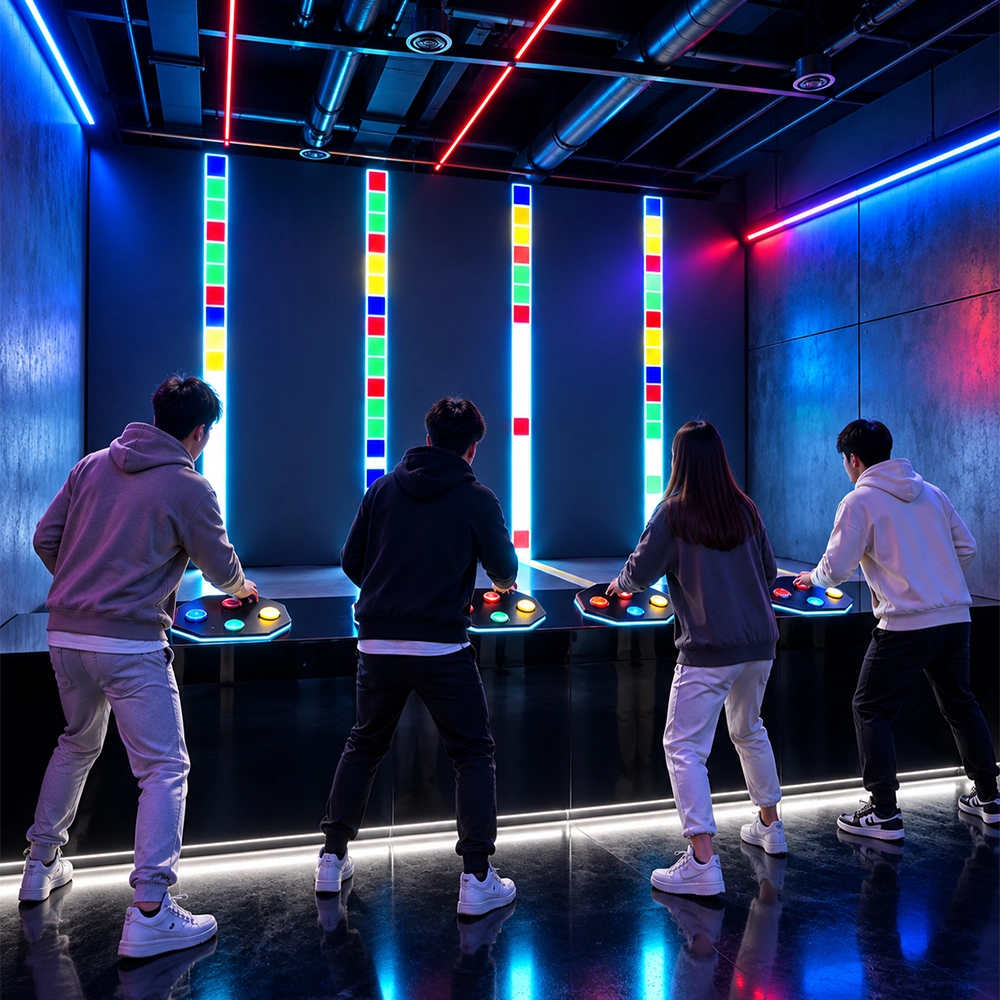
Speed Clash Red Light Green Light Reaction Game Room
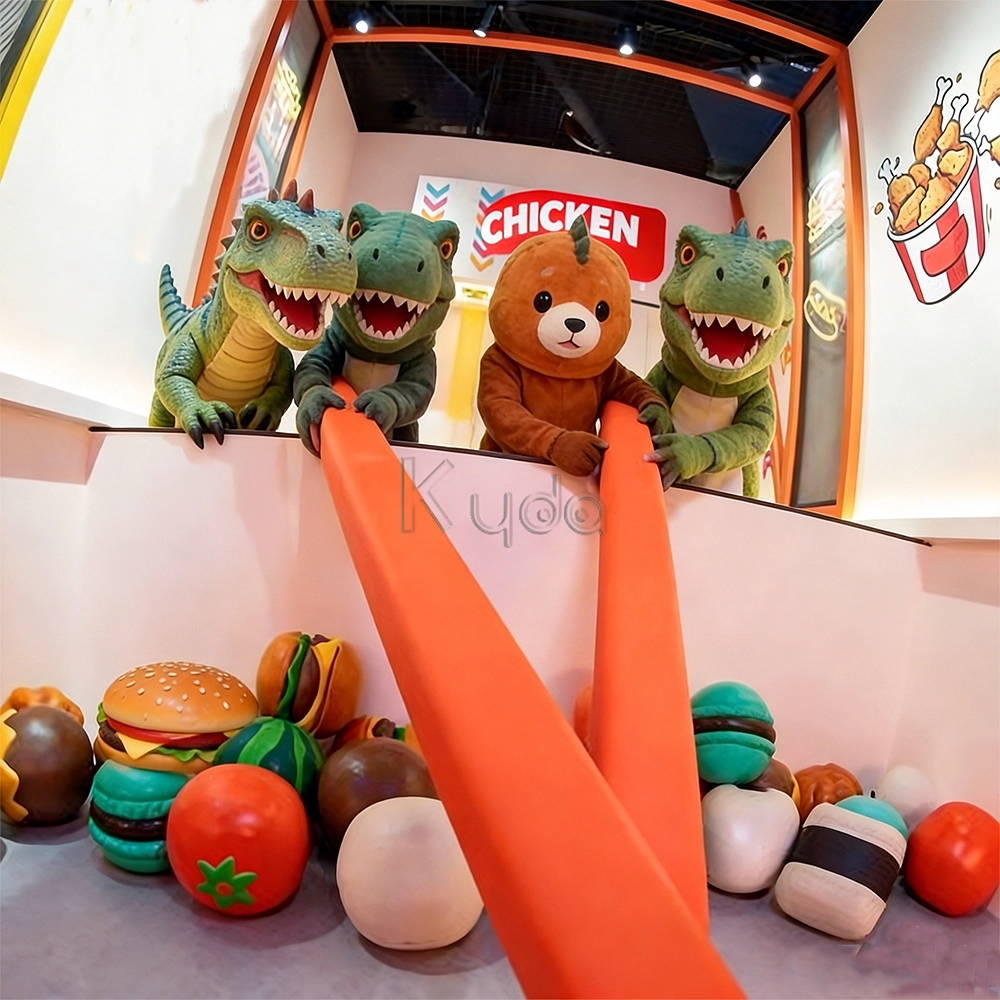
Crub Crab Giant Chopsticks Challenge Game Interactive Skill Challenge Game for Activate Game Rooms by Kyda
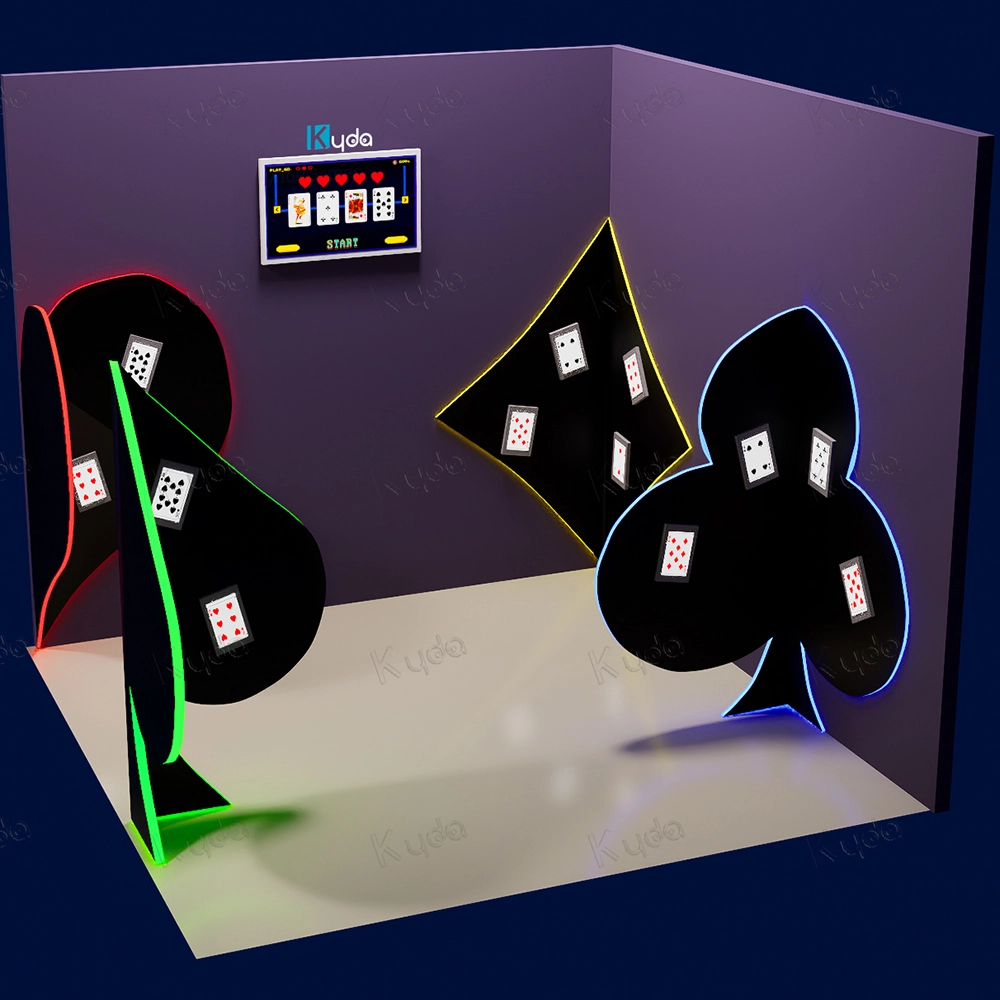
Spade Q: The Ultimate Interactive Game Room for Modern Venues.
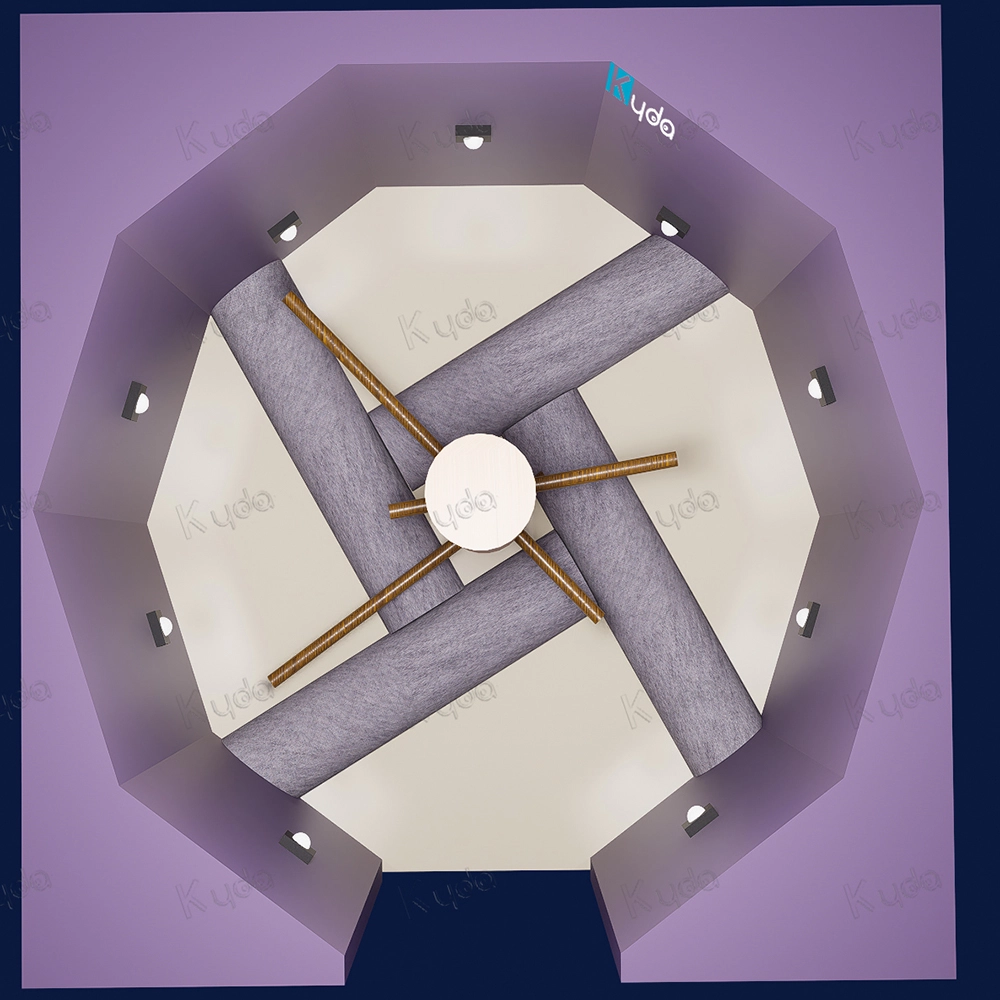
Ninja Dojo: 360° Rotating Beam & Reactive Wall-Matrix Challenge – The Next Frontier of Active Skill Gaming
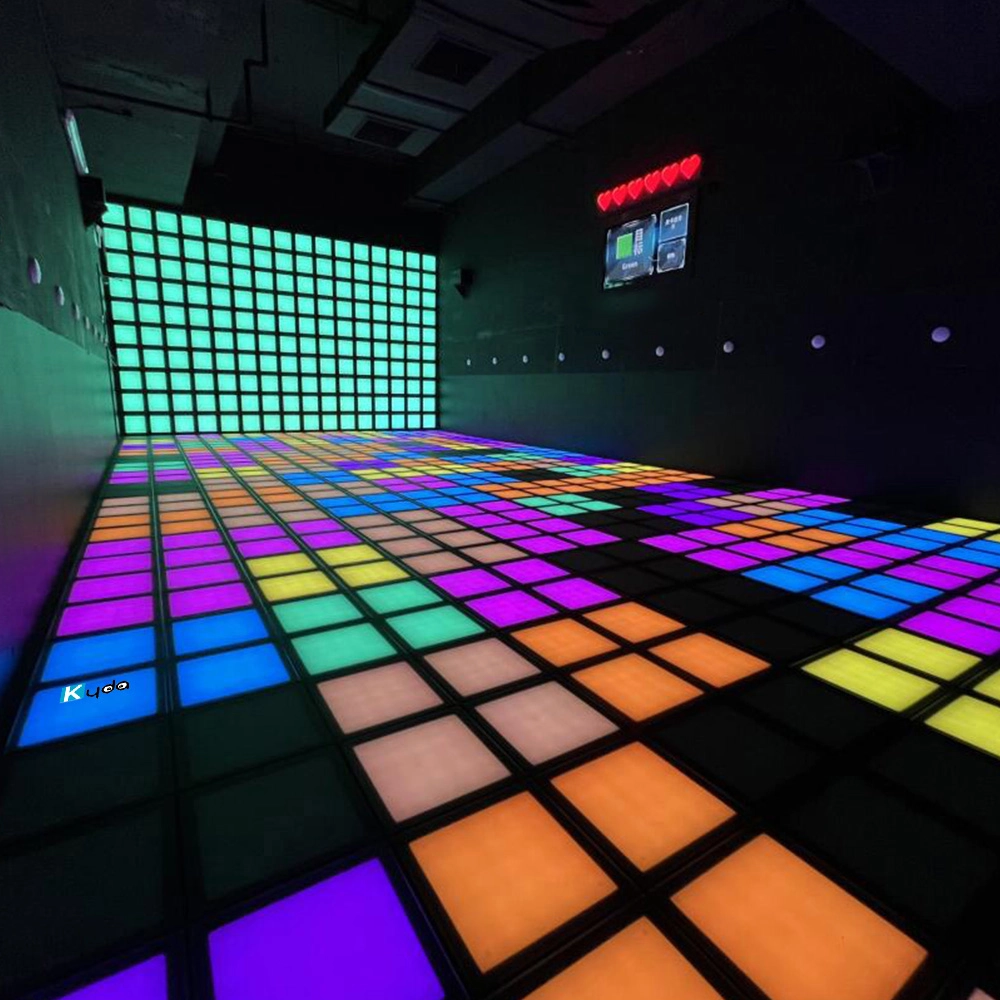
Interactive Light Grid Active Game Led Floor for Dance Pixel Grid Room
You May Also Like
-
-
Send us Your Inquiry
-
Fill out the form and we will provide you with personalized product quotes and service recommendations based on your needs.
Our team will contact you as soon as possible to help you build the most suitable entertainment equipment!
Let's get in touch
Email: sales@kydavr.com
Tel.: +86 188 2001 8779
Address: 501 Shixin Road, Dalong Street, Guangzhou, Guangdong, China.
© 2025 Kyda. All Rights Reserved.
 Scan QR Code
Linkedin
Ins
Facebook
Twitter
YouTube