




How to Choose Safe and Age-Appropriate Active Games for Children, Teens, and Adults
- Designing Age-Suitable Interactive Play Experiences
- Match movement complexity to developmental ability
- Consider height, reach, mobility, and sensory needs
- Evaluating Safety Before Purchasing Active Game Equipment
- Review physical, electrical, and software safeguards
- Verify venue operations and supervision requirements
- Building a Commercially Viable Active Game Room
- Balance safety, engagement, and return on investment
- Plan the room around traffic and behavior
- Why Kyda Supports Safer, More Flexible Game Room Projects
- One-stop development and manufacturing capability
- Customization with operational value
- Frequently Asked Questions
Choosing safe and age-appropriate active games is a combined safety, design, and business decision. A successful installation must match the physical abilities, attention span, confidence level, and risk tolerance of its intended users while also meeting the operating realities of a commercial venue. Children, teenagers, and adults do not interact with the same equipment in the same way: a fast reaction wall that excites a teenager may overwhelm a young child, while a low-complexity stepping game may not provide sufficient challenge for adult visitors. Project owners should therefore assess user profiles, movement intensity, collision exposure, supervision needs, accessibility, cleaning, maintenance, and revenue potential before approving a product mix.
Designing Age-Suitable Interactive Play Experiences
Match movement complexity to developmental ability
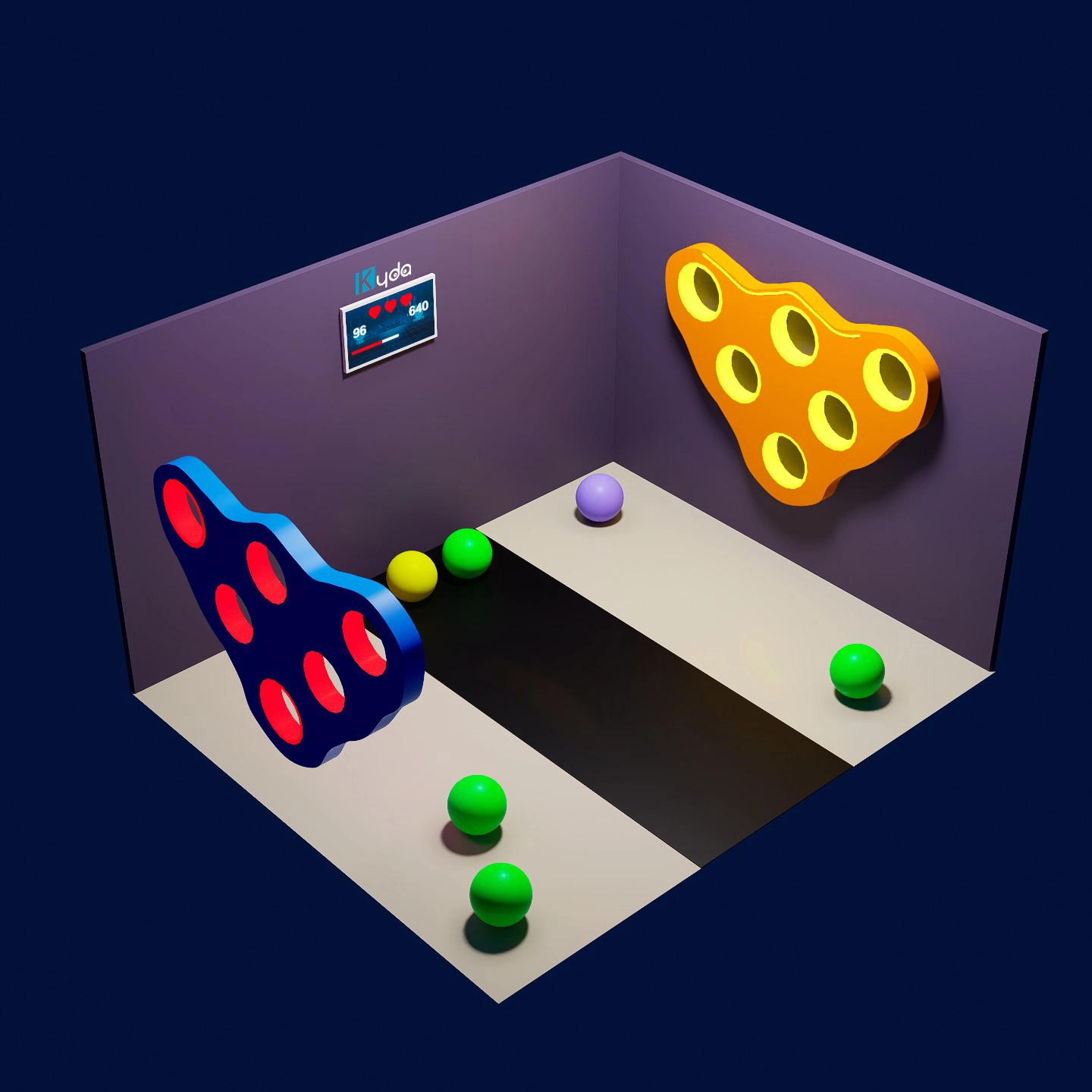
For young children, the most appropriate attractions typically use clear visual prompts, short play cycles, forgiving response windows, and movements that can be completed without jumping from height, rapid spinning, or forceful contact. Interactive projection games, soft-surface floor activities, color recognition challenges, and simple target-based experiences can encourage balance, coordination, and physical participation without requiring advanced reading or complex controls. Controls should be positioned at a reachable height, and game instructions should rely on icons, sound cues, and demonstrations as well as text.
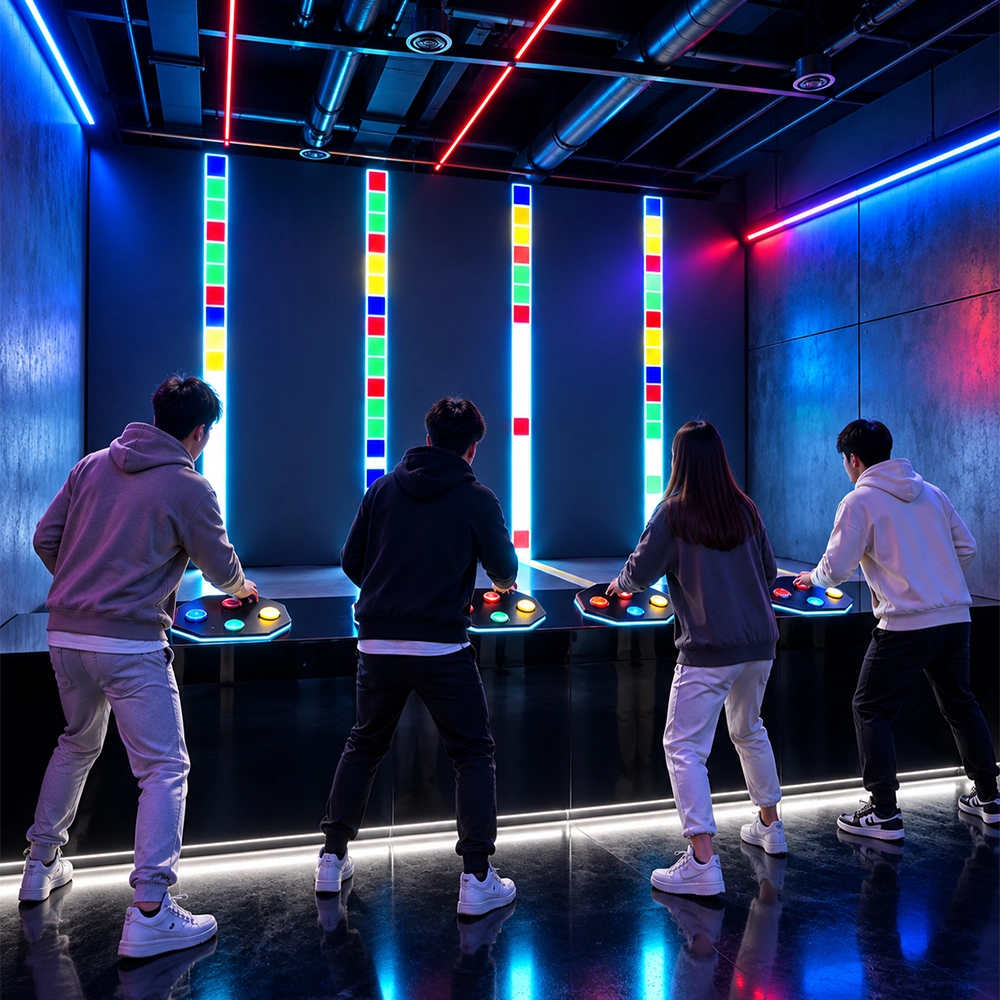
Teenagers generally seek more autonomy, competition, and measurable achievement. Active reaction games, multiplayer challenges, interactive LED walls, laser interactive game formats, and timed obstacle activities can support this audience when speed, intensity, and scoring are adjustable. The equipment should still limit dangerous acceleration, unpredictable barriers, and uncontrolled player contact. A well-designed system can offer beginner, standard, and advanced modes so that the same attraction serves school groups, families, and experienced players.
Adults may prefer higher-intensity fitness challenges, strategy-driven competition, immersive projection content, or team-based experiences. Age suitability does not mean assuming that every adult can tolerate maximum exertion. Operators should provide visible intensity information, warm-up guidance where relevant, rest intervals, and a clear option to stop play. For venues serving mixed generations, configurable software is more commercially effective than a fixed experience designed for only one age bracket.
Consider height, reach, mobility, and sensory needs
Age labels are useful but incomplete. Height, body size, mobility, visual acuity, hearing, reaction speed, and confidence can vary substantially within the same age group. Buyers should request operating envelopes that state minimum and maximum user height, recommended player count, floor clearance, reach distance, and any restrictions related to pregnancy, cardiovascular conditions, epilepsy, or reduced mobility. These requirements should appear in pre-opening procedures and on concise venue signage.
Inclusive design improves both customer value and risk management. Adjustable targets, multiple response zones, seated or low-impact modes, non-slip flooring, high-contrast graphics, and sound-volume controls can make an attraction more usable without reducing its entertainment value. The World Health Organization guidance on physical activity recognizes that movement opportunities should be adapted to individual capabilities, which supports a flexible approach rather than a single intensity level for every visitor.
Evaluating Safety Before Purchasing Active Game Equipment
Review physical, electrical, and software safeguards
A procurement review should begin with foreseeable hazards. Common concerns include slips, trips, sharp edges, pinch points, unstable structures, excessive noise, glare, loose cables, overheating, accidental player collisions, and unsuitable access zones around moving or illuminated components. A responsible manufacturer should explain how each hazard is controlled through enclosure design, rounded edges, cable routing, emergency stop functions, ventilation, low-voltage components where appropriate, and software limits on speed or duration.
Buyers should ask for a documented risk assessment and identify the standards used during engineering and production. ISO 12100 machinery safety principles provide a recognized framework for hazard identification, risk estimation, and risk reduction. Although the exact compliance requirements depend on the destination market and equipment category, the underlying process is valuable for every project. Electrical documentation, user manuals, wiring diagrams, inspection schedules, and replacement-part information should be available before shipment rather than after installation.
Software is also part of the safety system. Game designers should be able to adjust response speed, player density, time limits, motion intensity, sound levels, and visual effects. Administrators need role-based access or a simple control interface so staff can select the correct mode for a birthday party, school visit, open play session, or adult team-building event. Automatic idle shutdown, error alerts, and session logging can reduce equipment stress and help operators identify recurring faults.
Verify venue operations and supervision requirements
Safe hardware can become unsafe when the operating environment is poorly managed. The project plan should define queue flow, player entry and exit, spectator boundaries, maximum occupancy, staff sightlines, cleaning intervals, emergency evacuation routes, and procedures for stopping a session. The U.S. Consumer Product Safety Commission provides a widely used Public Playground Safety Handbook; while not every active game is a playground, its focus on fall zones, entrapment, impact attenuation, layout, and inspection offers useful reference points for family-oriented facilities.
Staff training should cover age verification, pre-use inspection, safe player briefing, emergency stop operation, incident reporting, first-aid escalation, and equipment restart procedures. A venue serving children may require closer supervision and smaller player groups than an adult-focused attraction. Operators should not rely solely on warning labels to control foreseeable misuse; the physical layout, game rules, staffing model, and monitoring system must work together.
| Evaluation area | Lower-risk design indicator | Buyer verification action |
|---|---|---|
| Impact and falls | Non-slip surfaces, controlled movement, protected edges, and appropriate clearance | Inspect drawings, material samples, floor specifications, and installation photos |
| Electrical safety | Protected wiring, grounding, ventilation, overcurrent protection, and accessible isolation | Request electrical schematics, test records, manuals, and destination-market documentation |
| Age suitability | Adjustable difficulty, clear instructions, height guidance, and supervised operating modes | Test child, teen, and adult scenarios during factory acceptance or video demonstration |
| Operations | Emergency stop, staff controls, occupancy limits, inspection checklist, and cleaning plan | Review standard operating procedures and train venue personnel before opening |
| Maintenance | Modular parts, diagnostic access, spare-part availability, and remote support | Confirm warranty scope, response time, preventive maintenance, and lifecycle costs |
Building a Commercially Viable Active Game Room
Balance safety, engagement, and return on investment
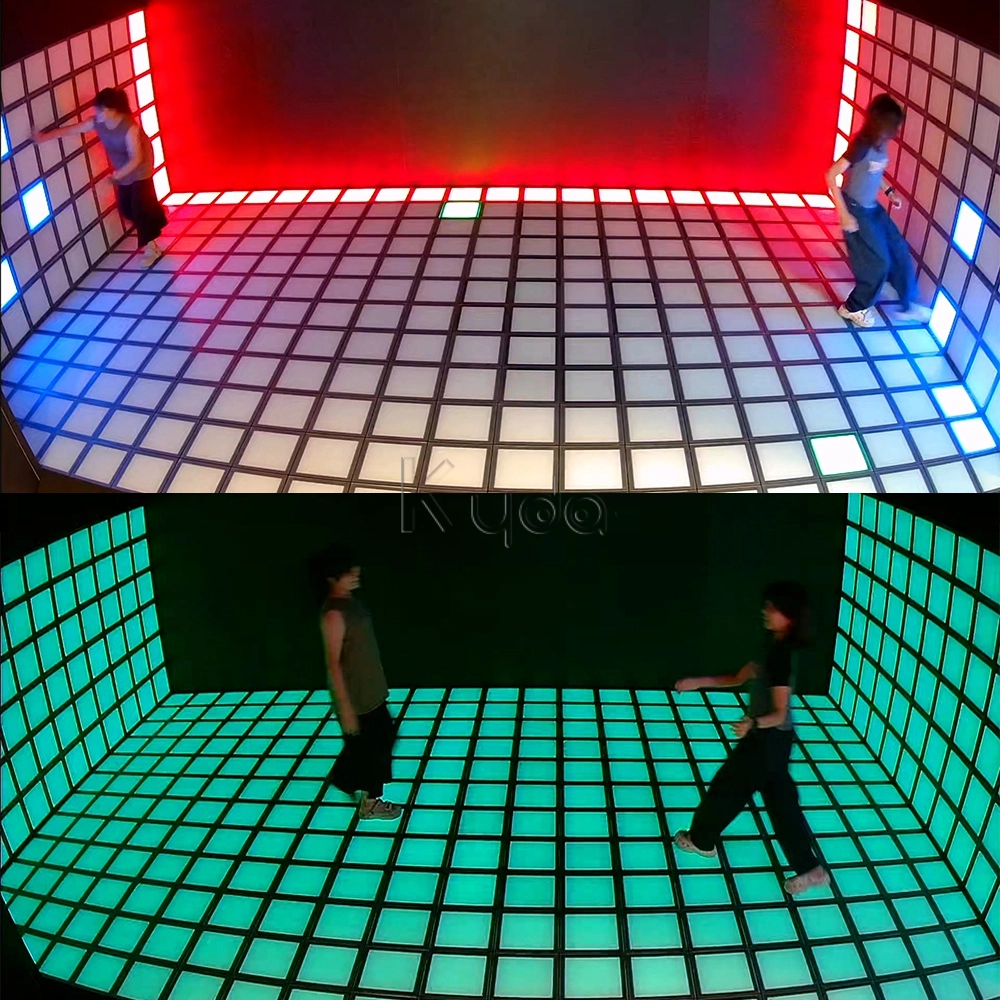
Commercial buyers should evaluate more than the initial equipment price. A compelling game room combines different dwell times, price points, player capacities, and physical intensities. A short-cycle reaction attraction may increase throughput, while a longer immersive challenge can raise perceived value and encourage group bookings. Interactive LED floor systems and wall-based games can create visual impact in a shared zone, whereas projection-based activities can provide flexible content updates and a broad range of themes.
Key commercial indicators include usable floor area, sessions per hour, average players per session, staffing requirement, estimated power consumption, cleaning time, consumable parts, software update process, and expected downtime. Buyers should model revenue under realistic occupancy rather than assuming continuous peak use. A modular system that supports birthday parties, school programs, corporate events, and public sessions may deliver stronger annual utilization than a specialized attraction with only one audience.
Supplier selection is central to this calculation. A qualified active game room equipment supplier china should be able to explain manufacturing quality control, customization boundaries, installation responsibility, spare-parts logistics, software ownership, and after-sales support. Procurement teams should compare total cost of ownership, not only quotation totals, and should require a clear acceptance process covering functionality, safety checks, content accuracy, and staff training.
Plan the room around traffic and behavior
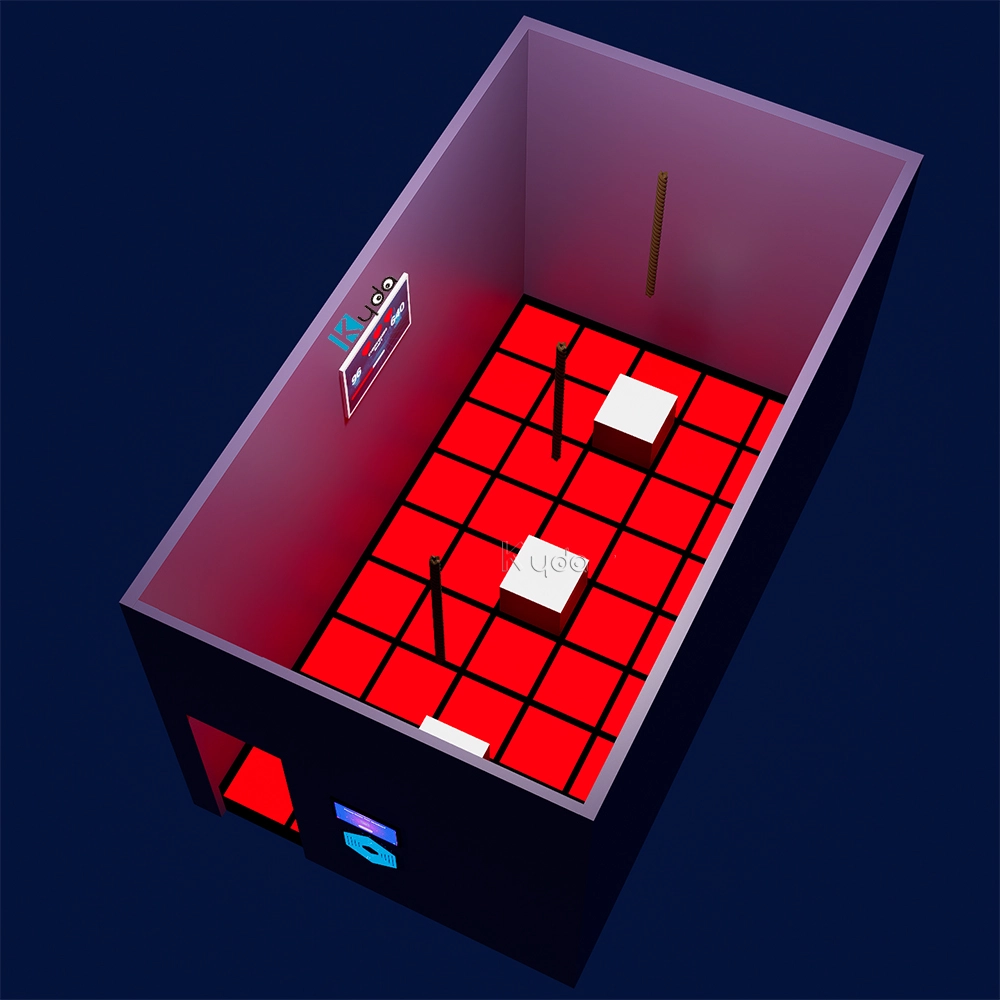
Room planning affects both safety and revenue. The layout should separate active play zones from waiting areas, prevent crossing traffic, preserve access to emergency exits, and give staff unobstructed visibility. Bright displays and sound effects should be coordinated so that they attract attention without creating excessive glare, sensory overload, or communication problems. Clear floor markings can define player positions and reduce accidental overlap between groups.
Content rotation helps maintain repeat visits. Operators can schedule beginner and advanced modes, seasonal themes, cooperative missions, fitness challenges, and tournament formats without replacing the core hardware. A content management plan should define who approves new games, how updates are tested, and how inappropriate imagery, excessive flashing, or unsuitable language are excluded from child-friendly sessions. Buyers should also confirm whether content licensing, translation, and local cultural adaptation are included in the project scope.
Why Kyda Supports Safer, More Flexible Game Room Projects
One-stop development and manufacturing capability
Kyda is a one-stop solution provider for active game rooms and Activate gaming centers, supporting custom research, development, production, sales, and project implementation. Our portfolio includes active interactive games, interactive projection games, interactive LED floor systems, interactive LED walls, active reaction games, brain challenge games, horror escape games, active fitness games, laser interactive game attractions, and indoor and outdoor amusement equipment.
Our engineering and creative capabilities cover electronic design and development, software programming, game design, animation design, product design, multimedia design, and interior design. This multidisciplinary structure helps project owners coordinate hardware, content, user flow, room aesthetics, and operational requirements through one accountable partner. It also supports age-based configuration, from simplified children’s play modes to competitive teen experiences and higher-intensity adult programs.
Kyda uses the manufacturing advantages of Guangzhou, Zhongshan, Zhengzhou, and Beijing and maintains long-term partnerships with LED light factories, advertising production factories, sheet metal factories, paint factories, electronic assembly factories, 3D plastic printing factories, and multimedia resource companies. This network enables customized products and complete installations for different local markets, venue sizes, budgets, and regulatory expectations.
Customization with operational value
Our approach is designed around the buyer’s full operating model rather than a single product shipment. We can support theme development, visual identity, hardware configuration, game content, room planning, installation coordination, and post-delivery service. For a family entertainment center, the priority may be intuitive controls, soft visual language, and high throughput. For a fitness or corporate venue, the solution may emphasize scoring, team competition, performance tracking, and repeat-use content.
Quality control should remain visible throughout the project. Buyers can request design confirmation, component specifications, prototype or sample review, factory testing, packaging inspection, installation guidance, and final acceptance documentation. These steps reduce the risk of mismatched interfaces, unsuitable dimensions, unclear maintenance responsibility, or costly modifications after delivery.
Kyda is committed to using evolving technology, design, and execution capabilities to meet changing and personalized customization needs. Our vision is to become the world’s leading active game room manufacturer while helping investors and operators build attractions that are safe, adaptable, visually distinctive, and commercially practical.
Contact Kyda at sales@kydavr.com or visit https://www.kydagames.com to discuss an age-appropriate active game room, interactive projection games, LED game systems, or a customized Activate gaming center.
Frequently Asked Questions
What features make an active game suitable for young children?
Young children generally need clear visual prompts, short play cycles, forgiving response windows, reachable controls, low-impact movement, protected edges, and simple instructions supported by icons, sound cues, and demonstrations.
How should active games be adapted for teenagers and adults?
Teenagers often benefit from adjustable competition, reaction challenges, multiplayer formats, and timed scoring, while adults may prefer higher-intensity fitness, strategy, immersive, or team-based experiences; both groups still need configurable intensity, clear stop procedures, and appropriate supervision.
What safety documents should a buyer request from an equipment manufacturer?
Buyers should request a documented risk assessment, user manuals, electrical documentation, wiring diagrams, inspection schedules, emergency-stop information, maintenance instructions, destination-market compliance records, and spare-part details.
Why are height and reach requirements important in addition to age labels?
Users of the same age can differ significantly in height, body size, mobility, visual acuity, hearing, reaction speed, and confidence, so operating envelopes should state minimum and maximum height, reach distance, floor clearance, player count, and accessibility considerations.
How can an active game room improve commercial return on investment?
A commercially balanced room combines different dwell times, capacities, physical intensities, and price points, while also considering sessions per hour, staffing, power use, cleaning time, software updates, downtime, content rotation, and total cost of ownership.
What does Kyda provide for an active game room project?
Kyda provides custom research, development, production, sales, and project support for active game rooms and Activate gaming centers, including interactive projection games, interactive LED floors and walls, active reaction games, brain challenge games, active fitness games, laser interactive game attractions, and indoor and outdoor amusement equipment.
Best indoor active games manufacturers and supplier brands in us
Installing an LED interactive game floor: step-by-step guide
Why Interactive Wall Projection Games Are a Must-Have for Modern Entertainment Spaces
How to Choose the Right Indoor Activity System for a Family Entertainment Center
You May Also Like
-
-
Send us Your Inquiry
-
Fill out the form and we will provide you with personalized product quotes and service recommendations based on your needs.
Our team will contact you as soon as possible to help you build the most suitable entertainment equipment!
Let's get in touch
Email: sales@kydavr.com
Tel.: +86 188 2001 8779
Address: 501 Shixin Road, Dalong Street, Guangzhou, Guangdong, China.
© 2025 Kyda. All Rights Reserved.
 Scan QR Code
Linkedin
Ins
Facebook
Twitter
YouTube