




Interactive Game Rooms vs. Traditional Play Areas: Key Differences, Benefits, and Limitations
- How Digital-Physical Play Changes the Indoor Entertainment Model
- Core differences in the visitor experience
- Engagement, repeat visits, and social competition
- Space efficiency and programming flexibility
- Benefits and Limitations Buyers Should Assess Before Investment
- Commercial benefits of responsive attractions
- Limitations and hidden operating costs
- Safety, accessibility, and compliance planning
- Procurement Framework for an Interactive Entertainment Project
- Define the business case before selecting equipment
- Evaluate the supplier beyond a product catalog
- Plan for lifecycle performance
- Why Kyda Supports Customized Activate Gaming Centers
- One-stop development and manufacturing capability
- Cross-disciplinary engineering for interactive products
- Manufacturing partnerships and customization
- Frequently Asked Questions
Interactive game rooms use sensors, projection, LED surfaces, software, audio, and responsive gameplay to connect physical movement with digital feedback. Traditional play areas generally depend on fixed slides, climbing structures, soft-play elements, sports layouts, or manually managed activities. The right choice depends on the project’s target age, available floor area, visitor throughput, staffing model, safety requirements, maintenance capability, content strategy, and expected revenue per square meter. For investors and facility owners, the most important distinction is not whether technology is present, but whether the attraction produces reliable engagement, operational flexibility, measurable utilization, and a sustainable guest experience. This comparison explains the benefits and limitations of both formats and outlines how a qualified interactive entertainment manufacturer can support concept development, equipment integration, customization, installation, and long-term commercial performance.
How Digital-Physical Play Changes the Indoor Entertainment Model
Core differences in the visitor experience
A traditional play area provides a largely stable environment. A slide, climbing frame, trampoline zone, ball pit, or soft-play structure delivers value through physical exploration, social interaction, and repeat use of the same equipment. Its simplicity can be a major advantage: guests usually understand the activity immediately, and operators can manage the environment without complex software or frequent content updates.
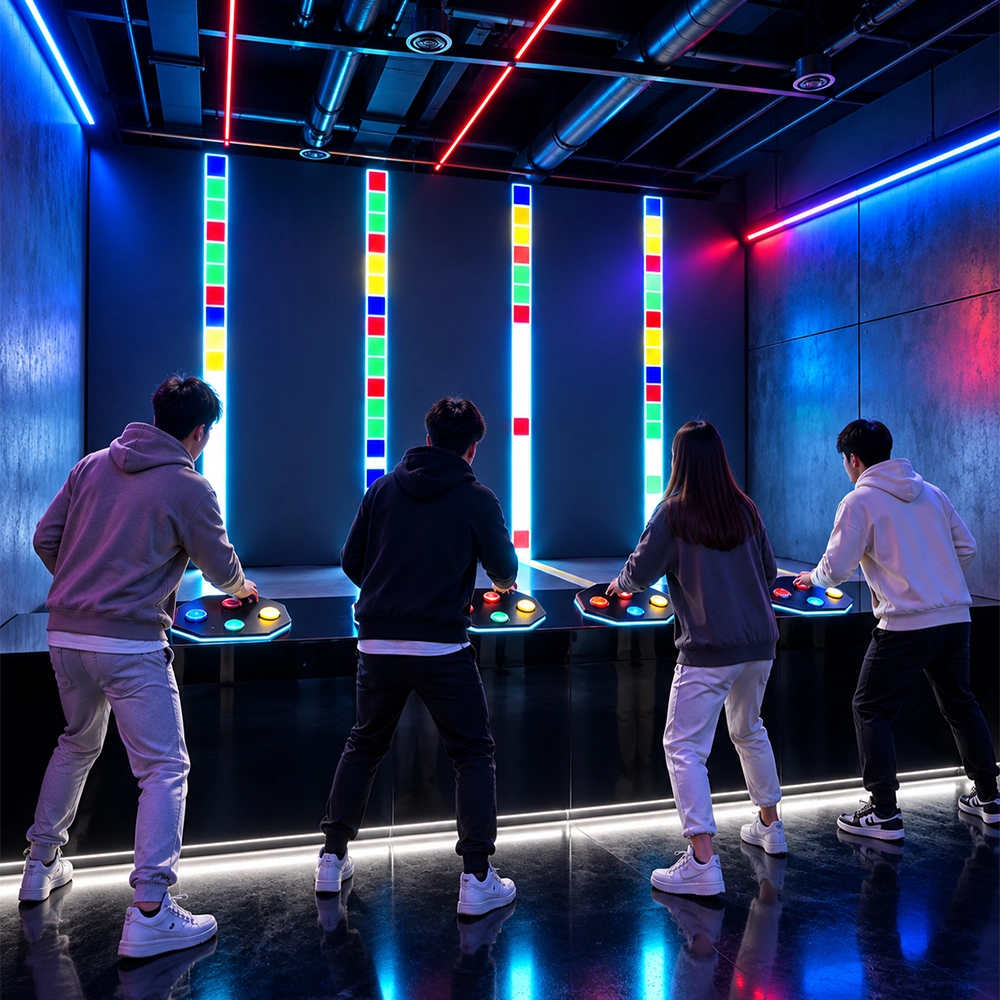
An interactive game room adds a responsive layer. Cameras, infrared sensors, pressure detection, motion tracking, interactive lighting, projection mapping, and real-time sound can respond to player movement. A floor may display targets that change position, a wall may present reaction challenges, or a projection game may convert a blank surface into a sports, education, adventure, or competition environment. This creates a more active and visually distinctive experience, especially for family entertainment centers, shopping mall attractions, resorts, schools, museums, and corporate recreation venues.
Engagement, repeat visits, and social competition
Traditional attractions often achieve repeat visits through accessibility and familiarity. Children can return to the same structure and still enjoy unscripted play, while parents may value the clear physical format. The limitation is that the experience can become predictable for older children, teenagers, and adults unless the operator adds events, coaching, themed programming, or complementary attractions.
Activate interactive games create repeatability through changing challenges, scores, levels, themes, and multiplayer formats. A reaction game can support short sessions with high throughput, while a brain challenge or escape-style experience can encourage teamwork and longer dwell time. Leaderboards and timed competitions can also support birthday packages, school programs, corporate events, and seasonal promotions. However, content must be configured carefully. Excessive difficulty, confusing interfaces, poor calibration, or slow resets can reduce participation rather than increase it.
Space efficiency and programming flexibility
Fixed play structures require careful clearance zones, impact-absorbing surfaces, access routes, and regular inspection points. They can be highly durable, but their footprint is difficult to change after installation. A traditional layout may therefore work best when the project has a stable audience profile and sufficient space for permanent equipment.
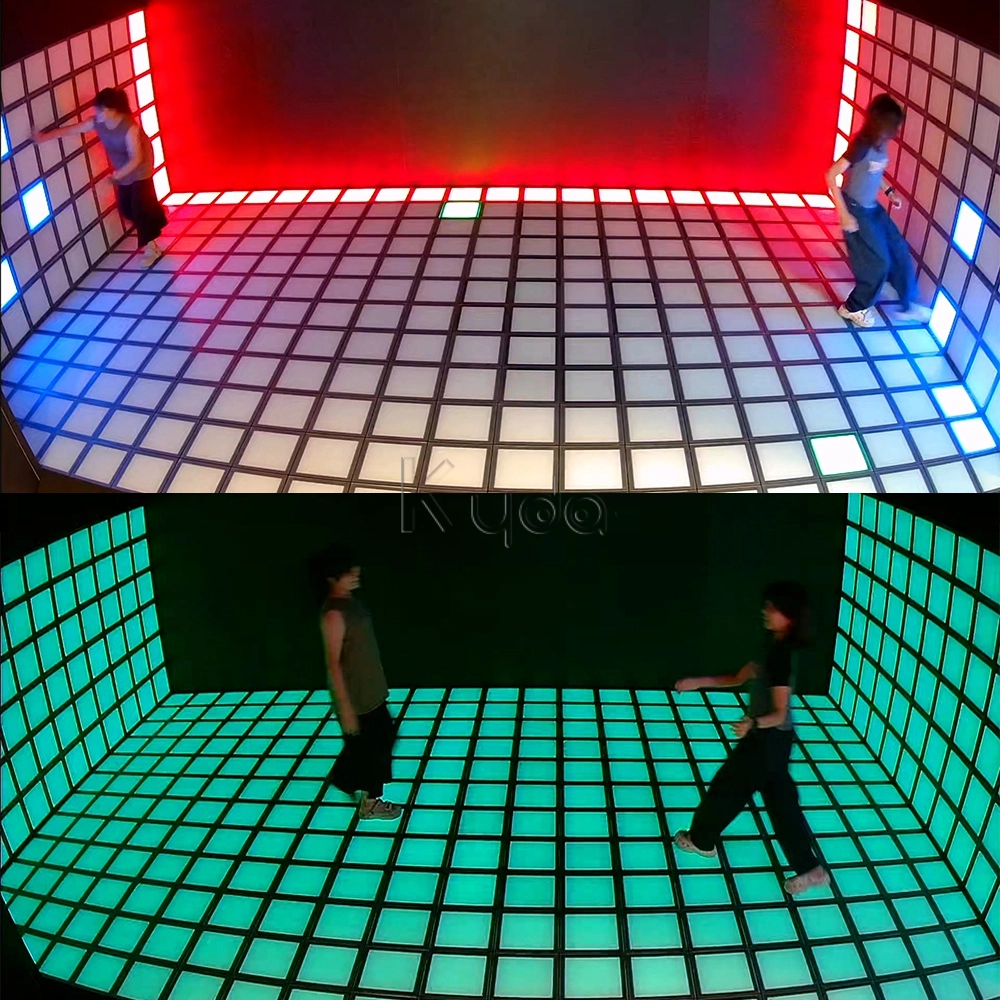
Digital attractions can make a smaller area multifunctional. The same room may host a fitness challenge in the morning, a family game in the afternoon, and a competitive event in the evening. Interactive LED floor systems, projection walls, laser-based games, and modular sensor zones can be combined with themed décor. This flexibility supports revenue diversification, but it creates a stronger need for software management, technical training, network planning, and preventive maintenance.
| Evaluation factor | Traditional play area | Interactive game room | Buyer implication |
|---|---|---|---|
| Primary experience | Physical exploration using fixed structures or equipment | Physical movement combined with digital response and game logic | Select based on the desired balance between open-ended play and guided challenges |
| Content change | Usually requires physical repositioning, theming, or new equipment | Can often be changed through software, media, and game configuration | Digital programming can support seasonal campaigns without rebuilding the room |
| Technical dependency | Generally lower, with emphasis on structure and surface inspection | Higher, including sensors, displays, computers, networks, calibration, and software | Technical support and spare-parts planning should be included in procurement |
| Operational model | Open access or basic supervision is common | Often benefits from session control, rules briefing, scoring, and active monitoring | Staffing and guest-flow procedures must be designed with the attraction |
| Customization | Mostly achieved through structure, colors, themes, and layout | Can include hardware, interface design, animations, sound, scoring, and branded content | Brand owners can create a more differentiated customer journey |
| Safety framework | Focuses on falls, entrapment, impact, materials, and physical access | Includes physical risks plus visibility, trip hazards, electrical systems, and screen-related considerations | Risk assessment must cover the complete installed system, not only the game software |
Benefits and Limitations Buyers Should Assess Before Investment
Commercial benefits of responsive attractions
The strongest commercial argument for an interactive attraction is the ability to serve multiple customer segments in one controlled environment. A children’s reaction game can be simplified for younger users, while advanced scoring and competitive modes can appeal to teenagers and adults. This broadens the potential audience for admission tickets, timed sessions, memberships, party bookings, education programs, and branded events.
Interactive systems also generate useful operational information. Depending on the platform, operators may review session duration, game popularity, player counts, score distribution, and peak usage periods. These indicators can guide staffing, programming, pricing, and promotional decisions. Data should not be treated as a guaranteed revenue outcome; it becomes valuable only when the operator has clear procedures for reviewing it and converting insights into action.
Visual impact is another advantage. An interactive LED wall, illuminated floor, projection surface, or laser interactive game can become a recognizable feature within a commercial venue. Strong visual design supports social sharing and wayfinding, although the attraction must still be comfortable, intuitive, accessible, and enjoyable without relying solely on photographs or novelty.
Limitations and hidden operating costs
Technology introduces dependencies that do not exist to the same extent in a conventional play zone. Projectors require appropriate brightness, alignment, ventilation, and surface conditions. LED systems require correct module installation, electrical protection, pixel maintenance, and spare components. Motion systems need calibration, and software may require updates, content management, or troubleshooting. A project owner should request a documented preventive-maintenance schedule, response-time expectations, warranty terms, and replacement-part availability before signing a purchase order.
Interactive rooms can also experience downtime if the system has weak integration between hardware and software. A technically impressive prototype may perform poorly in a commercial environment if it lacks fast reset functions, clear error messages, durable housings, simple staff controls, or protection against dust and impact. Procurement teams should evaluate a complete operating workflow: guest registration, briefing, game start, player switching, cleaning, reset, fault recovery, and end-of-day shutdown.
Safety, accessibility, and compliance planning
Safety must be addressed at concept stage rather than after installation. Project owners should examine slip resistance, cable routing, edge protection, equipment anchoring, emergency access, lighting transitions, sound levels, ventilation, and the interaction between players and staff. A useful reference for systematic risk thinking is ISO 12100 machinery safety principles, while human-centered design considerations can be informed by ISO 9241-210. These standards do not replace local building, electrical, fire, accessibility, or amusement regulations, but they help structure a professional design review.
Accessibility should include more than physical entry. Game instructions, color contrast, audio cues, reaction time, player height, mobility requirements, and alternative control modes all influence who can participate. Traditional play and digital play both require supervision policies and age guidance. Operators should also review relevant local requirements and consult recognized safety organizations such as the U.S. Consumer Product Safety Commission playground guidance where applicable to the project location and equipment category.
Procurement Framework for an Interactive Entertainment Project
Define the business case before selecting equipment
A reliable purchasing process begins with the business model. The project brief should identify the venue type, usable area, ceiling height, expected daily visitors, target age groups, ticket structure, session duration, staffing levels, local climate, and planned operating hours. A resort may prioritize low-touch family entertainment, while a mall-based family entertainment center may need high throughput and strong visual branding. A school or museum may place greater emphasis on educational content, accessibility, and curriculum alignment.
Buyers should calculate capacity using realistic session turnover rather than theoretical player counts. The analysis should include briefing time, queueing, cleaning, software resets, staff intervention, and peak-period demand. Capital cost is only one part of the investment. Importation, installation, freight, room preparation, electrical work, HVAC, internet infrastructure, insurance, local permits, content adaptation, maintenance, and staff training can materially affect the total project cost.
Evaluate the supplier beyond a product catalog
When comparing an active game room equipment supplier china or another international manufacturing partner, procurement teams should assess engineering depth, production quality, customization capability, documentation, communication, testing, and after-sales support. A credible supplier should explain component specifications, expected service life, software ownership, update procedures, warranty exclusions, spare-parts policy, and installation requirements in writing.
Factory evaluation should cover incoming-material inspection, assembly controls, electrical testing, software validation, burn-in testing, packaging protection, and final acceptance procedures. Buyers should request reference projects that resemble the intended venue rather than relying only on product photographs. A factory capable of delivering a single machine may not have the project-management capacity required for a complete activate gaming center with coordinated décor, multiple game types, integrated control systems, and local installation constraints.
Plan for lifecycle performance
Interactive entertainment is a lifecycle product. The purchase decision should include a roadmap for new game modes, seasonal media, replacement electronics, remote support, local service capability, and staff retraining. Hardware should be selected for maintainability, with accessible service panels, labeled wiring, standardized components where practical, and clear troubleshooting instructions.
Operators should also establish key performance indicators before launch. Useful measures include utilization by hour, average session length, repeat-visit rate, equipment uptime, fault frequency, conversion from queue to paid session, revenue per occupied hour, customer satisfaction, and maintenance cost per month. These indicators create a more defensible basis for judging return on investment than novelty or initial foot traffic alone.
Why Kyda Supports Customized Activate Gaming Centers
One-stop development and manufacturing capability
Kyda is a one-stop solution provider for active game rooms and activate gaming centers, covering custom research and development, production, sales, and project-oriented equipment integration. Our portfolio includes active interactive games, interactive LED floor systems, active reaction games, brain challenge games, horror escape games, active fitness games, interactive projection games, and a range of indoor and outdoor amusement equipment.
Our approach is designed for buyers who need more than a standard catalog item. We can support concept development, product selection, room planning, visual theming, game logic, media customization, and equipment coordination. This helps project owners align the attraction with local customer behavior, venue dimensions, pricing strategy, and brand identity. Buyers can review our Solution options when defining a complete project rather than purchasing disconnected machines.
Cross-disciplinary engineering for interactive products
Our team includes specialists in electronic design and development, software programming, game design, animation design, product design, multimedia design, and interior design. This combination matters because an interactive attraction must perform as a unified experience. Sensor accuracy, game rules, animation timing, sound, enclosure design, lighting, player flow, and staff controls all influence commercial usability.
Our main product categories include interactive projection games for flexible themed environments, interactive LED floors for movement-based challenges, interactive LED walls for responsive visual play, and laser interactive games for energetic competitive formats. Active reaction and brain challenge products can support short, high-throughput sessions, while active fitness and horror escape concepts can expand dwell time and audience variety.
Manufacturing partnerships and customization
Kyda leverages manufacturing advantages in Guangzhou, Zhongshan, Zhengzhou, and Beijing and maintains long-term partnerships with LED light factories, advertising production factories, sheet metal factories, paint factories, electronic assembly factories, 3D plastic printing factories, and multimedia resource companies. This network supports coordinated production across structural, electronic, visual, and software components.
Our manufacturing process can be adapted to different local requirements, including custom dimensions, themed finishes, branded interfaces, language localization, game content, control systems, and room layouts. Each project still requires site-specific engineering and local compliance review. The purpose of customization is not to add unnecessary complexity; it is to improve fit, usability, differentiation, and long-term operating value.
For investors, distributors, and facility owners, the practical advantage is a clearer path from concept to installation. Kyda’s vision is to become the world’s leading active game room manufacturer by combining evolving technology, design capability, execution discipline, and responsive customization. A structured project discussion should cover floor plans, audience profile, target capacity, budget range, preferred game categories, installation location, and after-sales expectations.
Contact Kyda at sales@kydavr.com to review interactive projection games, activate interactive games, interactive LED floor and wall systems, laser interactive games, or a complete customized entertainment solution.
Frequently Asked Questions
What is the main difference between an interactive game room and a traditional play area?
An interactive game room combines physical movement with sensors, projection, LED displays, software, audio, and responsive game logic. A traditional play area generally uses fixed structures or equipment for open-ended physical activity.
Are interactive game rooms more profitable than traditional play areas?
Neither format guarantees higher profitability. Interactive rooms can support multiple game modes, events, content updates, and measurable usage, while traditional areas may offer simpler operation and lower technical dependency. Profitability depends on capacity, pricing, staffing, maintenance, audience demand, and utilization.
What maintenance does an interactive game room require?
Maintenance may include projector alignment and cleaning, LED module replacement, sensor calibration, software updates, electrical inspections, cable checks, surface cleaning, network troubleshooting, and replacement of worn or damaged components.
What should buyers ask an interactive entertainment equipment manufacturer?
Buyers should ask about engineering capability, component specifications, testing procedures, customization, installation, warranty coverage, software ownership, update procedures, spare parts, technical support, response times, and reference projects similar to the planned venue.
How can an interactive game room improve repeat visits?
Repeat visits can be encouraged through changing challenges, levels, scores, multiplayer modes, seasonal content, leaderboards, competitions, birthday packages, school programs, and corporate events, provided the games are intuitive, reliable, and appropriately difficult.
Is a traditional play area still a good investment?
Yes. Traditional play areas can offer accessible, familiar, durable physical activity with comparatively low technology requirements. They may be suitable for younger children, open-play formats, and venues that prioritize simple supervision and predictable operation.
What products can Kyda provide for an activate gaming center?
Kyda provides active interactive games, interactive LED floor systems, active reaction games, brain challenge games, horror escape games, active fitness games, interactive projection games, interactive LED walls, laser interactive games, and various indoor and outdoor amusement equipment.
Custom Interactive Games Manufacturers & Suppliers in the US (2026)
Interactive LED Floor Game Room Technology Explained: A Practical Guide
Top 5 activate game Company List and Products Compared
Risk Mitigation for Pixel Floors: Installation Failures & Remedies
You May Also Like
-
-
Send us Your Inquiry
-
Fill out the form and we will provide you with personalized product quotes and service recommendations based on your needs.
Our team will contact you as soon as possible to help you build the most suitable entertainment equipment!
Let's get in touch
Email: sales@kydavr.com
Tel.: +86 188 2001 8779
Address: 501 Shixin Road, Dalong Street, Guangzhou, Guangdong, China.
© 2025 Kyda. All Rights Reserved.
 Scan QR Code
Linkedin
Ins
Facebook
Twitter
YouTube